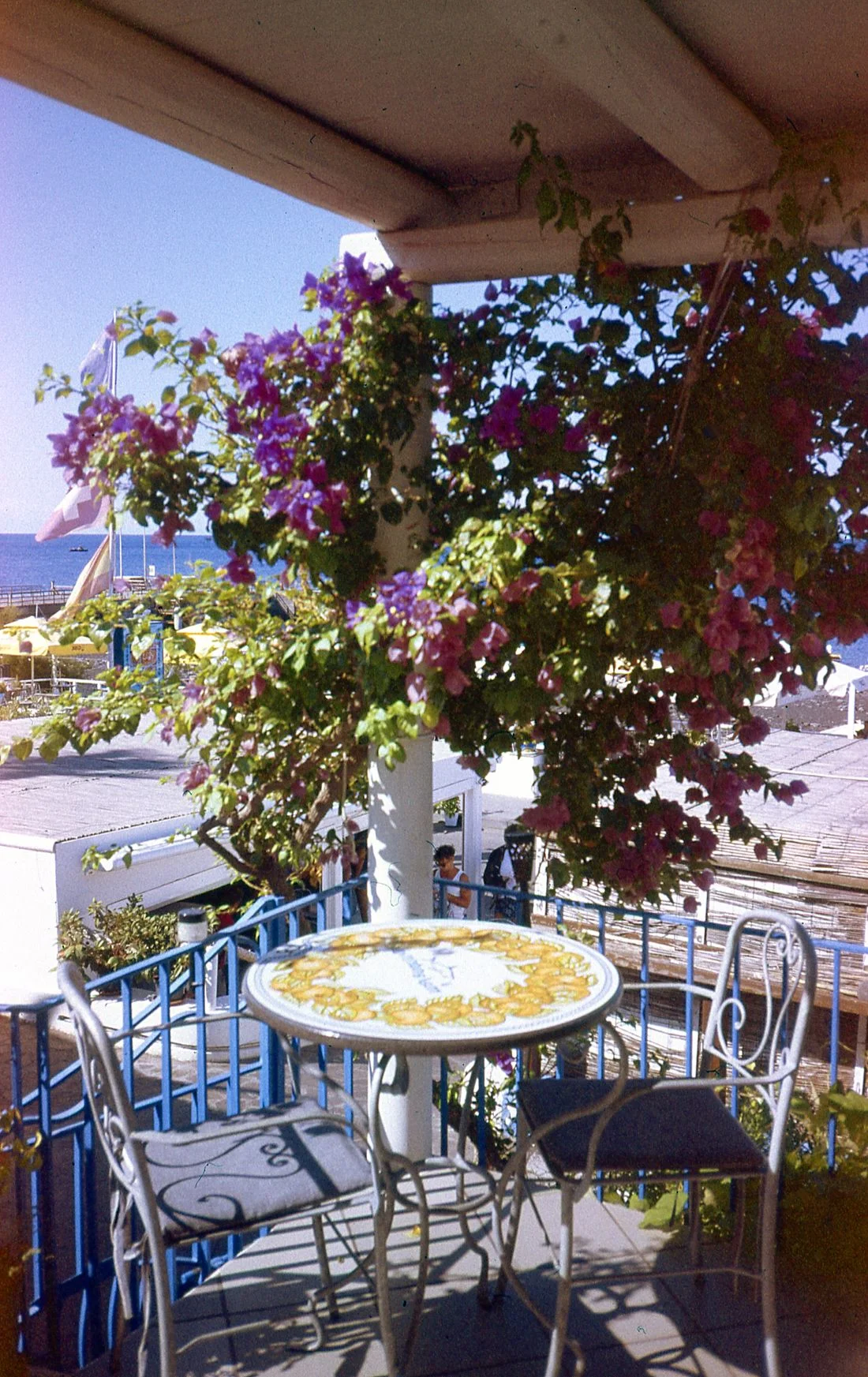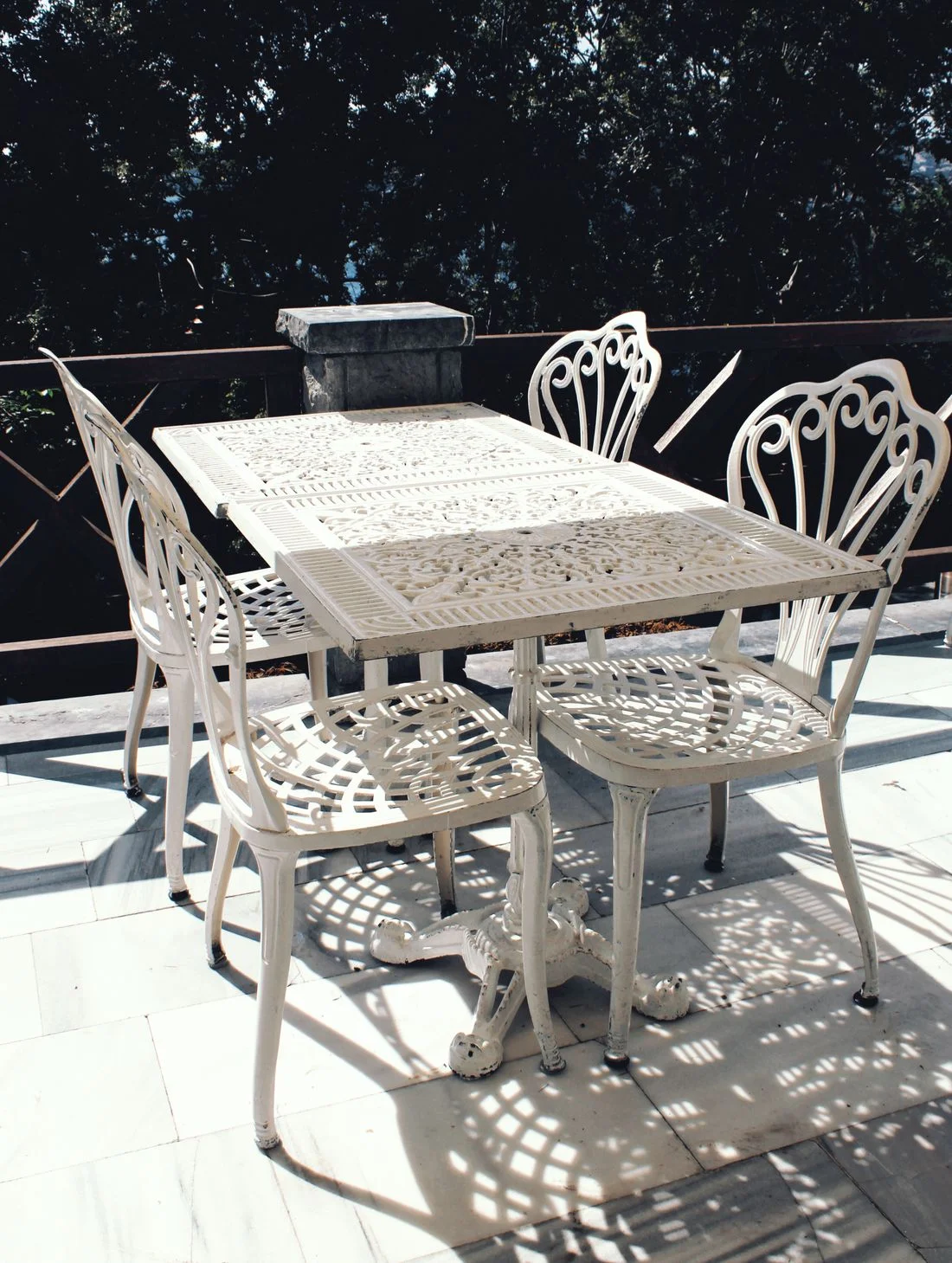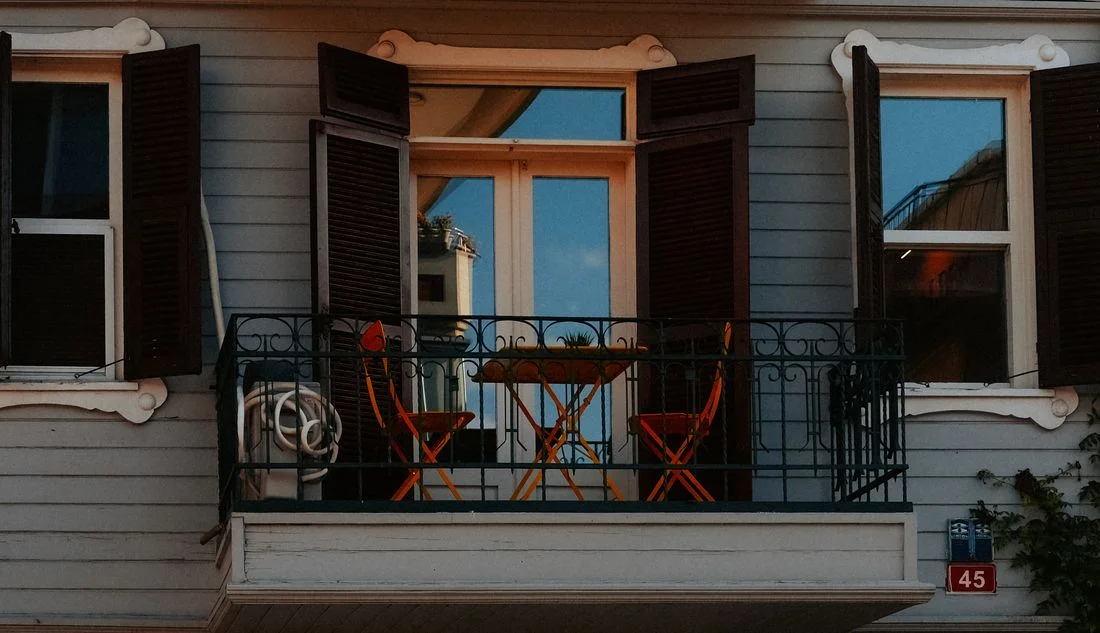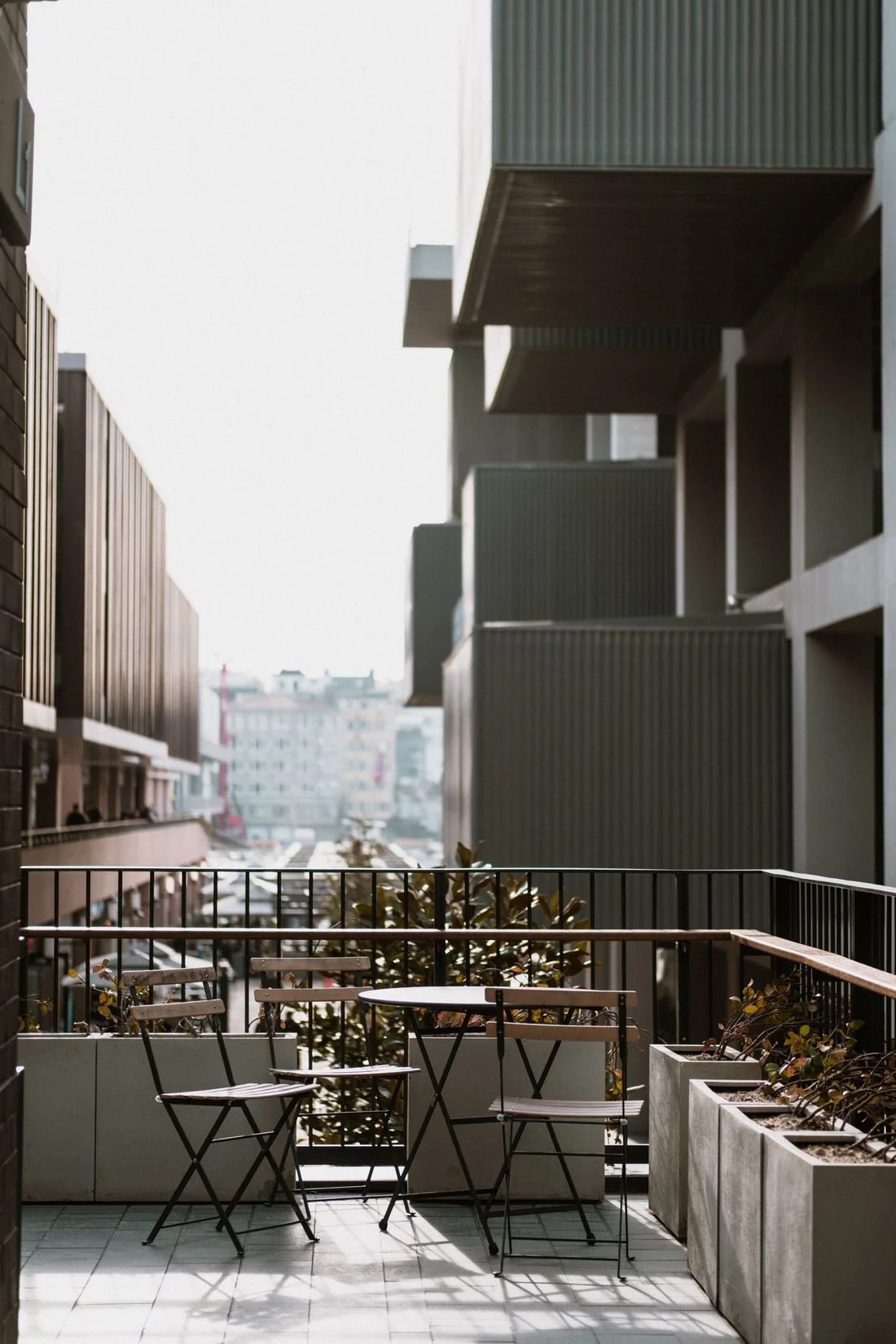
Privacy on a city balcony is rarely all-or-nothing. You may want to soften a view of the neighboring table without blocking the sky, or make a chair feel sheltered while keeping the rest of the balcony open. Start from the seated position where the exposure bothers you, rather than covering every railing by default.
Take a photograph at eye level from each chair. Identify the specific sight line: an opposite window, a neighboring balcony, or people walking below. A small change in furniture position may address one of these more effectively than a tall screen.
Move the seat before adding a barrier
Try turning the chair slightly inward or placing it closer to an existing solid wall. A side-on position can feel less exposed while preserving the outward view. If two chairs sit opposite one another, one person may have a much more public position; test both instead of optimizing only the favorite seat.
Keep the doorway and required access clear. A screen that creates a pleasant corner but makes the balcony difficult to exit is not a workable arrangement. Ask the building manager about permitted screens, attachments, planter loads, and exterior appearance before buying anything intended to attach to the structure.
Choose the kind of filtering you want
A solid panel gives a different experience from a slatted or woven screen. The former blocks a view more completely; the latter may preserve a sense of openness while only softening the view. Check samples from both sides. Small gaps that look private straight on can offer a clear view from an angle.
Plants can provide visual filtering, but a row of pots is not an instant opaque wall. Consider mature width, the actual light available, and the maintenance space around each container. Avoid buying tall plants simply as screening objects if the location will not suit them. Keep containers stable on the floor and within the building's requirements.
Fabric screens introduce their own questions: approved attachment points, exposure to weather, and the effect of wind. Follow the product and building guidance. Do not improvise a large sail-like panel or attach something to a railing because it seems secure on a calm day.
Preserve what you like about the balcony
After testing a temporary outline, sit there at the time you normally use it. Does the screen remove the evening view or make the small space feel closed in? Could a lower or narrower element address the actual sight line instead?
Choose a color that relates to the existing building surfaces if you want the boundary to recede. A highly contrasting screen may become the balcony's dominant feature. Keep nearby furniture and pots simple so the privacy element does not create another layer of visual clutter.
The final check is social as well as visual. Consider what neighbors will see from their side and whether the arrangement directs light or water toward them. A comfortable private corner can remain considerate of the shared setting around it.