A closet can have empty corners and still feel full. The difficulty is often access: everyday shirts occupy the dark end of a rail, while a suitcase sits exactly where you need to stand. Before adding another organizer, follow the route your hand takes from the doorway to a complete outfit. Anything you must move twice is a candidate for a different home.
Map the opening, not just the interior
Measure the clear doorway as well as the width of the back wall. Sliding doors conceal part of the closet at any one time; a drawer behind that overlap may never open fully. Hinged doors also need space for handles, baskets, and the person using them. Mark those obstructions on a simple sketch before choosing an insert.
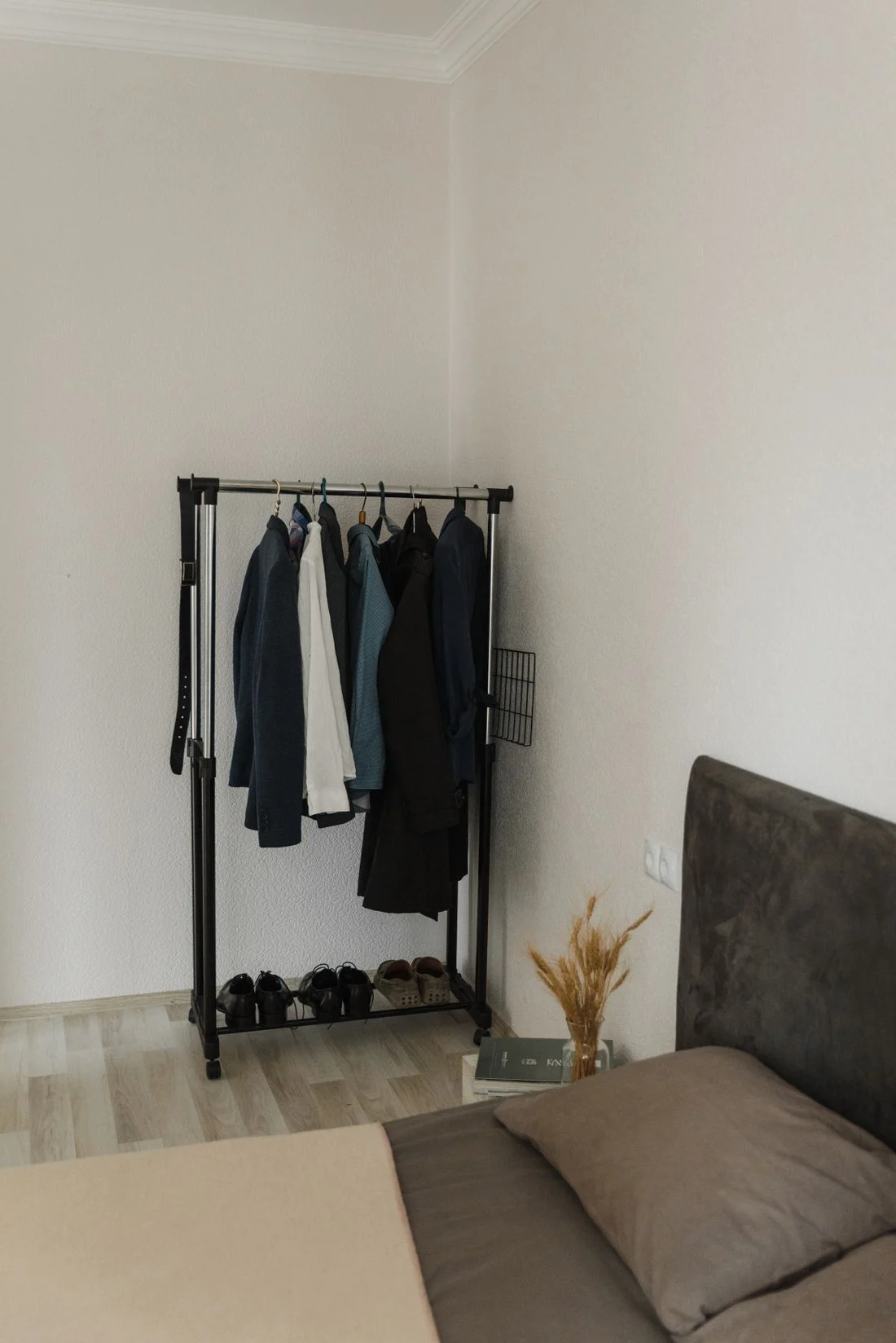
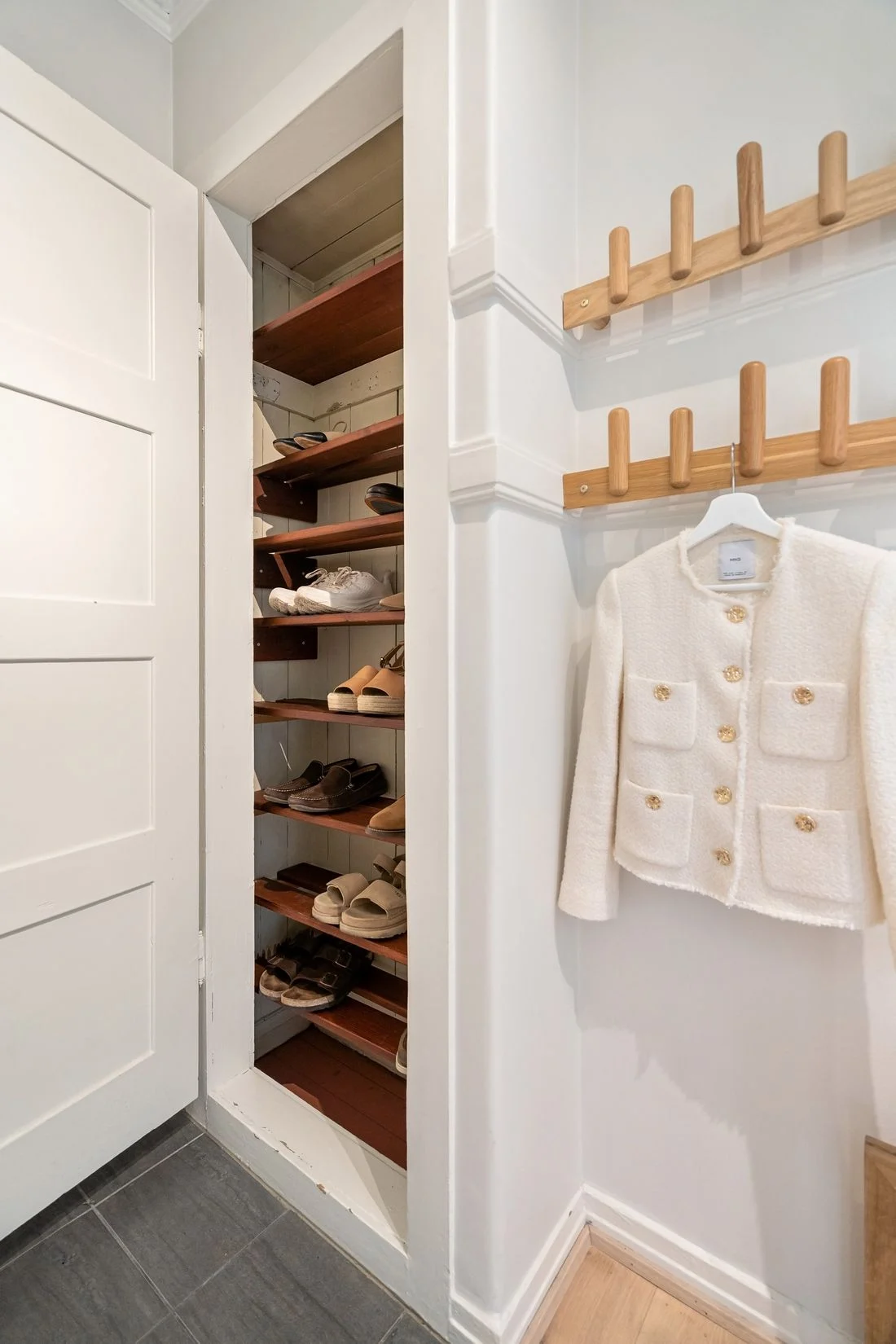
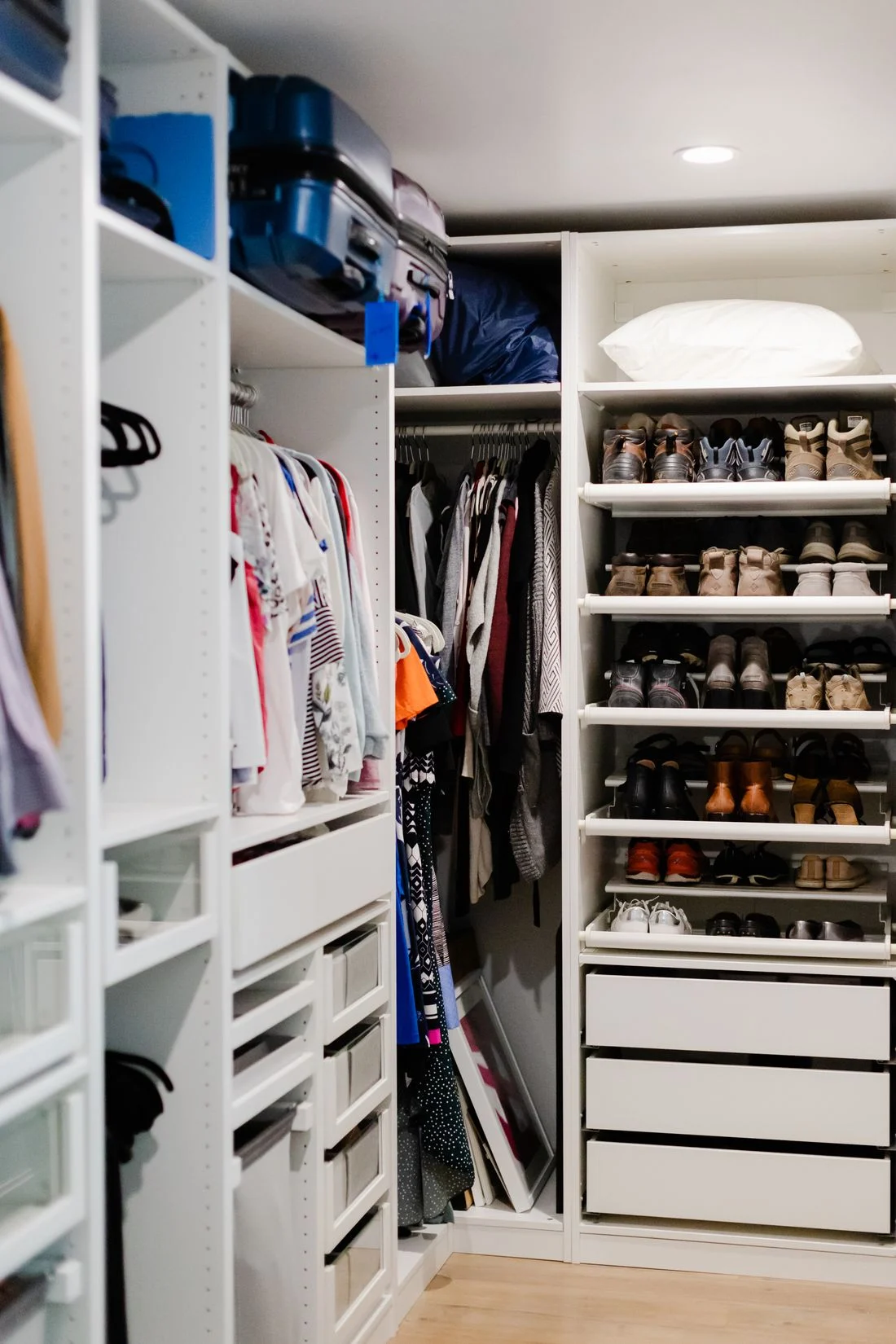
Keep daily clothes within the part of the rail you can see without leaning around a door. Reserve a deeper side return for occasional outfits in a single clearly defined group. Long garments need their own uninterrupted drop, whereas shirts can share a zone with a low shoe shelf. Do not assume every inch below a rail must be filled.
Give the back row a reason to exist
Deep shelves work poorly when small loose objects migrate behind larger ones. Use one removable bin for a complete category, such as swimming things, rather than several little containers arranged one behind another. Check that the bin can come straight out through the door opening. A handle you cannot grip does little to improve access.
The top shelf is useful for light, infrequently needed belongings. Label the visible edge, and avoid building tall, unstable stacks. Heavy objects belong lower down where they can be lifted comfortably. Any freestanding furniture added inside the closet still needs the manufacturer's required stability measures; surrounding it with walls does not secure it.
Test the morning routine
Return a week's worth of frequently worn clothes first. Leave the remaining space unassigned for several days and notice where clean laundry starts to pile up. That pile may reveal a missing folded-clothes shelf or an overfilled hanging section more clearly than a complete redesign would.
Once the routine works, put occasional items back around it. Leave enough room to slide a hanger sideways and remove a single garment without pulling its neighbors off. The closet is finished when choosing and returning clothes is straightforward, even if a corner remains deliberately empty.