A large cutting board can make preparation comfortable, but only if it fits your available counter and can be cleaned afterward. A tiny board is easy to store yet may force chopped ingredients into a pile around the knife. Choose the working size before choosing a decorative wood tone or a coordinated set.
Lay out a normal preparation task
Place your usual knife and a few ingredients on an existing board or a paper outline. Allow room for the ingredient before cutting and for the cut pieces afterward. The board should sit fully supported on a stable surface, with a working area that does not crowd the sink or stove.
Measure the sink or washing area too. A board that is awkward to wash may encourage hurried cleaning. Check whether the manufacturer's care instructions allow the cleaning method you intend to use; wood, plastic, and composite boards do not all have the same requirements.
Decide what must stay separate
Keep food preparation practices in mind rather than treating the board as a neutral display surface. FDA guidance emphasizes separating raw foods from ready-to-eat foods and cleaning hands and surfaces. Dedicated boards can make that separation easier to remember, but they still need proper cleaning and care. Color coding helps only when everyone understands the meaning.
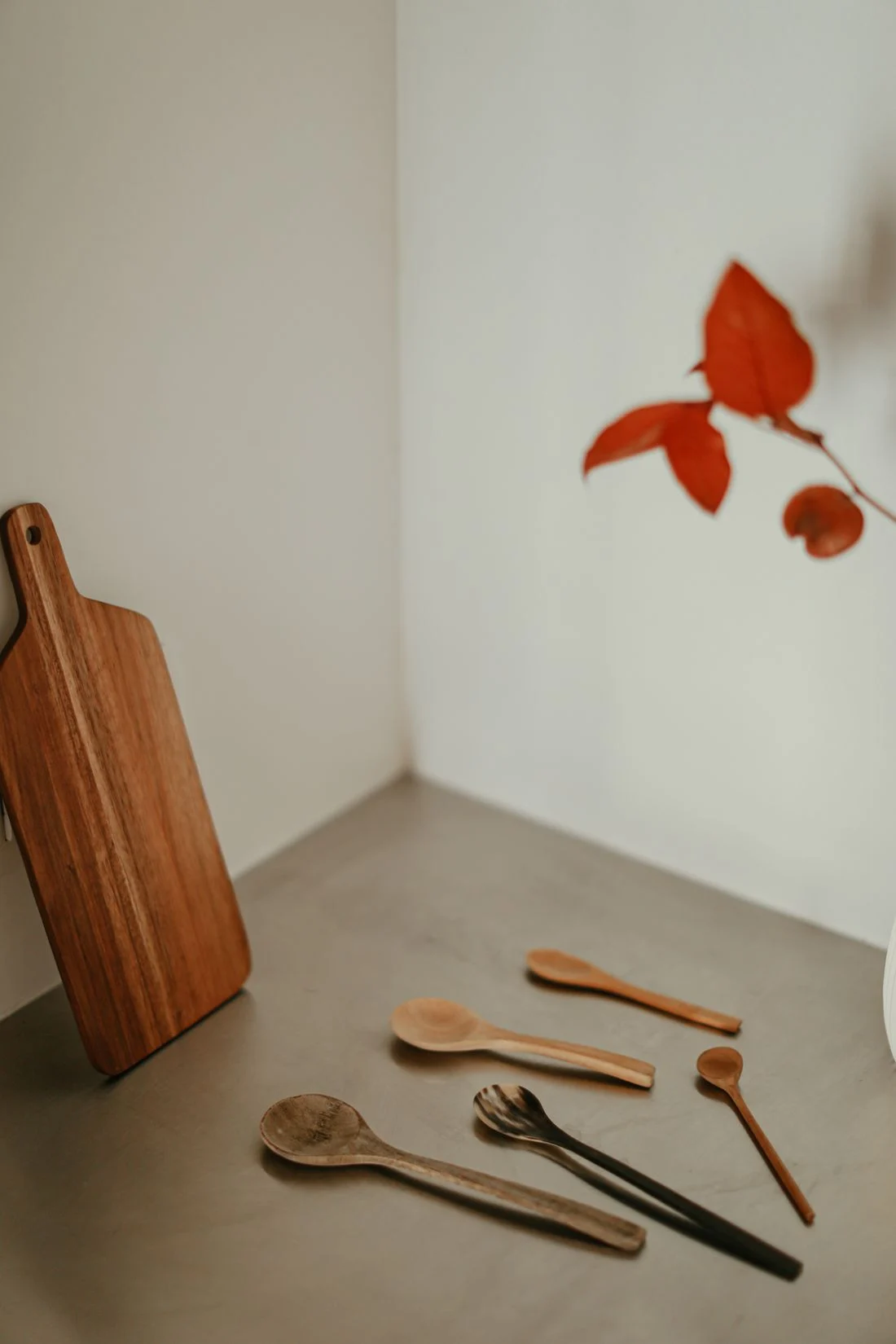
Do not choose a decorative serving board for chopping unless its maker identifies it as suitable for that use. Handles, grooves, and raised edges can be useful, but they also change the usable cutting area. A broad juice groove may leave less flat space than the overall dimensions suggest.
Consider lifting and storage
A thick board may feel stable but be heavy to move. Check whether you can carry it comfortably and whether it can dry and store in a suitable position. A narrow upright slot is useful only if it supports the board without wedging it against damp cloths or other items.
If you keep a board on the counter, make sure it can be moved easily for cleaning beneath it. A permanently styled arrangement of jars and utensils on top may discourage regular access to the surface underneath.
Buy for the tasks that repeat
One everyday board and a second board for a distinct preparation need may be more useful than a large matching set. A small board can handle a quick piece of fruit, while a larger one serves more involved cooking. Keep both only if their roles are clear and storage is available.
Inspect boards during ordinary use and follow the manufacturer's advice about damage, maintenance, and replacement. The best board for your kitchen is the one that supports safe preparation, can be cleaned properly, and is easy enough to retrieve that you use it consistently.