A drinking glass spends much of its life in the cupboard, drying area, or dishwasher. Its shape needs to work in all three places as well as in the hand. A set chosen only for the table can become awkward when tall glasses do not fit the shelf or broad bases occupy most of the drying rack.
Hold it as if it were full
Look at the diameter where your hand naturally grips. A heavy base can feel reassuring when empty but add substantial weight once the glass contains a drink. Smaller hands may find a narrower profile easier to manage. If possible, handle a sample rather than judging grip from a product photograph.
Check the rim and the listed capacity. A generous-looking glass may hold more than you want for ordinary meals, while a small tumbler can need frequent refilling. Choose around the drinks you serve most often rather than assuming one large size does every job.
Check storage honestly
Measure the clear shelf height and depth. Include the space needed to lift the glass without scraping the shelf above. If the product is designed to stack, check how securely it does so and follow the maker's guidance. Do not force ordinary glasses together simply because their shapes seem to nest.
A short stack may save space while remaining easy to handle. A tall tower can be awkward to retrieve and may place the most-used glass in a precarious position. Keep the arrangement manageable for everyone using the cupboard.
Match care to the household
Consult the manufacturer's dishwasher and temperature-use instructions. Not every glass is intended for hot drinks or sudden temperature changes. Decorative finishes may also have particular care needs. A small household collection should fit the way dishes are normally cleaned, rather than requiring exceptions that are routinely forgotten.
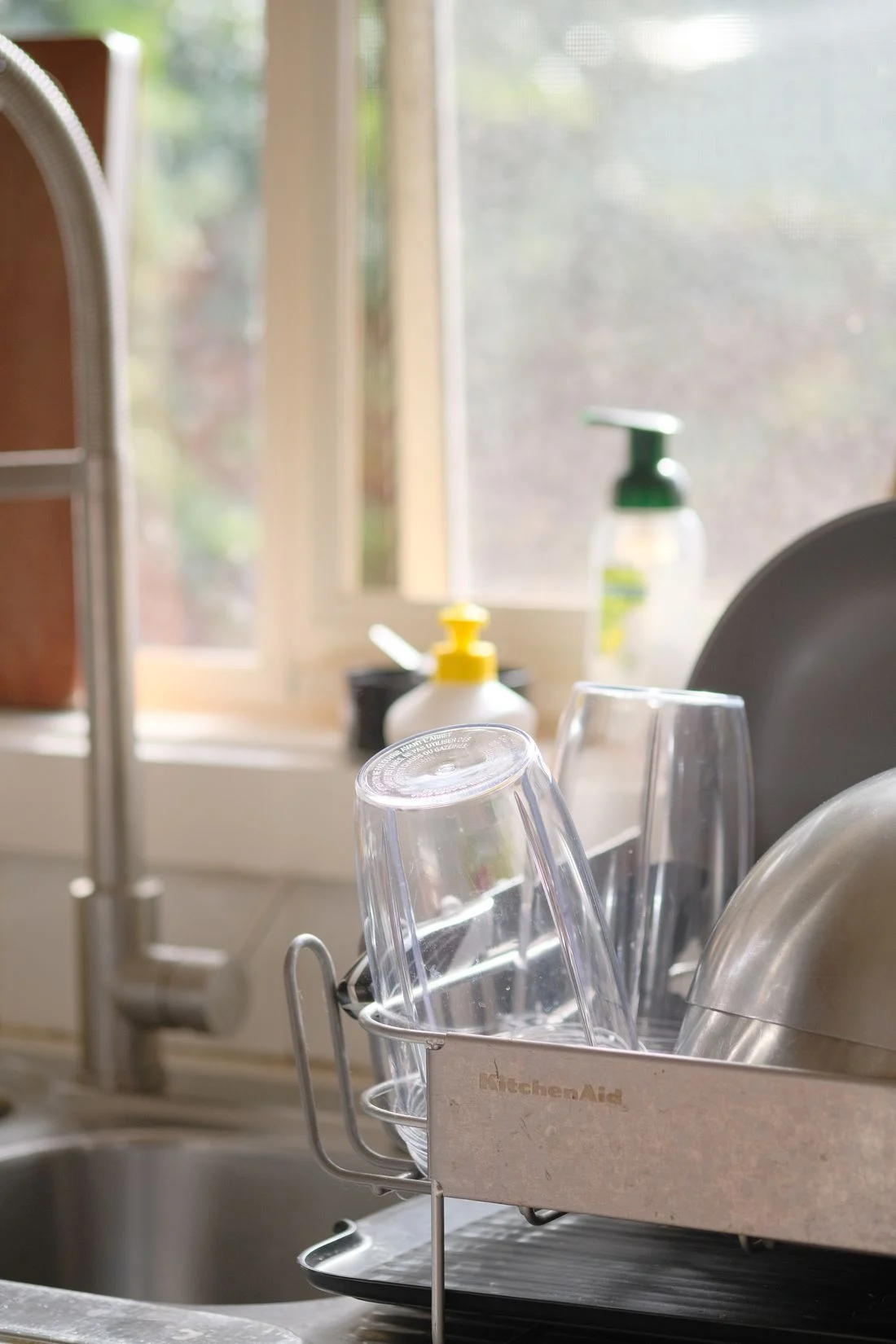
Consider the drying area. Wide rims and long stems can use more space than compact tumblers. If glasses are hand-washed, make sure they can rest securely without crowding the sink or balancing against other dishes.
Buy a quantity that covers normal use and the washing cycle. Keeping a few extra everyday glasses may be more useful than several specialized shapes that rarely leave storage. The right choice is the one that feels comfortable, fits the cupboard, and returns there easily after dinner.