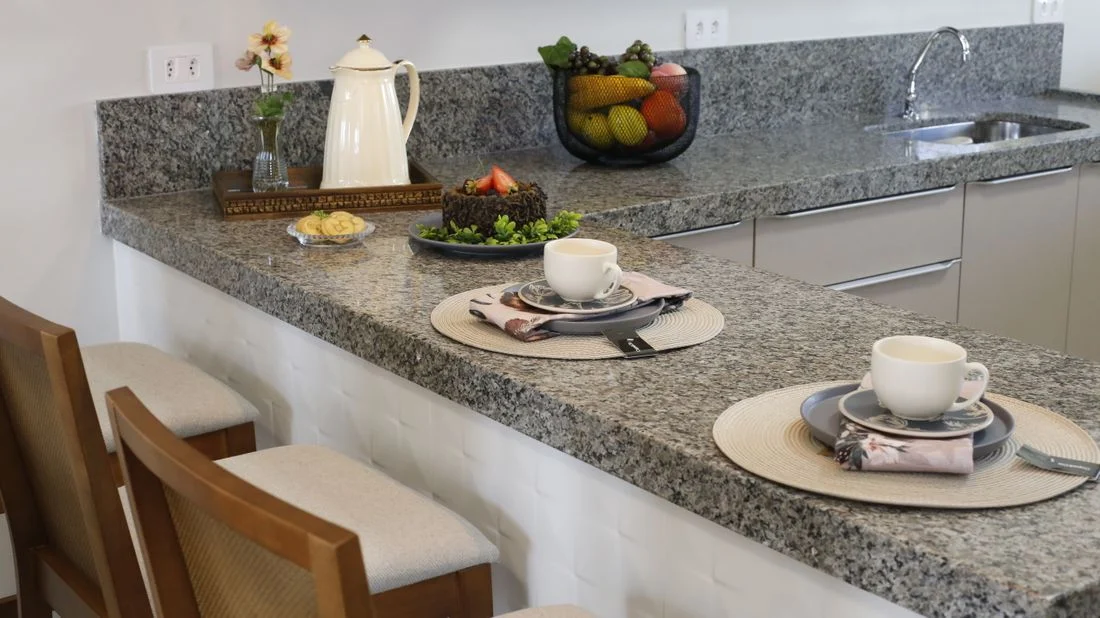
A kitchen counter can make a convenient breakfast spot, but a stool that looks right from across the room may be uncomfortable once someone sits down. Counter height, the thickness of the surface, the support underneath, and the stool's seat all affect the usable space. Measure the combination rather than shopping by the word counter stool alone.
Measure where the knees go
Record the height from the floor to the underside of the counter at the seating position. Include any apron, support, or bracket that reduces clearance. Then compare that space with the stool's actual seat height and the seated person's needs. Product categories such as bar and counter describe broad types, not a guarantee of fit.
If possible, test a similar combination before buying. Sit with feet supported and check whether knees have room without pushing the stool too far from the counter. A footrest can matter for comfort, especially when feet cannot reach the floor, but its position must suit the user rather than simply appear in the design.
Allow for the stool in use
Measure the seat width and the space needed to get on and off. Swiveling stools require room for their turning movement and should not collide with adjacent cabinets or each other. Backrests and arms can make seating more supportive, but they may prevent stools from tucking fully under the counter.
Tape out the proposed positions and use the kitchen while they are occupied. Check the route to the refrigerator, sink, and dishwasher. A row of stools that fits when pushed in may obstruct the room during breakfast. Fewer comfortable seats can be more useful than squeezing in the maximum count.
Think about the surface above
Set out an ordinary breakfast: a plate or bowl, a drink, and any shared items. The counter needs enough depth for these without placing a glass near an exposed edge. Keep the seating area separate from active cooking hazards and do not assume every overhang is intended to support people leaning heavily on it.
If the counter structure, overhang, or supports need changing, seek appropriate professional advice. This is a seating and layout decision, not a guide to modifying the counter's structural support.
Choose materials around cleanup
Breakfast seating encounters crumbs, spills, and frequent movement. Read the stool's care guidance and consider how easy it is to clean the seat and floor beneath it. Upholstery can be comfortable, but its maintenance needs should fit the household. Check that feet or glides are compatible with the flooring.
Stability is more important than a delicate silhouette. Follow assembly and use instructions, and do not treat a stool as a step ladder. Where children use the space, choose seating appropriate to their age and needs rather than assuming an adult-height stool is suitable.
Keep the styling simple once the fit works. A small placemat or a repeat of a color from the kitchen can connect the seating area to the room. Comfortable reach, a clear route, and stools that fit the people using them do more for a welcoming breakfast spot than an extra seat squeezed into the last gap.