Food-container storage often fails because the lids and bases are treated as separate miscellaneous collections. A drawer fills with pieces that almost fit one another, and the matching lid is found only after several attempts. Begin by pairing what you already own before purchasing another set.
Discard or otherwise handle damaged and unsuitable pieces according to their material and local guidance. Keep containers intended for food storage and follow the manufacturer's limits for refrigeration, freezing, reheating, and washing. A container that works for one purpose is not automatically suitable for every temperature or appliance.
Choose a small number of working sizes
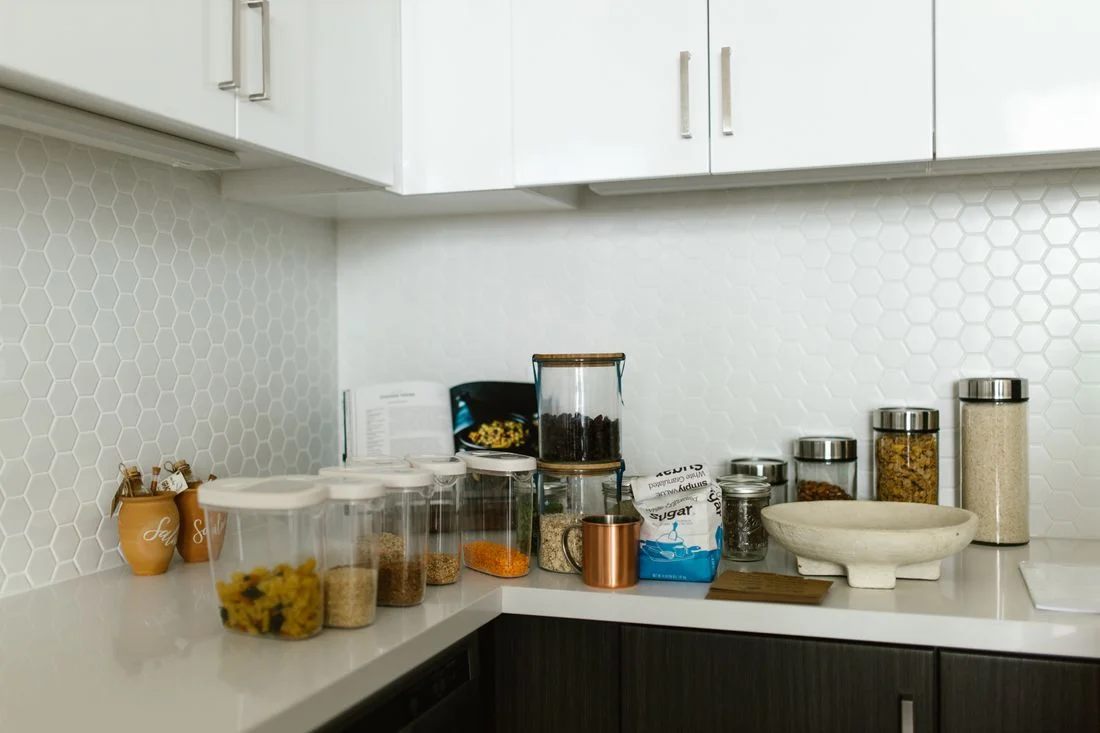
Look at the portions you actually store. A household saving individual lunches needs different shapes from one storing a large family dish. Keep enough variety to cover those uses, but avoid buying many nearly identical sizes that require slightly different lids.
Rectangular containers can use shelf space efficiently, while round ones may suit the foods or cupboard arrangement better. The key is how the shapes fit your refrigerator, freezer, bag, and washing area. Measure a typical stack with the lids included rather than judging the empty base alone.
Decide how lids return
For a small collection, storing each clean, dry container with its lid can eliminate the search. For a larger collection, nesting bases and keeping lids upright in a divided section may use less space. Choose the arrangement that remains easy to maintain after a rushed meal cleanup.
Do not nest wet pieces tightly and hide them away. Follow cleaning and drying guidance, and keep seals or removable parts accessible for care. A container with a complicated lid may be useful, but account for the additional pieces that need washing and storing.
Keep the refrigerator functional
Containers should help identify food, not conceal it behind a uniform wall. Label contents and dates when that helps the household use them appropriately. Keep original product instructions available where needed. FDA guidance recommends covered food and enough room for air to circulate rather than packing the refrigerator too tightly.
The refrigerator should be kept at 40°F or below, with an appliance thermometer used to check the temperature. Organizers and attractive containers do not replace safe storage practices. Follow food-specific guidance rather than applying one universal leftover schedule to every dish.
Test one meal's cycle
Fill a container with a normal portion, close it, place it in the intended storage spot, and consider how it will be carried or reheated. Then wash and return it. If the lid is difficult to identify or the shape does not fit the shelf, fix that before buying multiples.
Leave a small empty space in the container drawer so returning a clean piece does not require rebuilding the whole stack. The system succeeds when the right pair is easy to find and the remaining collection stays understandable.