Mugs tend to accumulate as gifts, travel souvenirs, and small purchases. Each may be appealing, yet the collection can exceed the cupboard long before any single mug seems unnecessary. Decide which ones are used daily and which are kept mainly for their story or appearance.
Give daily mugs the easiest position
Place the regular group near the drink-making area or the dishwasher, depending on the kitchen's layout. Keep handles accessible and avoid packing mugs so tightly that removing one knocks its neighbor. Tall and broad mugs may need different shelf heights from small cups.
If you stack, do so only where the mugs are designed to stack securely. Handles and rims can make an improvised tower unstable. A short, accessible arrangement is more useful than maximum density that requires careful unpacking every morning.
Decide whether hooks help
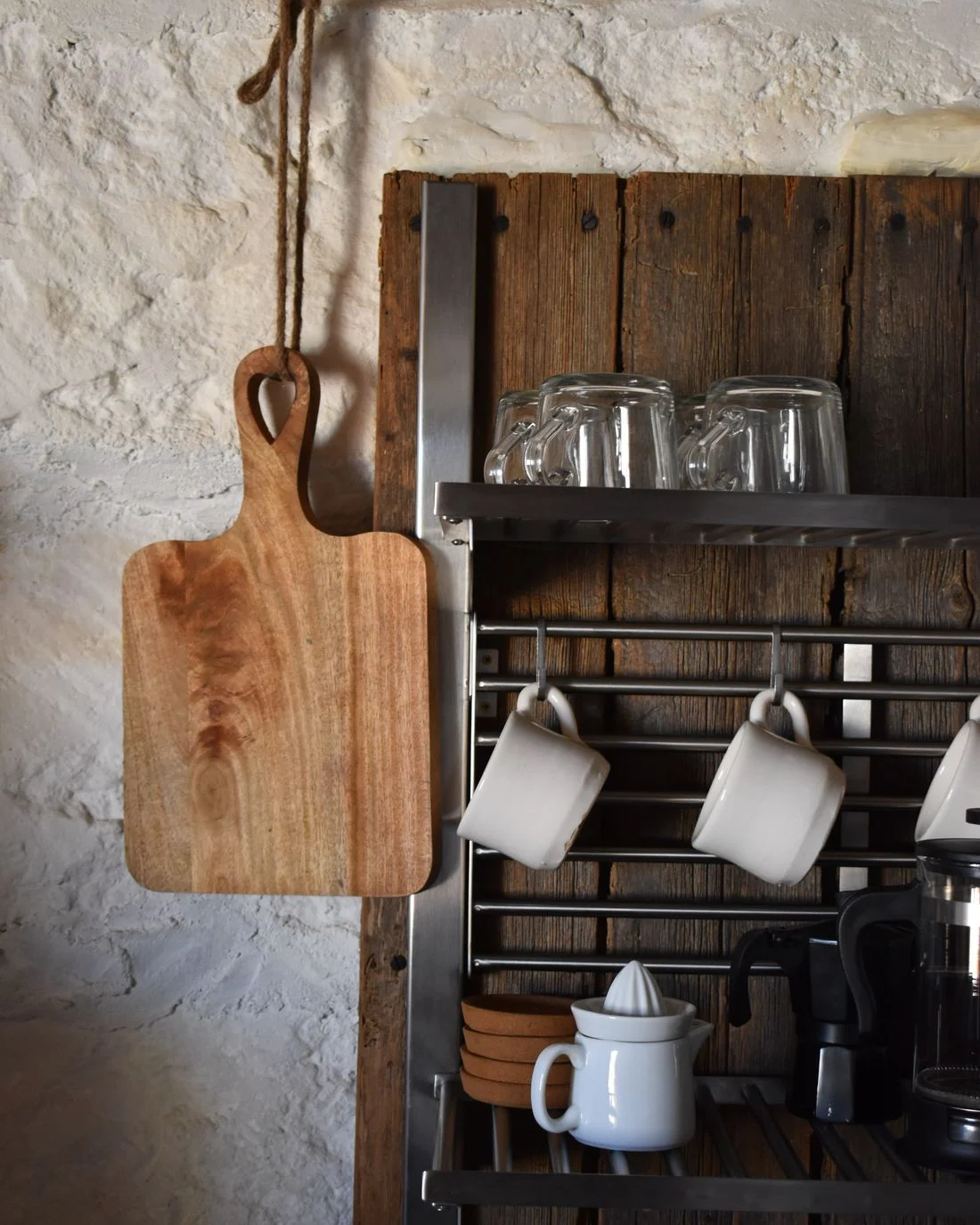
A suitable rack can make mugs visible and free shelf space, but it needs appropriate installation and load capacity. Check that hooks fit the handles without forcing them and that mugs cannot be easily knocked together. Leave clearance from doors, work surfaces, and the movement of people using the kitchen.
Do not assume every decorative wall rail is intended for heavy ceramics. Follow the product's mounting requirements, and choose another storage method if the wall or location cannot support it appropriately.
Let the collection have a second home
Occasional or sentimental mugs do not all need to occupy the prime kitchen shelf. A small display elsewhere may suit pieces kept for their appearance. If a mug is not intended for drinking or its suitability is uncertain, treat it as a decorative object rather than assuming it is food-safe.
Keep the active quantity tied to use and the washing cycle. A household may need several mugs available between dishwasher runs, but that does not mean every souvenir belongs beside the coffee machine.
Review when a new one arrives
Choose where the new mug will go before adding it to an already full row. It may replace a worn daily piece, join a defined collection, or be passed along if it has no useful role. There is no need for a strict universal number.
The aim is a collection that remains enjoyable to use and easy to put away. When the cupboard opens without a precarious clink, the arrangement is doing its job.