Kitchen counters fill in small increments. A coffee machine arrives, then a jar of utensils, then a tray for oil, and eventually the cutting board has nowhere to sit. Instead of organizing all those objects in place, begin by reserving the space needed to prepare an ordinary meal.
Put your everyday board on the counter and leave room for ingredients and a bowl beside it. That area is the work zone. Mark its edges mentally or with a temporary paper outline while rearranging the rest of the kitchen. It should not depend on moving several appliances every time you cook.
Rank objects by use
Daily equipment may deserve counter space if it is safe and convenient there. Occasional appliances can live elsewhere if they can be lifted comfortably and stored according to their instructions. Do not put a heavy machine in a difficult upper cupboard simply to create an empty-looking counter.
Group small frequently used objects only when the grouping makes them easier to move or clean around. A tray for a few related items can be useful; several trays covering the entire surface merely turn clutter into compartments.
Keep appliance requirements visible
Follow each appliance's guidance for ventilation, clearances, placement, and operation. A location that fits the footprint may not allow enough room to open a lid, fill a tank, or release heat. Do not operate equipment inside a closed cabinet unless it is specifically designed and installed for that use.
Cords should not cross the preparation area or become trapped behind a sliding object. Permanent electrical changes need appropriate professional attention. Counter organization should work within the kitchen's existing safe setup rather than creating improvised power arrangements.
Move the supporting items closer
If a drawer holds the tools used at the work zone, arrange them so the drawer opens without moving a stool or trash can. Keep mixing bowls and containers nearby when possible. The counter feels larger when the next needed item is accessible without being permanently displayed.
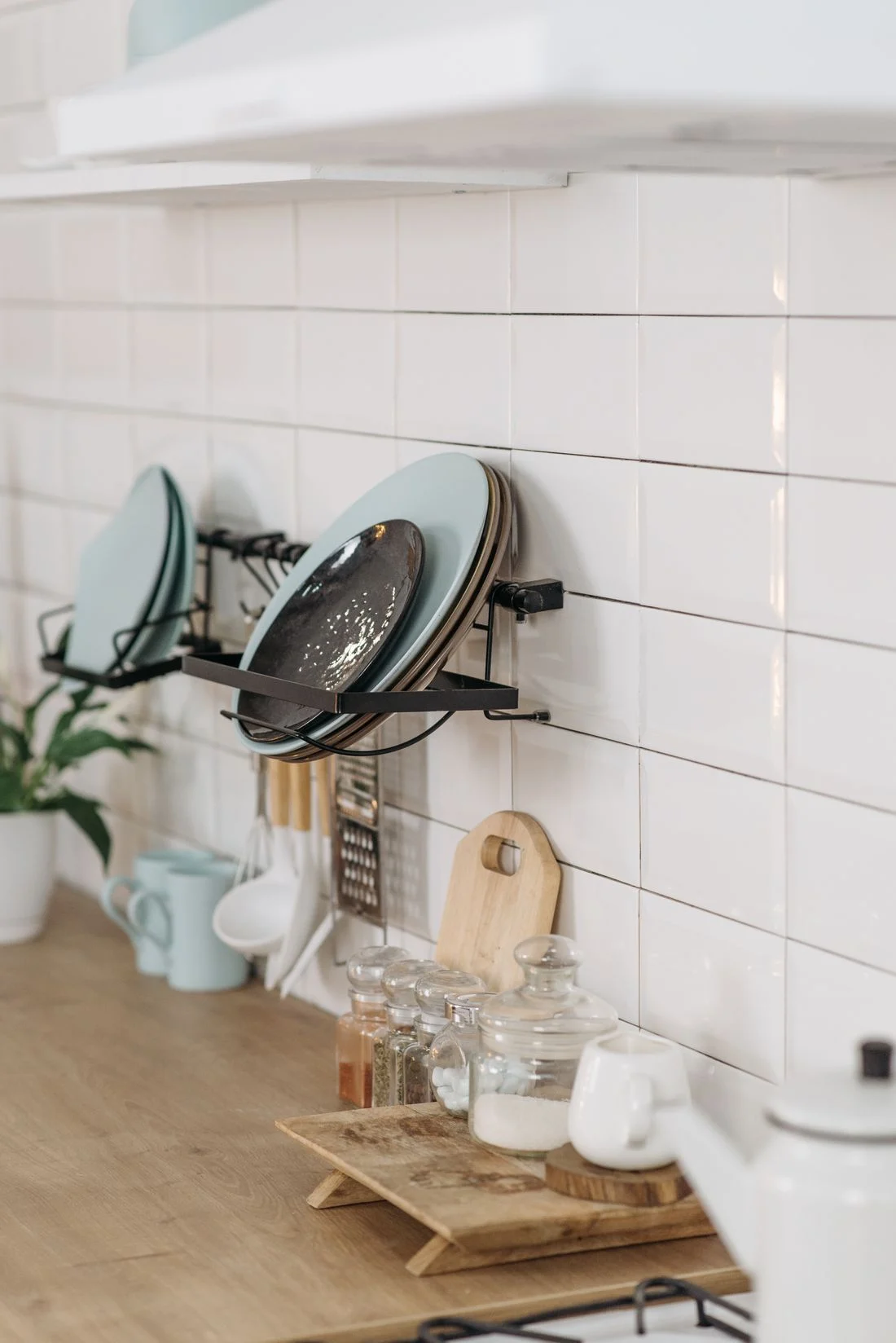
Use vertical storage only when its installation and load requirements can be met. A wall rack may free a surface, but it should not crowd your head space or hang sharp and heavy objects where they can be knocked down.
At the end of cooking, clear the work zone first. If one item repeatedly returns to it, find a deliberate home for that item. The goal is not an unused kitchen; it is a kitchen where the next meal can begin without a preliminary rearrangement.