A small dining table feels crowded when it must hold place settings, serving dishes, a vase, a fruit bowl, and the paperwork that arrived earlier. The answer is not always a larger table. Often the first improvement is deciding which jobs belong there during a meal and which can happen nearby.
Check the occupied chairs
Measure the table, but also test the room with people sitting in the chairs. Pull a chair out, sit down, and try to leave while someone occupies the next seat. Check the route to the kitchen and any nearby doors. A tabletop may fit the floor plan while the diners do not.
Chair arms, angled legs, and a table's apron can affect how far a chair tucks in. If buying new seating, compare the actual dimensions and test the combination when possible. Do not rely only on a photograph showing empty chairs neatly pushed under the table.
Give the meal a serving location
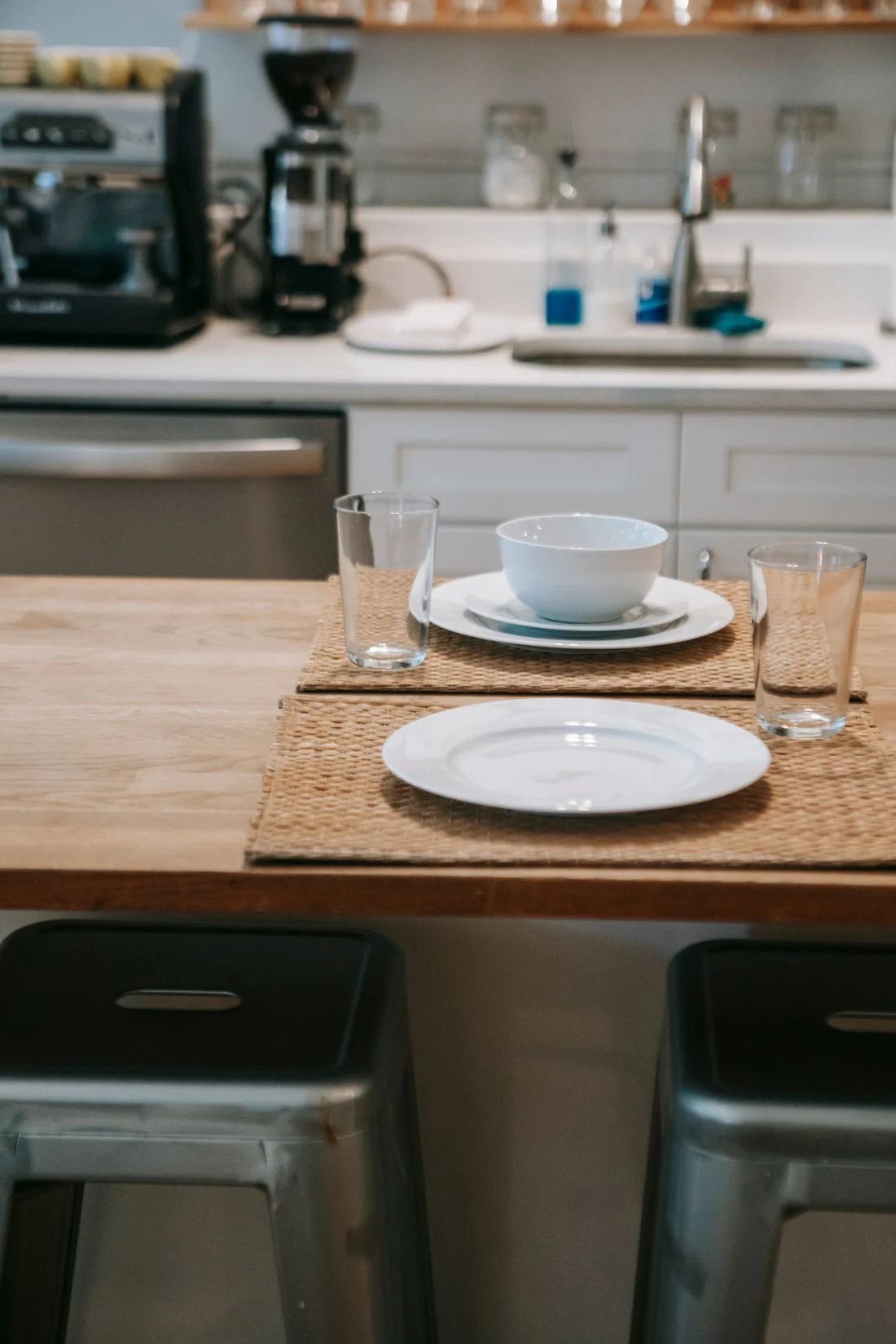
On a compact table, plate food at the counter or use a nearby sideboard for larger serving dishes. Keep the table for what diners need within reach. This is particularly helpful for a two-person meal where a large central platter can consume most of the usable surface.
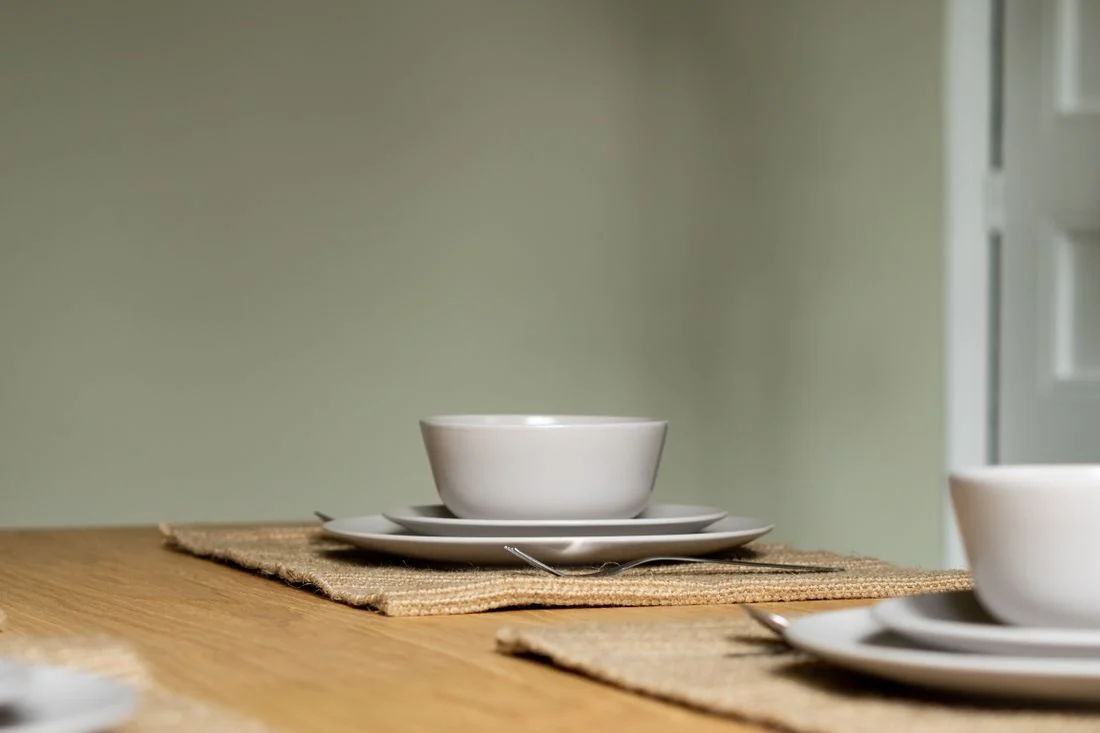
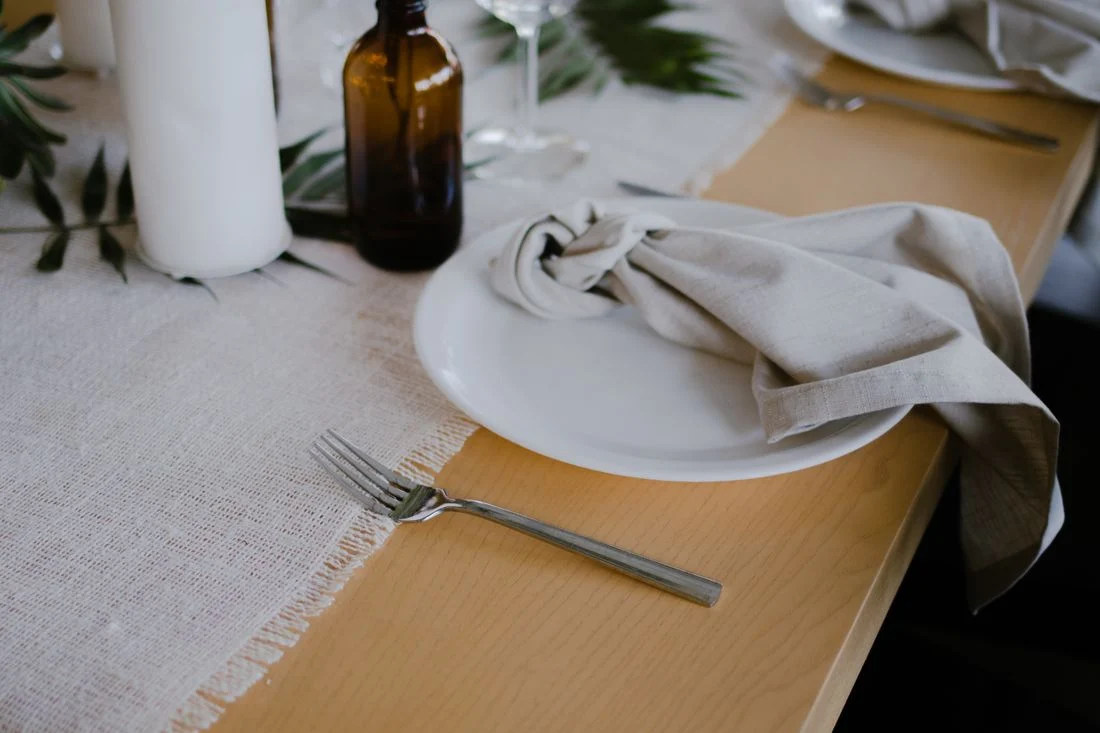
Choose glasses and plates that fit the setting without extending to the edge. Oversized chargers, several unused utensils, and multiple decorative layers may make the table look generous while reducing the space available for eating.
Keep a clear center
A small low object can remain between meals, but it should be easy to move as one piece. A tray is useful if it gathers a few items that genuinely belong together. It becomes counterproductive when it encourages a permanent collection too large for the table.
If the dining table also serves as a work surface, provide a nearby place for work materials. A single project box or tray can clear the table quickly without scattering papers across the sofa. The reset needs to be simple enough to happen before dinner.
Test the usual meal, not the maximum guest count
Arrange the table for the household's normal number of diners first. Occasional gatherings can use a different serving approach, borrowed seating, or a planned extension if the furniture supports it. Designing every day around the largest imaginable party can make the ordinary meal less comfortable.
After several dinners, notice what is repeatedly moved off the table. Those items probably need another home. A small dining area works well when the chairs can move, the food has a sensible route, and the tabletop remains available for the people using it.