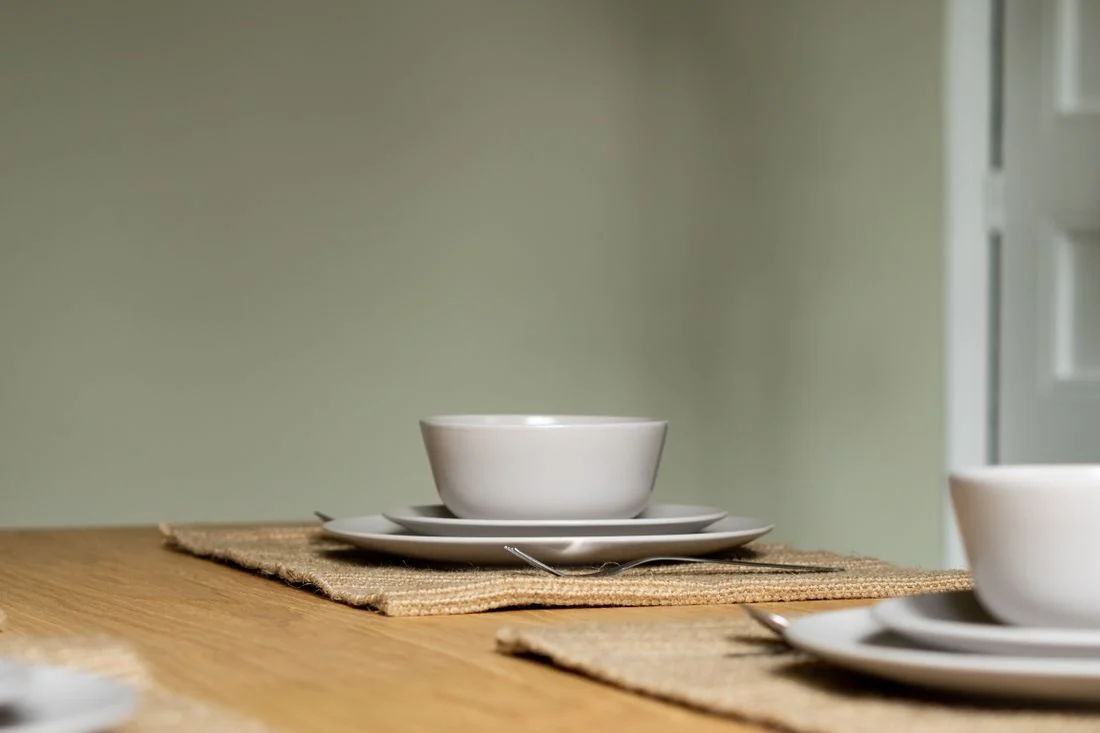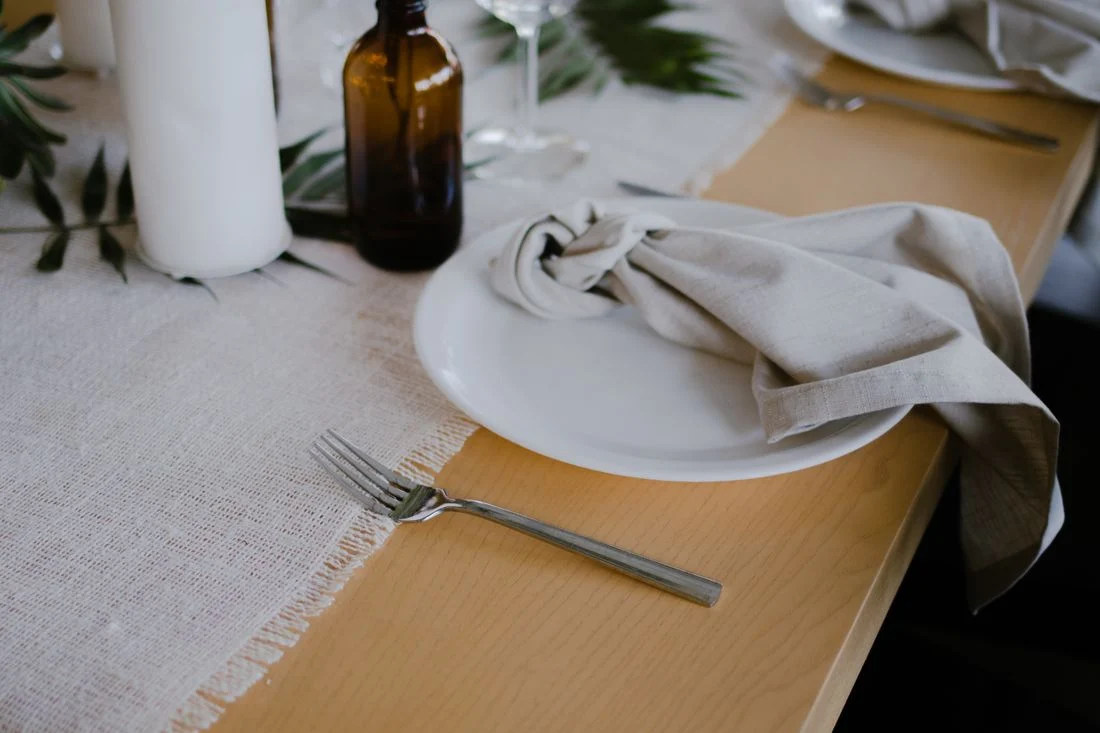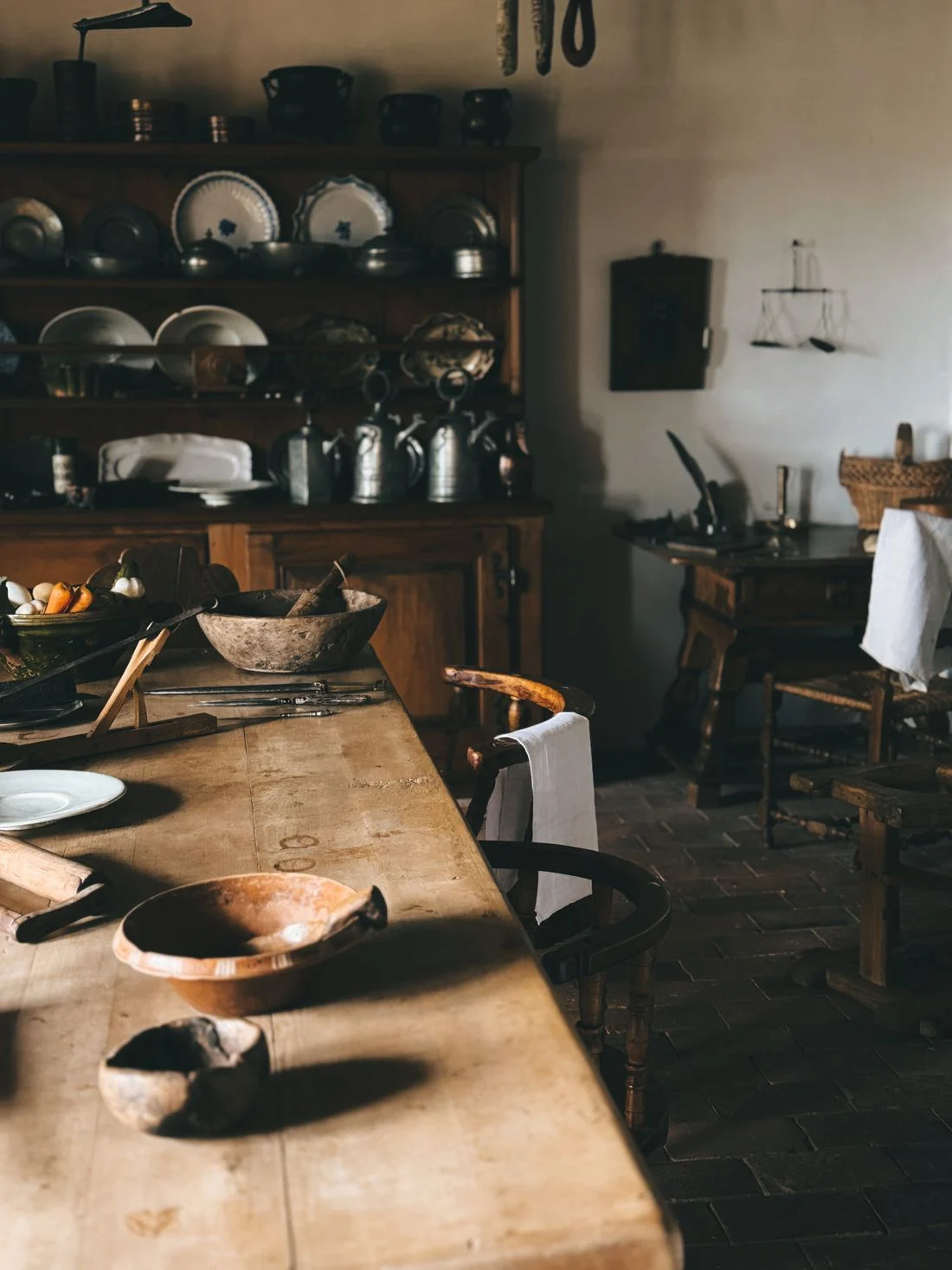
Open kitchen shelving is easiest to maintain when it holds dishes that circulate through use and washing. A shelf packed with occasional serving pieces can gather dust while taking the best position near the work area. Decide whether the shelf is a working store or a display, and give it a clear priority.
Choose the daily collection
Start with the plates, bowls, or mugs used most often. Keep stacks short enough to lift comfortably and leave room beside them for a hand. A tightly packed shelf may look complete but makes returning dishes unnecessarily precise.
Follow the shelf manufacturer's installation and load requirements. Ceramic dishes can create a concentrated load, especially when stacked. Do not assume a slim decorative shelf is suitable for a full dinner service. Any new wall installation needs appropriate support and hardware for the specific wall and product.
Keep the shelf away from the messiest zone
Consider cooking splashes, steam, and the movement around the stove or sink. A shelf directly above a busy cooking area may require frequent cleaning. Choose a location where dishes can be retrieved without reaching over hot equipment or across someone preparing food.
Leave enough vertical clearance to lift a bowl off its stack. Tall mugs and pitchers may need a different shelf height from plates. If the shelf is deep, resist making a hidden second row of small objects behind the dishes.
Mix useful objects carefully
A container for everyday utensils or a small frequently used jar can belong alongside dishes. Decorative objects should not block the most-used pieces. Avoid placing plants or other items where water or loose material can fall onto clean tableware.
Color and shape can create a coherent view without requiring everything to match. A limited group of similar-sized stacks often looks calmer than a collection spread evenly across every available inch. Leave some space unoccupied so the shelf remains easy to use.
Build cleaning into the routine
Remove the contents when wiping the shelf rather than cleaning only the visible front edge. Follow the care requirements of both the shelf finish and the dishes. If the arrangement takes too long to dismantle, reduce the collection.
Keep occasional or delicate pieces in more suitable enclosed storage when that makes care easier. A working open shelf should make the kitchen more accessible, not add a permanent display that must be carefully reconstructed after every wash.