A second sofa is a substantial commitment to one layout. Two chairs offer a different kind of room: seats can turn toward a conversation, separate for reading, or move away when more floor space is needed. The tradeoff is that each chair needs its own landing area and enough breathing room around its arms.
Start by asking who normally sits together. A couple watching a movie may value one shared sofa. Guests talking over coffee often appreciate individual seats. A pair of chairs can serve both situations, but only if their angle toward the television or main sofa is comfortable rather than forced.
Draw two complete footprints
A chair is more than its seat cushion. Include the arms, rear legs, and the space needed to settle in. Swivel and reclining chairs need additional operating room; check the specific product rather than assuming a compact base means a compact footprint. Place two dining chairs temporarily where the new chairs would stand and move around them for a day.
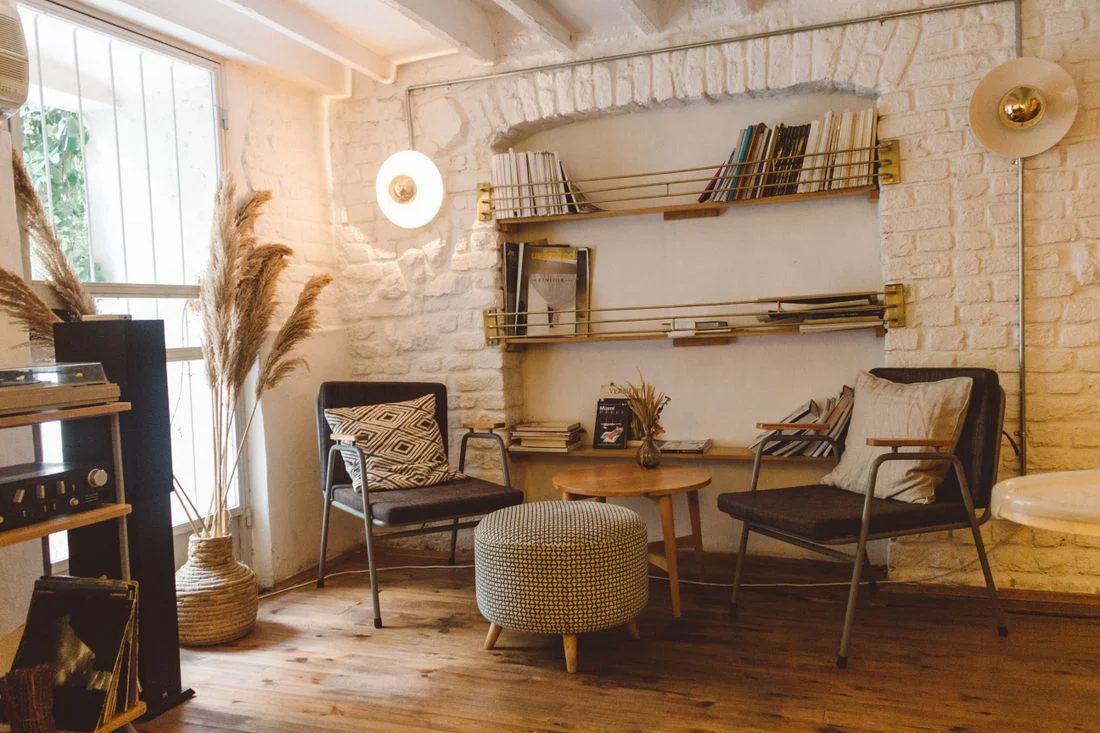
Avoid placing both armchairs tight against the same wall simply because they are a pair. A slight inward angle can make each seat part of the group. If the room is narrow, stagger them instead of building a solid row that narrows the central path.
Give the pair a shared relationship
Matching chairs make the choice easy, but different chairs can work when they share one clear quality. Similar seat heights, related wood tones, or comparable visual weight will create a relationship without making them identical. Be cautious about pairing one bulky recliner with a very delicate occasional chair: the difference may be useful, but it should feel deliberate.
A small table between them is convenient if both users can reach it. When that arrangement makes the pair too wide, use separate compact tables or place one chair near the coffee table. Lamps should follow where people read, not a requirement for mirror-image symmetry.
Leave the arrangement adaptable
Do not surround every chair with a plant, basket, and lamp that must move before the chair can turn. The benefit of separate seats disappears when accessories lock them into position. Keep the route to the sofa and the main doorway clear, and put the most easily moved chair on the side that occasionally needs extra access.
Before buying, compare the cost of the complete group. Two chairs, two small tables, and a lamp can become a larger purchase than expected. Prioritize comfortable seats first and use a table you already have while you learn how the arrangement behaves.