A memory box is most useful when it tells a recognizable story. It might hold one person's school years, a particular trip, or a family event. A box that accepts every sentimental object eventually becomes difficult to open, and the relationships between its contents become less clear over time.
Begin with the scope rather than the container. Decide what belongs together and what should have a separate home. Photographs, letters, children's artwork, and three-dimensional souvenirs have different storage needs. They can share a theme without being piled directly against one another.
Keep a representative collection
Spread the items across a clean, dry surface and identify the pieces that carry the story. You do not have to make every decision immediately, but avoid treating the box's empty volume as a target to fill. Several nearly identical tickets or copies of the same photograph may add bulk without adding context.
For an item you are uncertain about, write down why it matters before deciding whether to keep it. Sometimes the explanation is the valuable part. A photograph of a bulky object can be a useful record when keeping the object is impractical, though it will not replace the emotional value for everyone.
Protect photographs appropriately
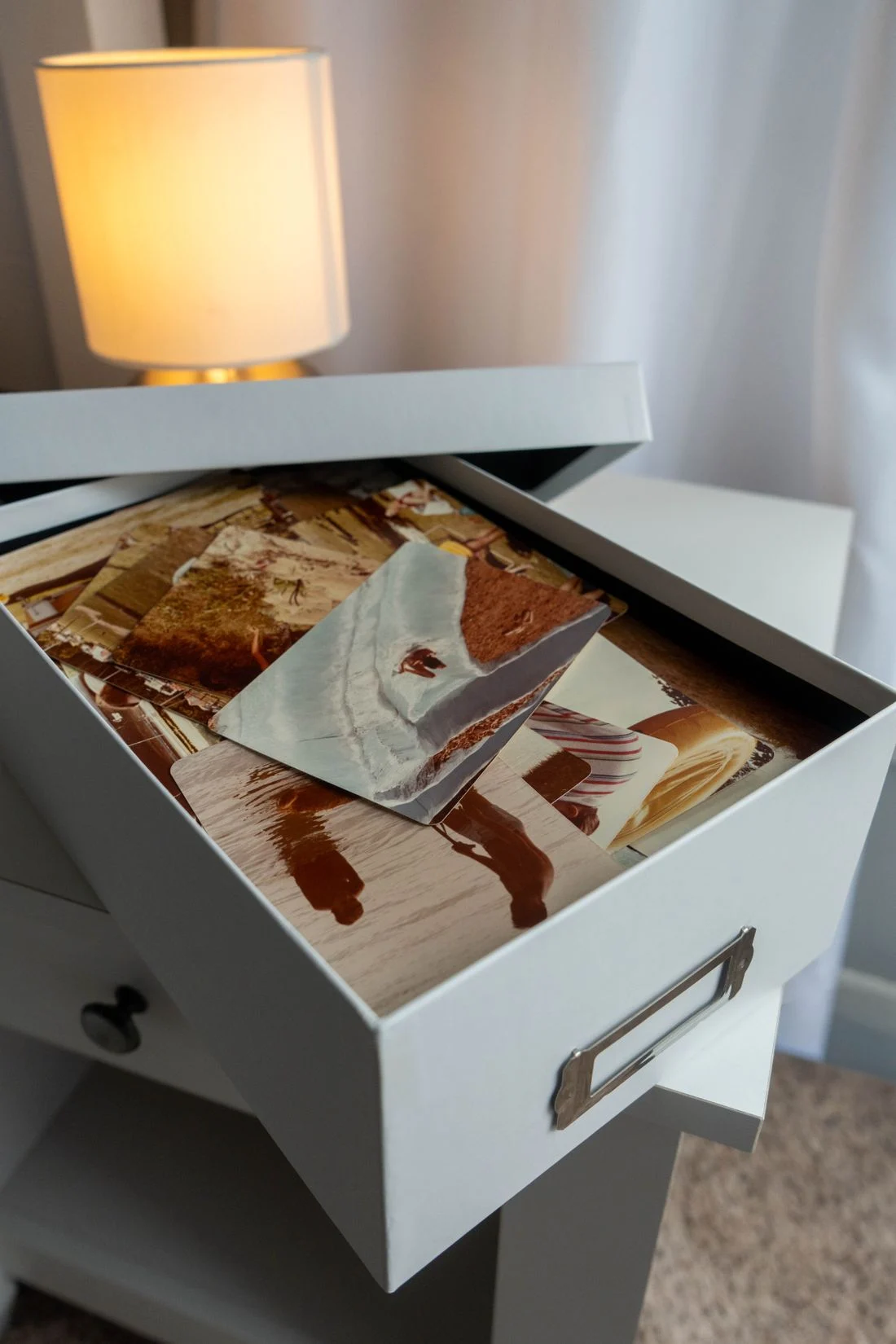
The Library of Congress recommends handling photographs by their edges or housing materials and avoiding adhesives, rubber bands, and paper clips directly on prints. Use photo-safe enclosures appropriate to the material. The Library notes that suitable photographic storage materials should meet relevant specifications, including the Photographic Activity Test; the word archival alone is not a complete description of suitability.
Do not force brittle prints into tight sleeves or try to peel apart stuck photographs as part of an organizing session. Fragile or damaged materials may need advice from a photograph conservator. Separate any object that could scratch, stain, or press against a print.
Record the missing context
Names, places, and approximate dates are often more useful than decorative labels. Write that information on a suitable enclosure or a separate index, rather than attaching sticky notes to photographs. If a date is uncertain, say so. Future readers should be able to distinguish a remembered fact from a guess.
Keep the index simple enough to maintain. A short list grouped by event can be more useful than numbering every item. If you create digital copies, use consistent filenames and keep backups appropriate to your needs. Scanning improves access but does not remove the need to care for originals you intend to keep.
Choose the box and its home together
A sturdy container should support the contents without bending them. Heavy objects should not sit on top of delicate paper. Separate compartments or smaller protective enclosures can keep unlike materials from rubbing together. Leave enough room to remove an item without pulling the entire collection out.
The Library of Congress advises avoiding storage locations with large environmental swings or a high risk of leaks. An attic, damp basement, or shelf beside a radiator is therefore a poor default for family photographs. A suitable interior storage area is often easier to check and access.
Keep the boundary kind but real
When the box fills, review the collection before buying a larger one. You may choose to create a second clearly defined period, keep fewer duplicates, or move objects into more appropriate storage. The goal is not to reduce a life to a prescribed number of keepsakes.
It is to make the things you keep accessible, protected, and understandable. A smaller collection with names and stories can communicate more than a larger box of objects whose significance has been forgotten.