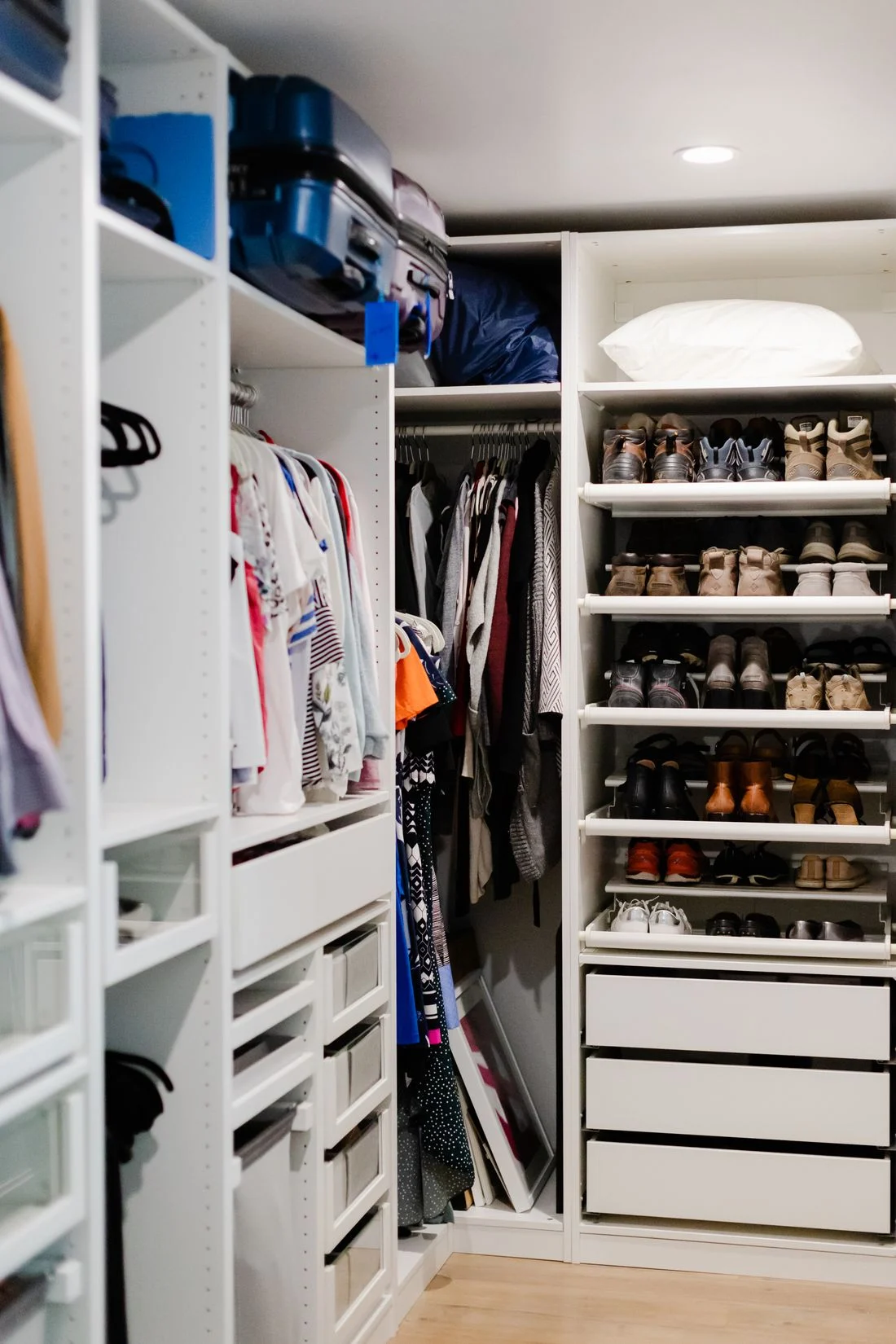
A shelf is a useful unit for decluttering because it has a visible boundary. You can empty it, make decisions, and put it back into use without turning the entire room into a sorting zone. Choose a shelf that causes a specific annoyance, such as hiding a needed item or spilling whenever you reach into it.
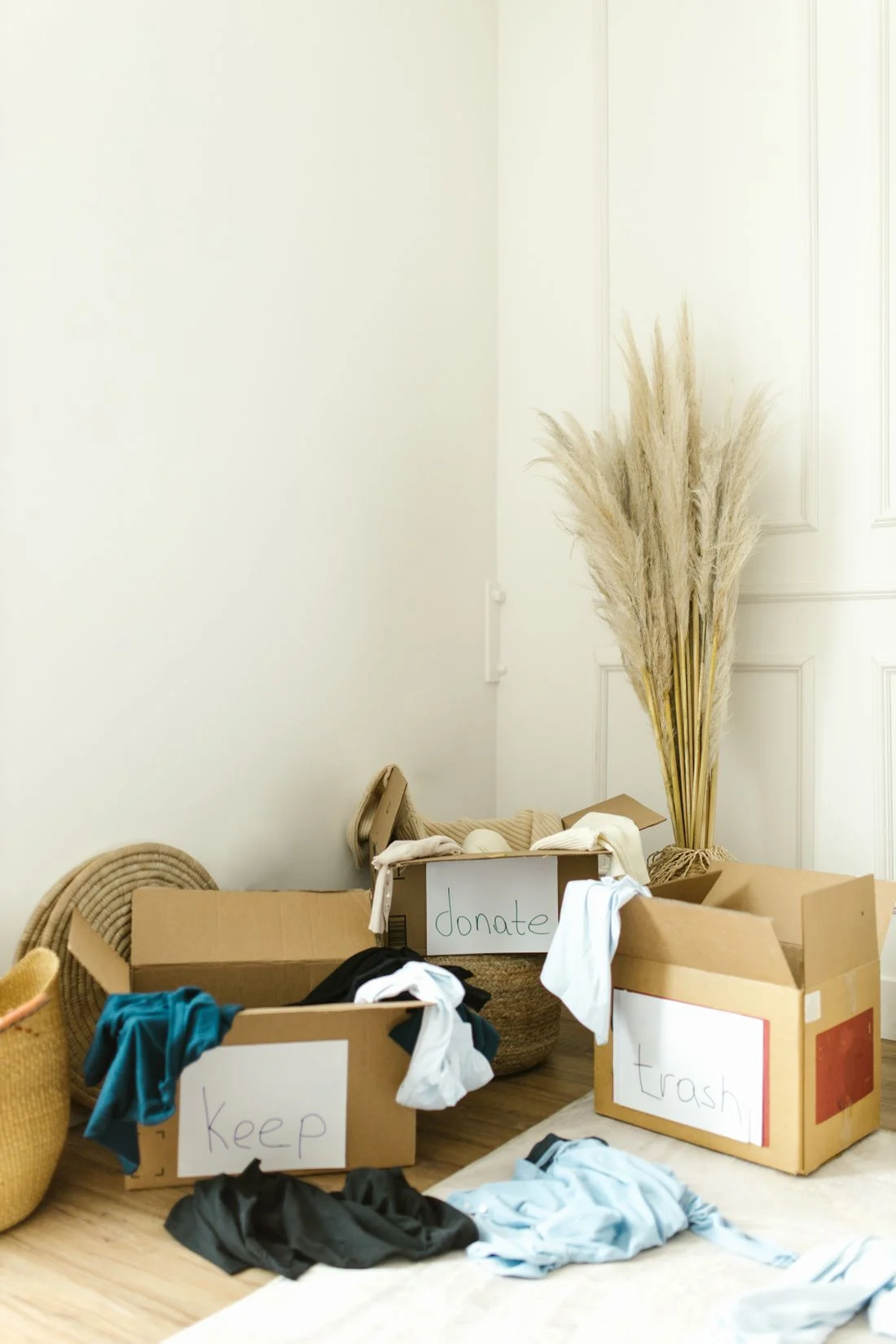
Clear a nearby working surface and prepare places for four outcomes: returning to this shelf, moving elsewhere, leaving the home, and requiring a decision. These can be ordinary boxes or bags. Their job is temporary containment, not a new permanent storage system.
Take everything off once
Removing the contents lets you see the real shelf dimensions and clean the surface. As you handle each object, ask whether this is the location where you expect to look for it. An item can be worth keeping and still belong somewhere else. Move those things out of the immediate work area so they do not drift back onto the shelf by default.
For duplicate items, compare actual use and condition. Keeping a spare can be reasonable if it has a clear purpose and space. Keeping several indistinguishable extras because they are already there makes the shelf harder to understand.
Put the useful objects back first
Return the items used most often while there is plenty of room. Give them positions that do not require moving a decorative object or an unrelated box. Group small pieces only when they genuinely belong together. Do not buy dividers until the remaining collection tells you what sizes are needed.
Leave the uncertain items outside the shelf in a small, dated review container. Set a realistic time to revisit them. This is a way to finish the current task without pretending every decision is easy, not an excuse to create an expanding pile of unresolved boxes.
Complete the exits
Take the move-elsewhere items to their destinations immediately. Arrange donation, recycling, or disposal according to what the objects are and what local services accept. Avoid leaving a donation bag in front of the shelf for months; that simply relocates the obstruction.
Finally, use the shelf normally. If putting things back still feels awkward, change the arrangement before starting another decluttering project. A finished shelf that stays useful provides more information than an entire room of half-sorted belongings.