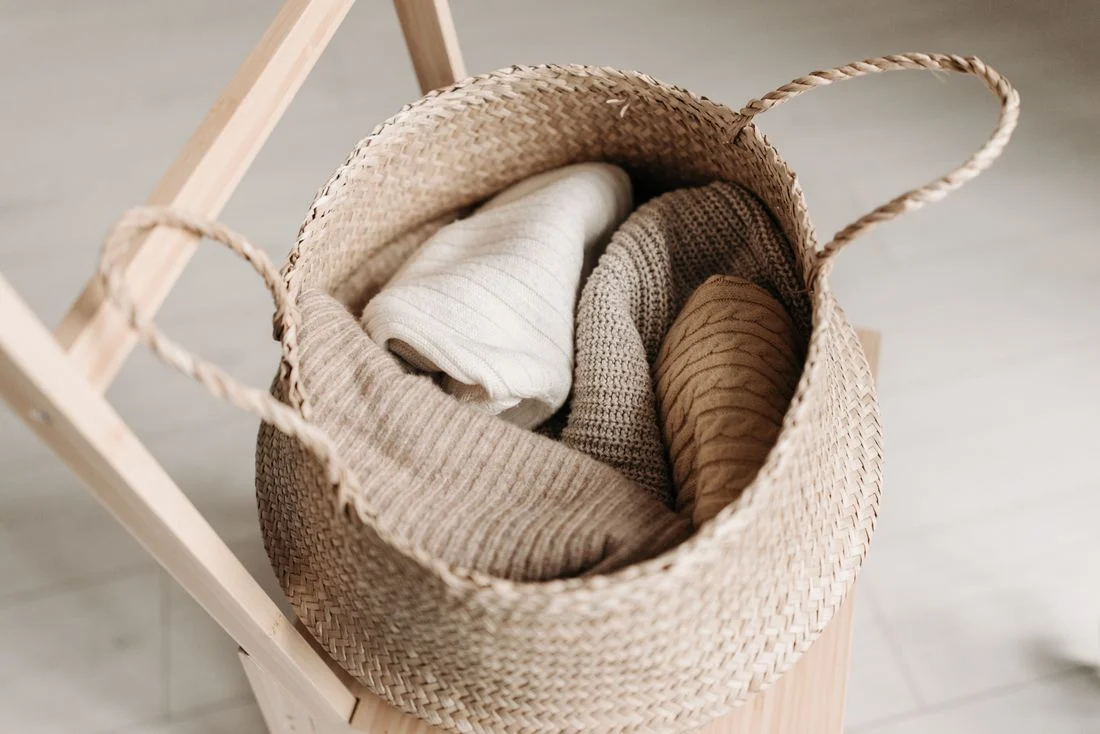
Seasonal storage is most helpful when it removes bulky items you truly will not use for a while. It is less useful when every mild-weather layer disappears in April and has to be retrieved during the next cool evening. Keep a small transition group available, and store only the clothing that changes how easily the current wardrobe works.
Sort by the next time you will need it
Separate deep-winter clothing from occasional formalwear and travel-specific items. They may all be infrequently worn, but they return to use for different reasons. A single oversized bag labeled seasonal forces you to unpack unrelated things whenever an invitation or trip appears.
Before packing, follow each garment's cleaning and drying instructions and check pockets. Set aside repairs so a loose button does not become next season's surprise. Do not use storage as a way to postpone deciding whether a garment still fits your life; a clearly labeled review bag is more honest than mixing uncertain pieces into the main collection.
Match the container to the shelf
Measure the storage space, including the opening through which the container must pass. Soft bags can use awkward gaps, while rigid boxes stack predictably within their rated limits. Handles should remain accessible after everything is in place. Two manageable bags often work better than one large, heavy parcel that must be dragged from an upper shelf.
Compression products are not equally suitable for every textile or construction. Check the garment and bag manufacturers' guidance before compressing bulky coats, delicate embellishments, or structured pieces. A flatter package is not an improvement if it creates difficult creases or distorts the item. Reserve enough space that the clothes do not have to be forced into the chosen container.
Leave a useful record
Label the visible side with a specific category and season: winter sweaters, rather than bedroom. Add a short inventory only when the contents are not obvious. The label should tell you whether opening the bag is worth the effort.
Store the containers in a clean, dry place with reasonably stable conditions, away from obvious leak risks. When the next swap arrives, bring one category out at a time and return its empty container to a designated spot. The goal is not a dramatic twice-yearly overhaul. It is a smaller, easier-to-use wardrobe supported by storage you can understand at a glance.