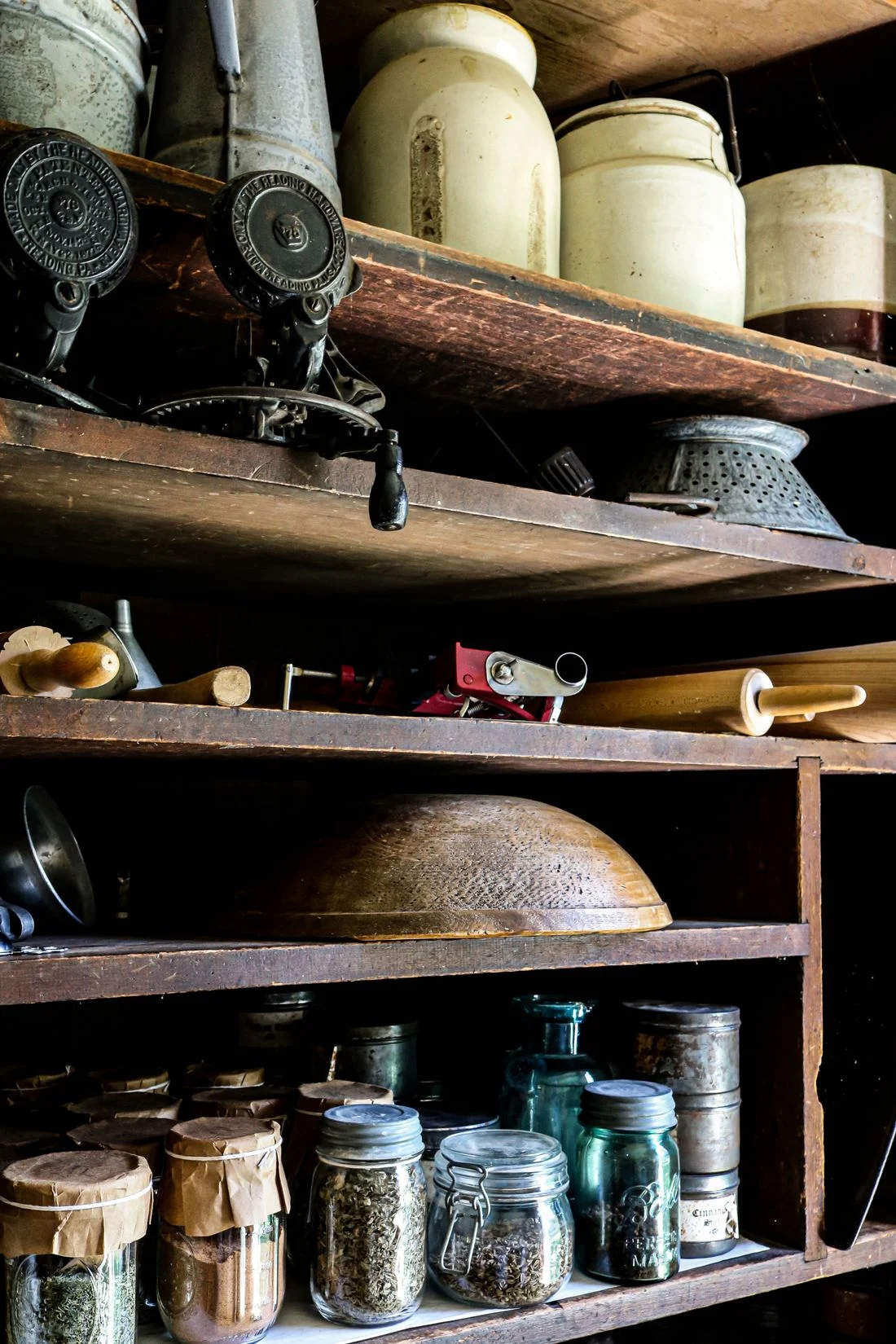
The spice you need is usually the one hidden behind a taller bottle. A useful spice shelf solves that visibility problem before it solves the question of matching containers. Empty the area, group what you use, and decide whether you normally read labels from the front, from above, or while holding the jar.
Let the viewing angle choose the label
Front-facing labels work on a shallow shelf. Lid labels help in a drawer or low pull-out bin. If jars sit above eye level, a tiny lid label is largely decorative. Test the layout with a few jars before labeling the entire collection.
Alphabetical order is helpful for a large collection if everyone follows it. A smaller collection may work better in groups such as everyday cooking, baking spices, and less-used blends. Do not mix several organizing systems on the same shelf without a visible boundary, or jars will drift into the nearest gap.
Compare the organizer's real footprint
A stepped riser makes rear labels visible but uses vertical space. Put a tall jar on the back step and check that it clears the shelf above. A turntable gives access from one side but needs clearance around its full circle, including projecting jar lids. In a narrow cupboard, a simple rectangular bin may use the footprint more efficiently.
Avoid stacking loose jars into a tower. A shelf that requires moving three containers to reach one discourages returning things to the same location. Keep the most frequently used spices in the easiest section and leave specialty items together elsewhere.
Preserve the original information
If you transfer spices, retain ingredient details and any relevant date or storage instructions. Blends can contain ingredients that are not obvious from a short name. Do not call an unfamiliar mix by a nickname that another cook cannot interpret.
Place the collection according to the products' storage guidance. A shelf immediately above a working stove may be convenient to reach but can expose containers to heat and cooking residue. A nearby cupboard often makes a more manageable home.
Review the collection while making a shopping list rather than buying replacements from memory. Put duplicates behind the active jar or in a clearly labeled reserve box. Once the shelf is readable, adding more containers is rarely the first improvement needed.