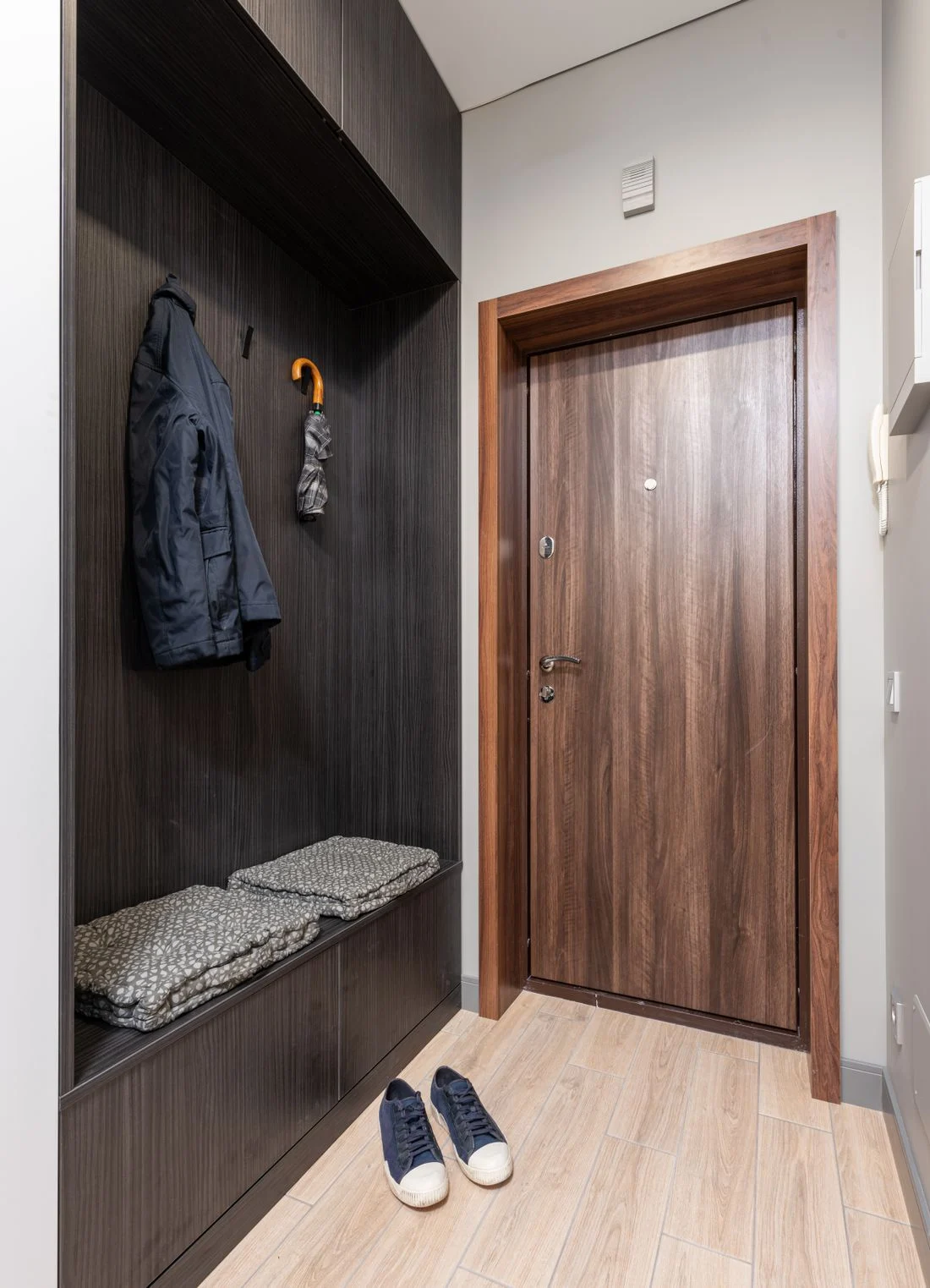
The entryway is a transition point, not a warehouse. It needs to absorb what comes through the door and help it move to the next place. When everything lands on one console, the surface quickly holds yesterday's mail, tomorrow's returns, wet umbrellas, and the keys needed right now. Separate those movements before choosing a piece of furniture.
Watch one ordinary arrival
Notice what you put down first. If you carry groceries, you may need a brief clear surface more than a decorative bowl. If you remove shoes immediately, a place to sit and a contained shoe area may matter most. Someone returning with a backpack needs a hook or shelf that can hold its usual weight without pulling the door area into disarray.
Make room for the door itself, including its handle and the person entering behind it. Tape out a proposed bench or cabinet on the floor, then walk through with bags in both hands. A shallow unit that leaves a clear path is usually more helpful than a deep console that offers extra storage at the expense of movement.
Give each object a short route
Keys and small daily items can share one shallow tray. Keep the tray small enough that unrelated objects cannot accumulate unnoticed. A deep decorative bowl tends to bury the item you need beneath receipts and spare change.
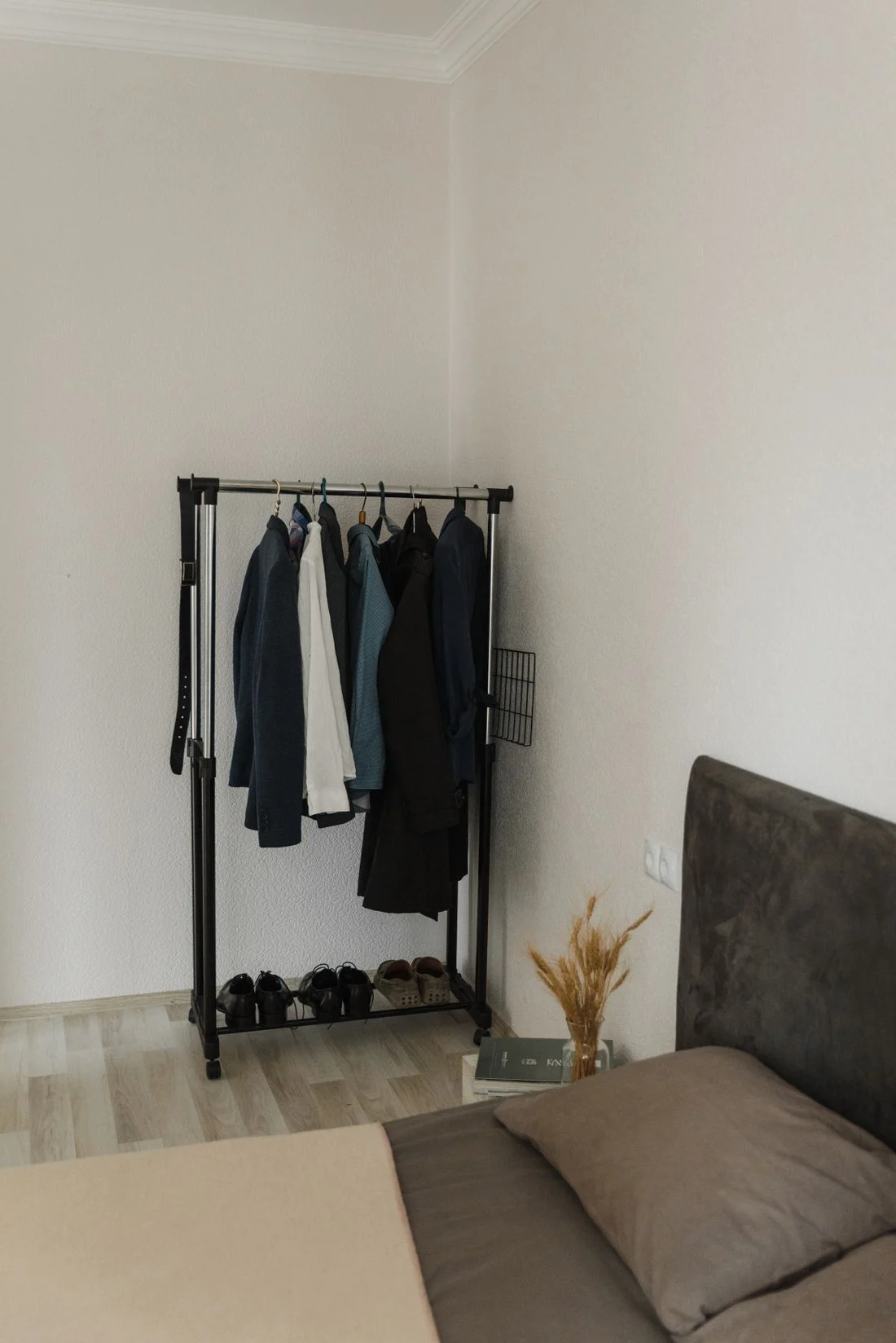
Coats need enough separation to hang without creating a dense bundle in front of the door. Assign hooks by person or by daily use, and move occasional outerwear to a closet. Install any wall storage using the manufacturer's specified hardware and appropriate support. Do not overload adhesive hooks with bags beyond their rating.
Incoming paper needs a different destination from personal belongings. A single slim inbox can hold items awaiting attention, but it should lead to a regular sorting routine. Once a paper has been dealt with, file it or dispose of it appropriately rather than returning it to the tray.
Allow a temporary outgoing spot
A library book, a parcel to return, or an item for a neighbor can sit in a small designated area near the exit. The point is visibility, not permanent storage. If outgoing things remain there for weeks, reduce the size of the zone and put a reminder in the system you already use.
Wet shoes and umbrellas need surfaces and containers suited to moisture. Keep them clear of rugs and materials that could be damaged, and allow them to dry before enclosing them. Avoid placing any container where it narrows the escape route or becomes easy to trip over.
Edit the display last
Once the arrival routine works, add a small decorative element only if there is room. A wall picture or mirror uses less landing space than several objects on the console. Leave the useful surface visibly available.
A successful entryway does not require every item to be concealed. It requires a clear distinction between what belongs there each day, what is passing through, and what should already have moved further into the home.