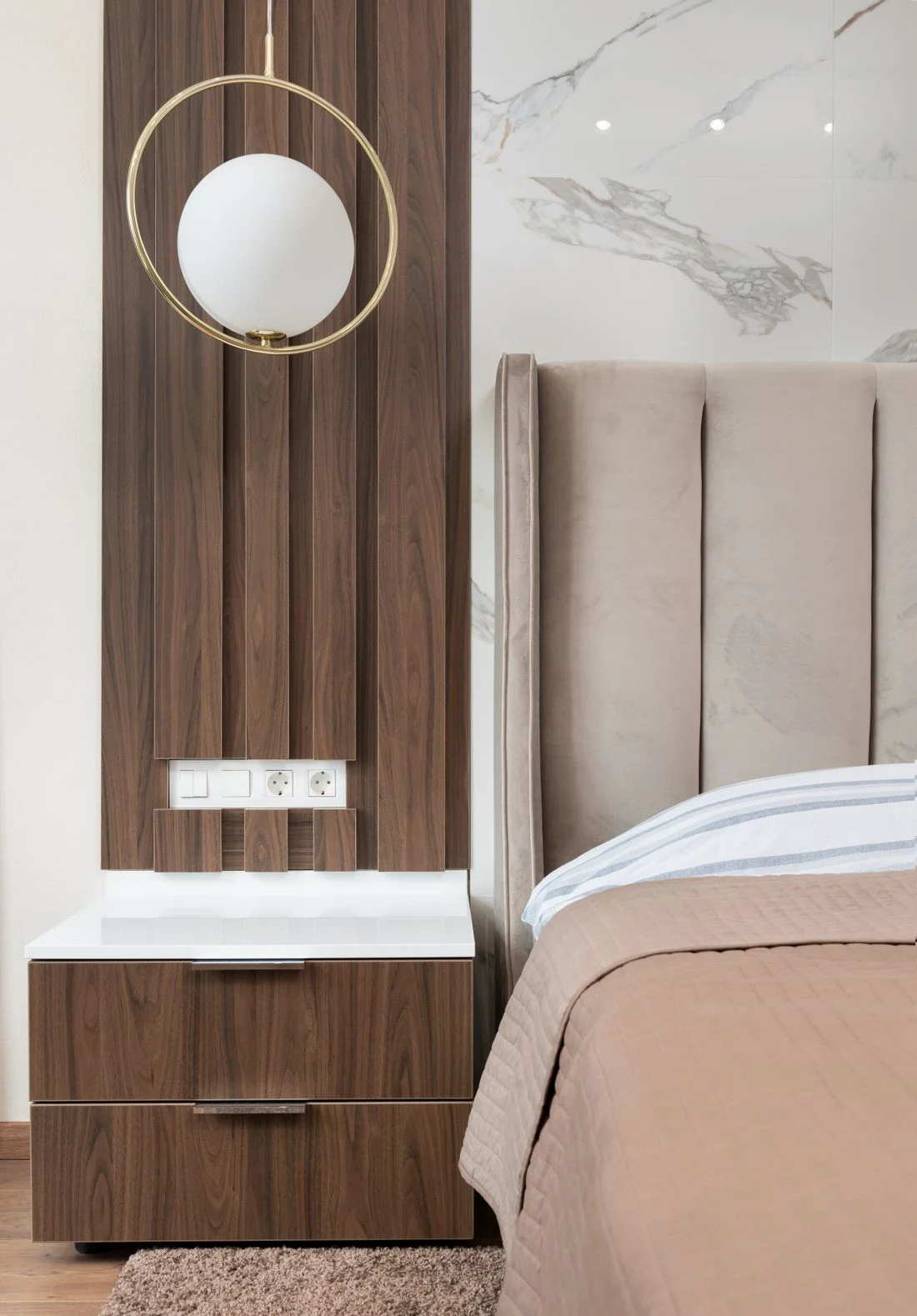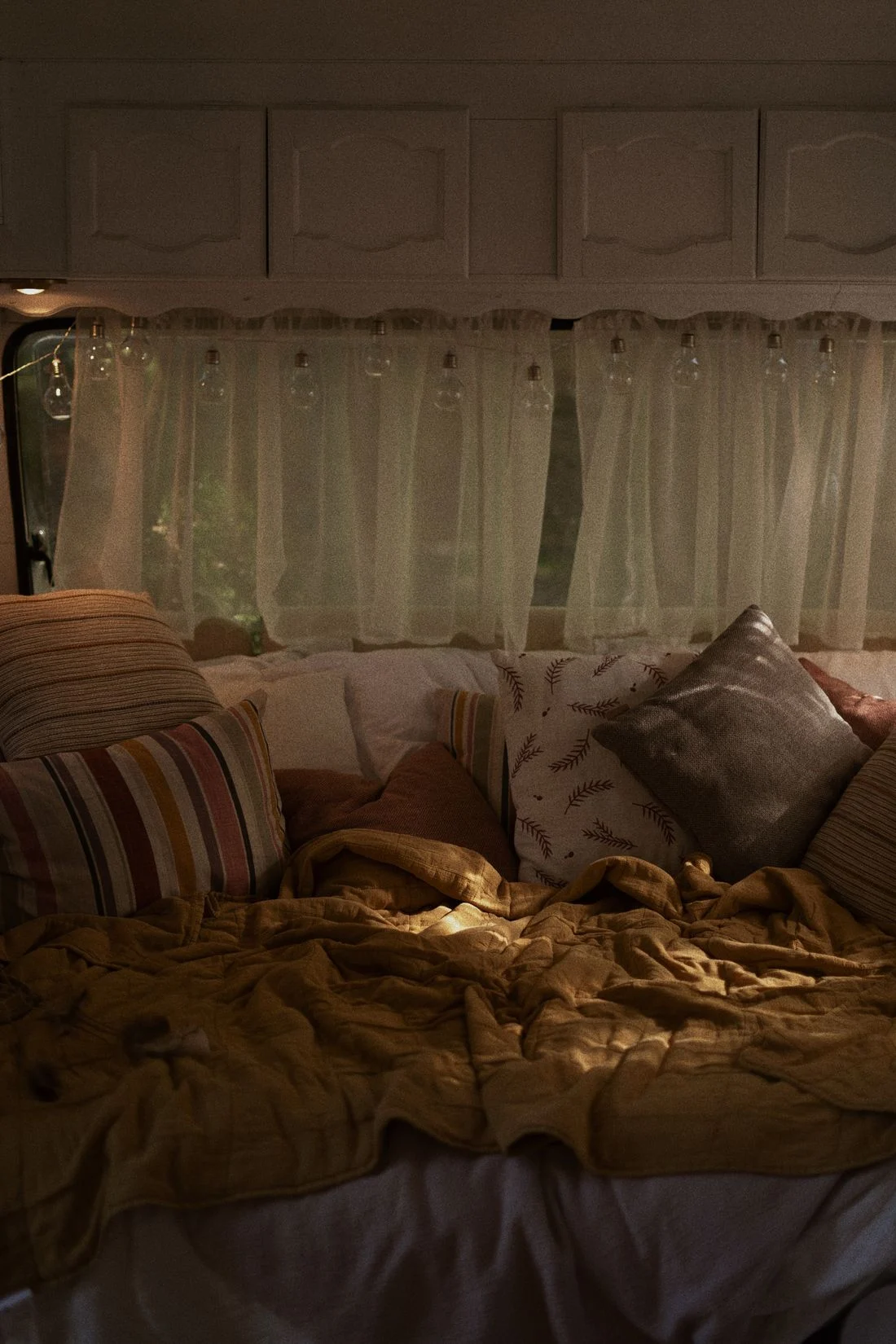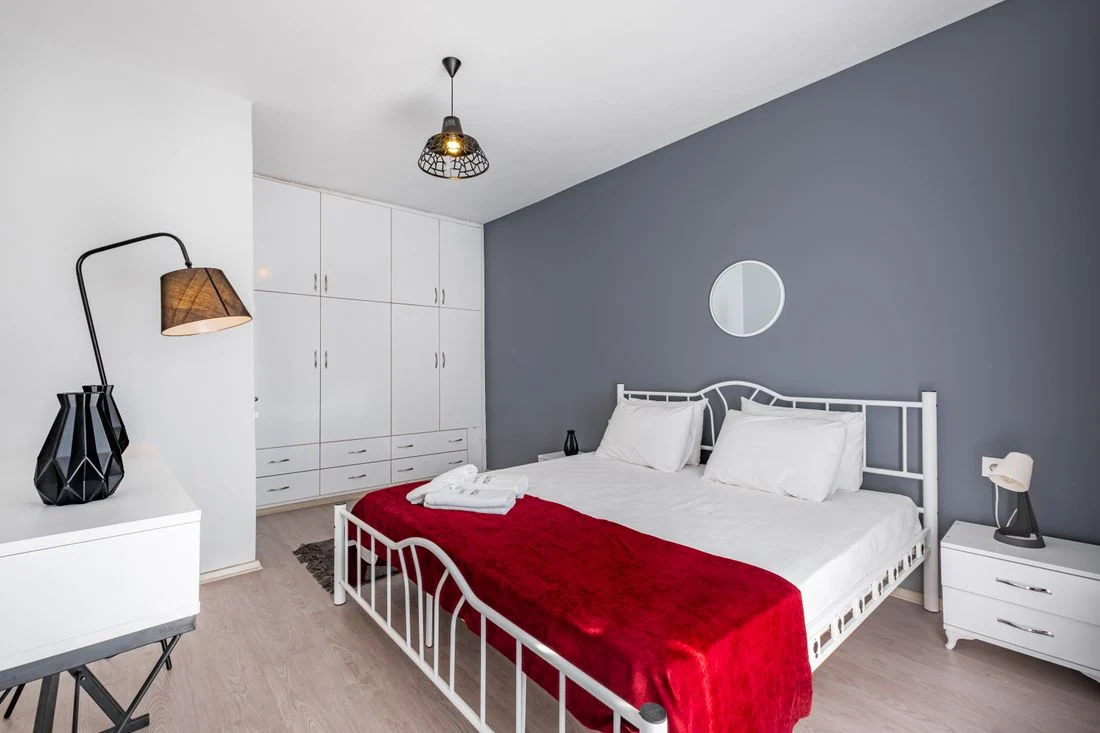
White walls and white bedding do not automatically create a flat room. The room can still contain clear edges, shadows, and tactile differences. Before adding a strong color, look at what is actually disappearing: the outline of the bed, the bedside furniture, or the entire wall behind them.
A photograph taken from the doorway can help you notice those relationships. It does not reproduce every color accurately, but it reveals whether the room reads as one pale rectangle or several distinct shapes. Choose one part of that composition to emphasize first.
Put a darker edge where it helps
A dark bedside table gives pale bedding a visible neighbor. A narrow picture frame can define artwork on a white wall without turning the wall into a large dark feature. If the bed itself lacks definition, a contrasting blanket folded across its lower portion may do more than several small accessories scattered around the room.
Try the item in place before repeating its color elsewhere. One burgundy blanket, for example, may already provide all the color the room needs. Repeating burgundy in every cushion, lamp, and picture can make the room feel more coordinated than comfortable.
Let texture work at close range
Smooth cotton, a woven basket, and a matte painted surface reflect light differently even when their colors are similar. These differences become visible through ordinary daylight and the shadows around folds or edges. Choose textures you like to use and maintain rather than adding rough surfaces solely for their appearance.
Large areas matter most. A textured coverlet changes more of the view than a tiny vase on a distant dresser. If you want the bedroom to stay predominantly white, that broad but subtle difference can provide enough interest without a new paint color.
Check the whites beside one another
A cool white sheet can make a cream upholstered headboard look more yellow. That does not mean either piece is wrong. Try a warmer blanket or natural wood nearby and see whether the combination becomes more deliberate. Examine samples in the room, with the lamps you actually use, before replacing a large item.
Leave some surfaces quiet. Contrast is easier to appreciate when it has an uncluttered background. Once the bed has a clear shape and the pieces beside it are visible, an empty patch of wall or a plain bedside surface can be part of the finished arrangement.