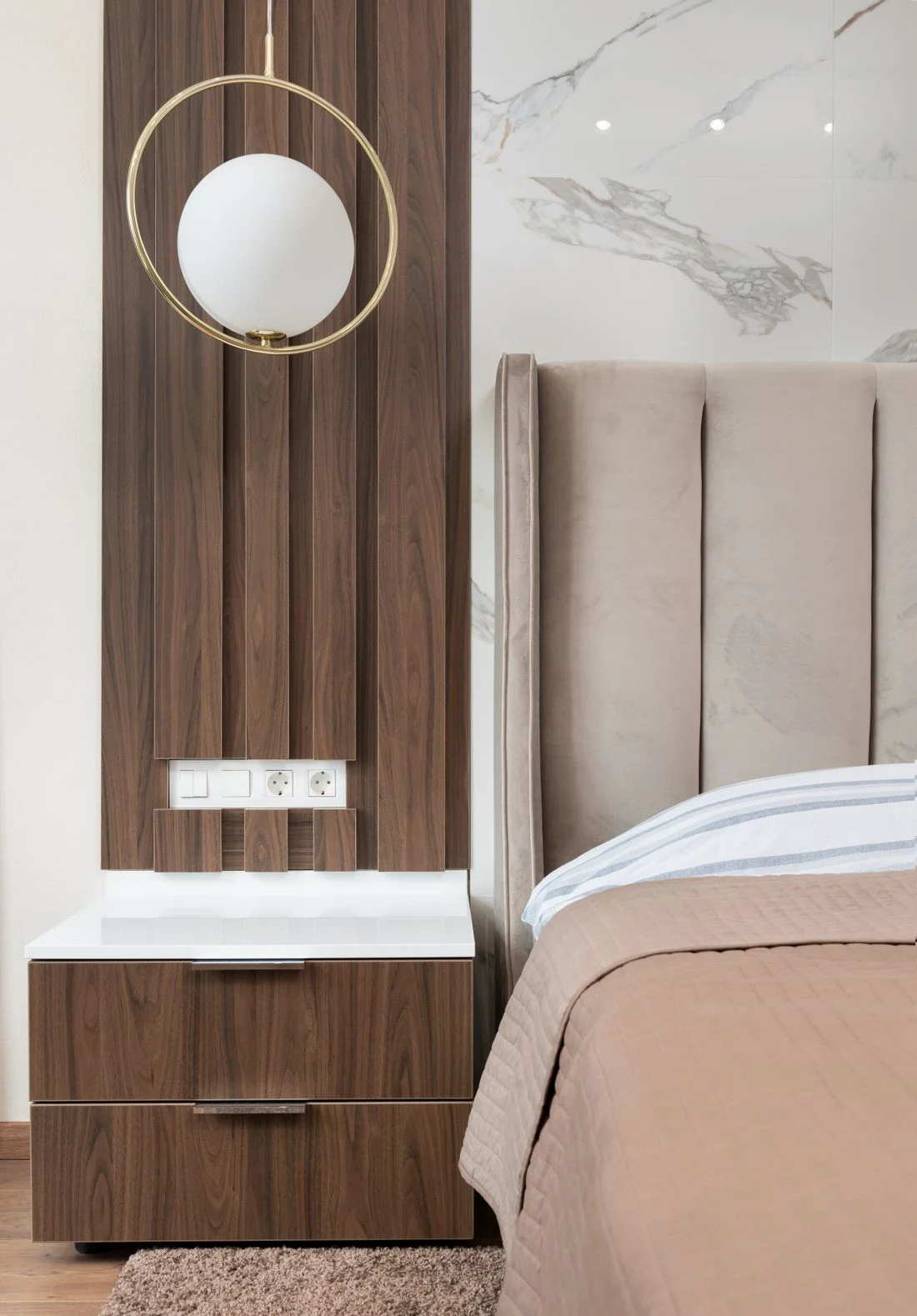
Mattress dimensions are not bed-frame dimensions. A padded headboard, a broad side rail, or a projecting footboard can make the complete bed noticeably larger than the sleeping surface. When a bedroom is tight, those extra inches determine whether a drawer opens and whether the route past the bed feels usable.
Collect the complete frame's width, length, and height from the manufacturer. Look for a dimension drawing rather than relying on the product name or mattress size. Ask for missing measurements before ordering, particularly if the frame has wings, storage drawers, or legs that project beyond the rails.
Draw the room as it is used
Measure the room and mark doorways, closet openings, windows, fixed heaters, and existing furniture. Include door swings and drawer extension. A plan that shows only closed cabinets overstates the free space available during an ordinary morning.
Use tape or paper to outline the proposed bed on the floor. Keep the material appropriate for the floor finish and remove it as directed. Walk around the outline, reach into the closet, and open the dresser. This mock-up is more informative than measuring a single gap from a wall.
Consider an illustrative room that is 120 inches wide and a frame that is 66 inches wide. Centering the frame leaves 54 inches in total, or 27 inches on each side, before bedside furniture or other projections. That arithmetic describes the particular plan; it is not a recommended clearance or an accessibility standard.
Length needs a separate check. If the room is 132 inches long and the complete frame is 88 inches long, there are 44 inches left beyond the bed. A dresser 18 inches deep reduces that to 26 inches before its drawers open. The bed might fit on paper while the dresser becomes difficult to use. Changing the frame shape or furniture position can be more effective than forcing the arrangement.
Storage beds need operating space
A drawer beneath the bed requires room for its full extension and for the person using it. Check whether a bedside table blocks the first drawer. A drawer that opens only after furniture is moved offers occasional storage, even if the product description presents it as everyday convenience.
A lifting platform has different requirements. Follow the manufacturer's instructions for the mattress weight, lifting mechanism, assembly, and clear space. Do not assume every mattress works with every mechanism. Consider whether bedding or a nearby wall fixture would interfere with the intended movement.
Under-bed clearance also matters for ordinary cleaning. If your vacuum attachment cannot reach beneath the frame, decide how you will clean that space before buying. A low frame may still be your preferred choice, but its appearance comes with a maintenance arrangement.
Check the route into the room
Delivery access is a different measurement problem from room fit. Review package sizes and the dimensions of any large assembled sections. Measure stair turns, doorways, and other narrow points along the actual route, following the seller's delivery requirements. A removable headboard may help, but verify what can really be disassembled rather than assuming it.
Finally, compare the assembled bed height with the mattress included. Sitting down, standing up, and reaching a bedside surface are affected by that combined height. If anyone needs mobility accommodations, plan around their actual needs and suitable professional guidance. Choose the frame after these everyday movements work, then consider the fabric, color, and decorative details.