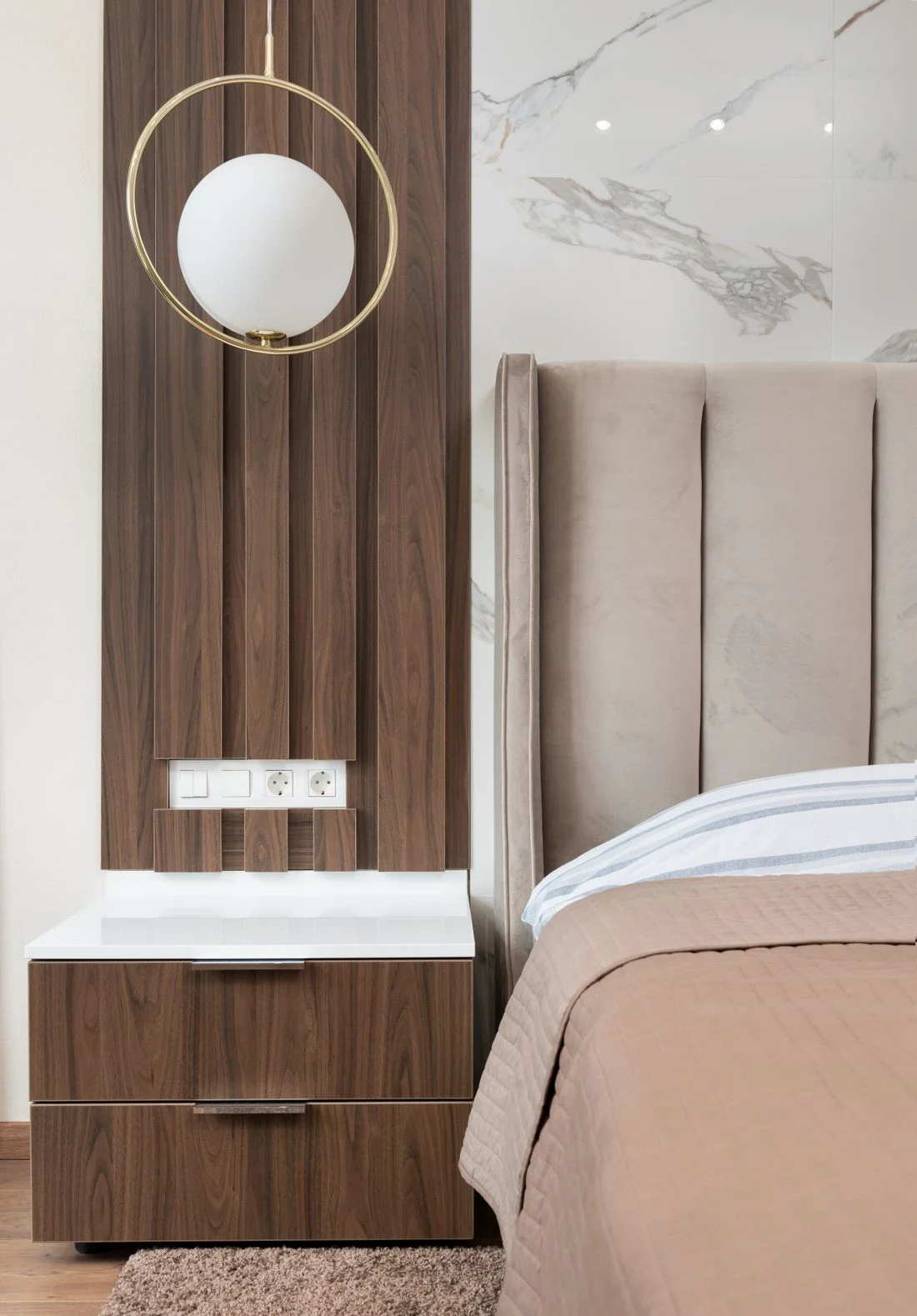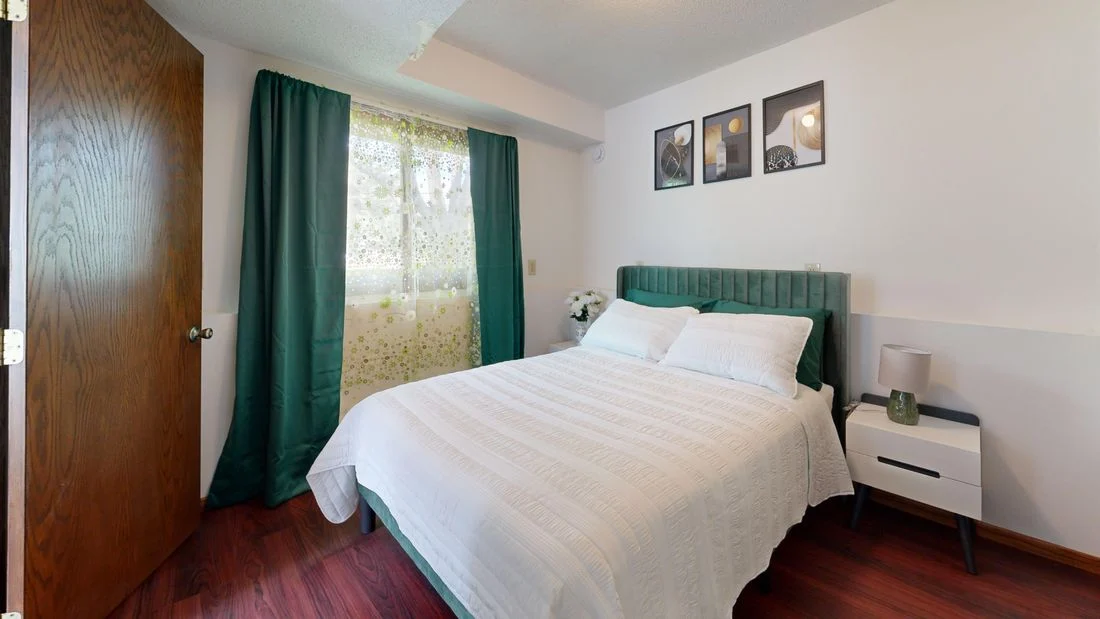
A headboard is often the largest vertical furniture surface in a bedroom. Its height can frame the bed, compete with a window, or leave an unexpectedly large gap beneath artwork. Decide how it should occupy the wall before choosing a fabric or decorative shape.
Measure the whole composition
Mark the mattress width, the frame width, and the proposed headboard width separately. Some headboards extend beyond the bed, while others follow it closely. Include nearby outlets, switches, windows, and bedside tables in the drawing.
Use paper or removable tape to mock up the height. Look at the outline with pillows in place, because a low headboard may largely disappear behind them. A very tall version can be striking, but it may crowd a modest room or overlap trim you want to keep visible.
Decide what the material contributes
Upholstery can provide a softer surface to lean against, depending on its construction. Wood or metal offers a different visual character and may need pillows for comfortable reading. Consider the actual activity rather than choosing solely from a product image.
Read the care instructions for the specific finish or fabric. A pale textured surface beside hair products or frequently handled bedding may need more attention than expected. Removable-looking covers are not necessarily designed to be taken off and washed.
Work with the wall rather than hiding it
If the bed sits under a window, avoid treating the headboard as a way to conceal an awkward opening. Preserve window operation and required access. A lower profile may suit the position better, or the bed may need a different wall.
A headboard does not require artwork above it. If its shape and texture already establish the focal point, leaving the upper wall quiet can be enough. If you add a picture, relate its size and position to both the bed and the remaining wall space, using secure installation appropriate to the item.
Check how the headboard attaches before ordering. Freestanding, frame-mounted, and wall-mounted designs have different requirements. Follow the manufacturer's compatibility and installation guidance. A well-proportioned headboard should belong physically and visually to the bed, not merely look attractive while leaning against the wall.