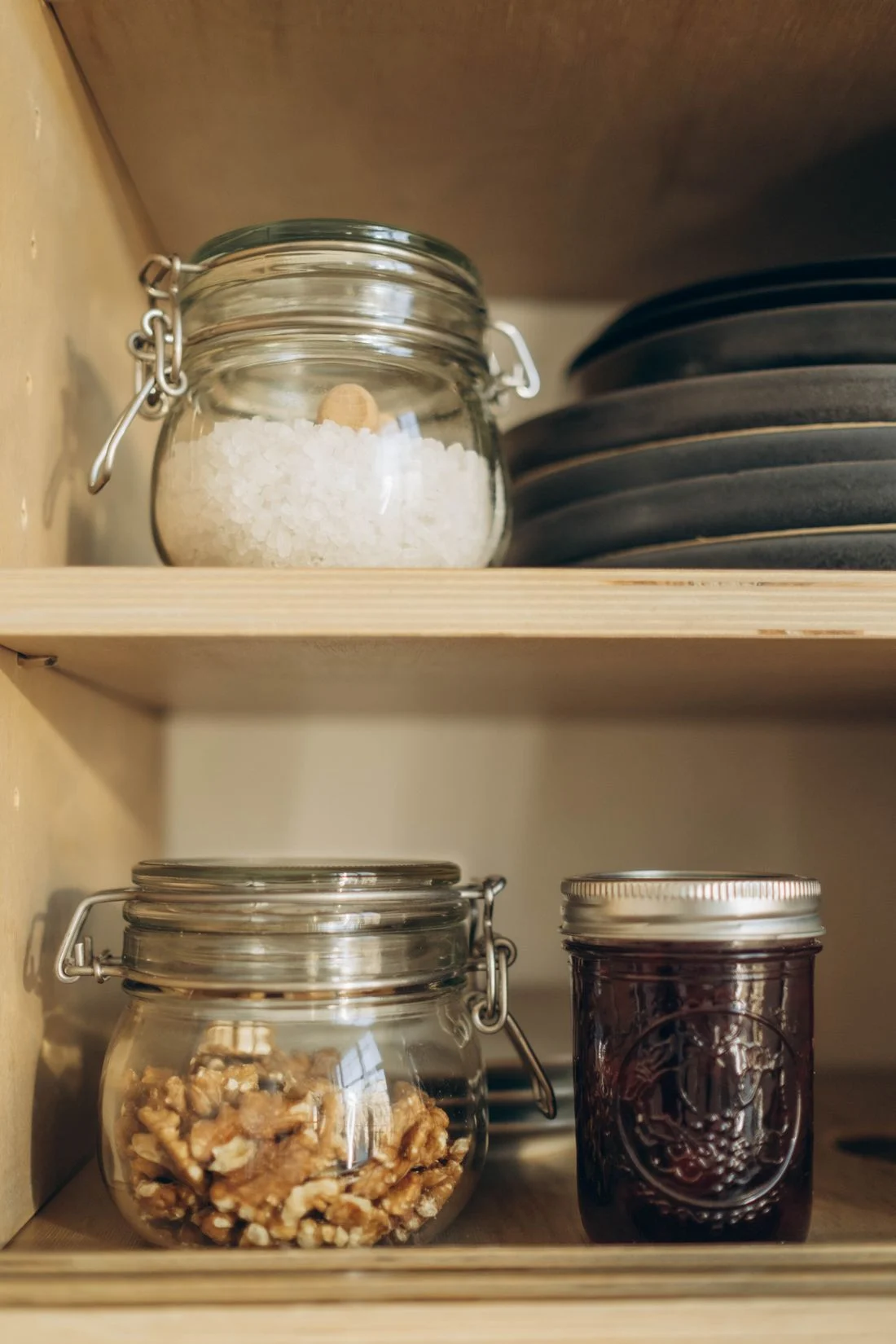
A container can hold the advertised volume and still be inconvenient in the pantry. Its lid may hit the shelf above, a measuring cup may not fit through the opening, or the final portion of a large bag may not fit after the first refill. Choosing sizes individually often avoids the leftovers created by a uniform set.
Begin with the shopping unit
Write down the normal package size for the ingredient you want to store. Treat that as a starting point rather than a direct conversion. Dry ingredients have different densities and shapes, so a pound of one food can occupy a different volume from a pound of another. Container manufacturers sometimes provide ingredient-specific examples; check what those examples actually refer to.
Allow room to work inside the jar. If you scoop flour, you need clearance for the measuring cup and your hand, not just space for the food. If you pour rice, a narrower opening may be comfortable. A tall, thin jar can suit long pasta but be difficult to clean with your available tools.
Measure the usable shelf
Note the height below the shelf above, the depth before the door closes, and any hinges or shelf supports. A round jar may waste less usable space than a square one if the latter collides with a hinge. Measure the lid's widest point and the handle if it has one.
Check how the jar opens. Some lids lift straight off; others hinge backward and need extra room. A container that fits only when closed is suitable for a pull-out shelf or countertop, but inconvenient beneath a fixed shelf if every use requires wrestling it out.
Consider full weight
A large glass container of dry food may be heavier than expected. Keep it at a manageable lifting height and avoid placing it where a slippery grip would mean a long drop. Smaller containers may be more comfortable for everyday handling, even if the reserve package stays elsewhere.
Buy one test container before committing to a group. Fill it with the actual ingredient, label it clearly, and try the normal cooking motion. Can you grip it with one hand? Does the seal close without excessive force? Can you see when it needs refilling?
Once one size works, repeat it only for ingredients with similar needs. A pantry with three carefully chosen sizes is often easier to use than a perfectly matched row whose tallest jars are half empty and shortest ones overflow.