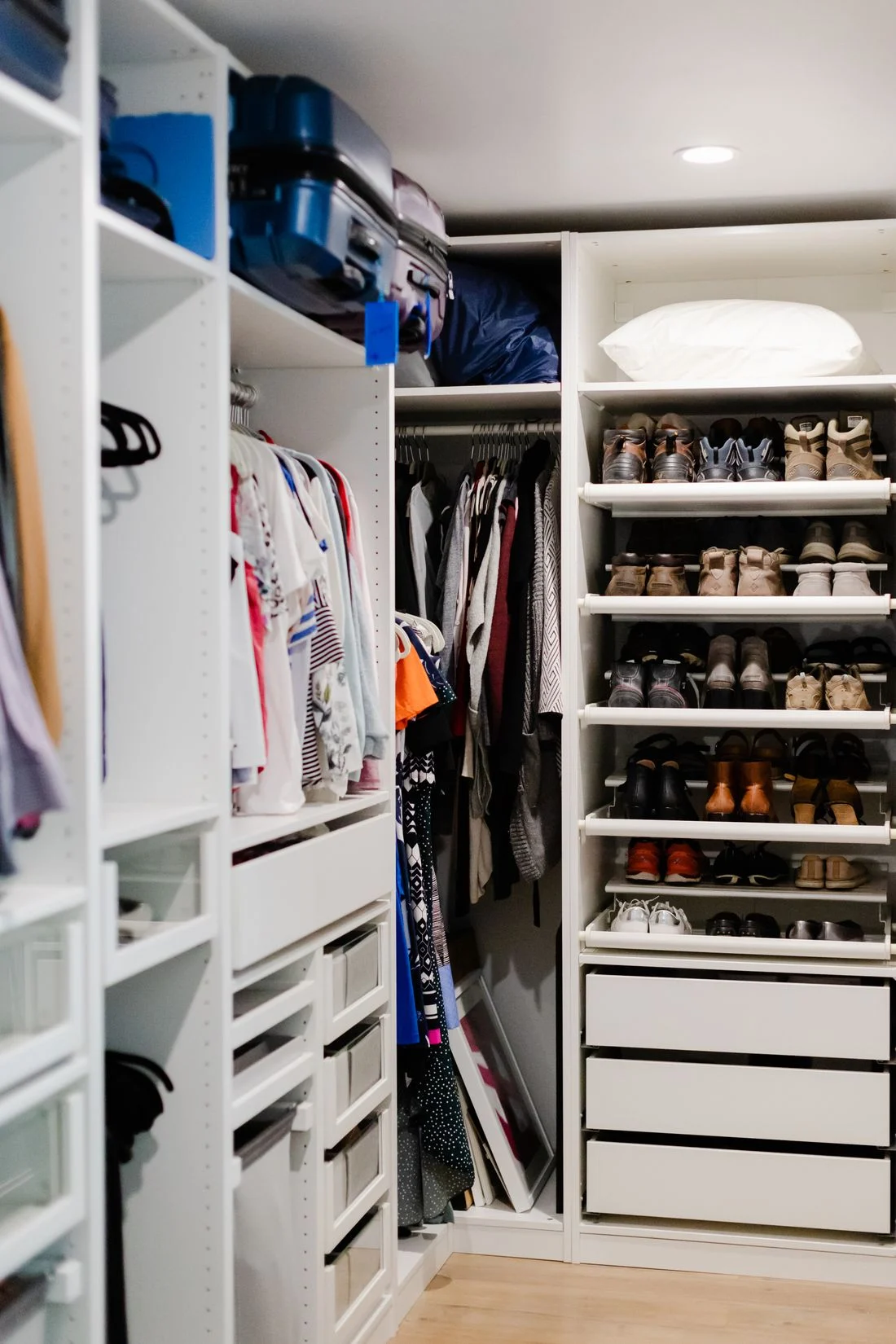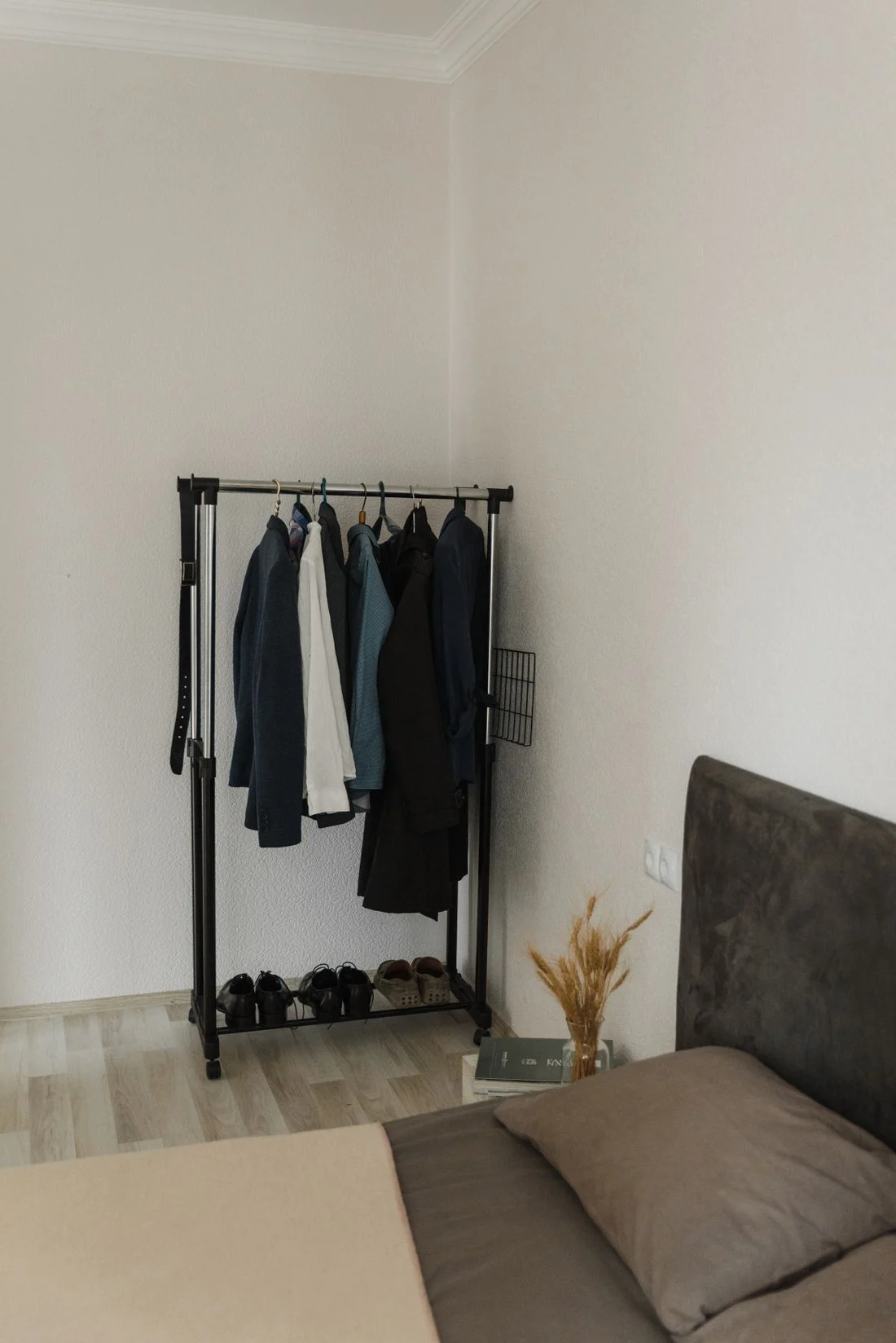
Splitting a closet exactly down the middle sounds fair until one person has long dresses and the other mostly folded T-shirts. Equal width does not always provide equal usefulness. A better starting point is to count the kinds of storage each person needs: full-length hanging, short hanging, shelves, drawers, and shoes.
Sketch the closet and assign those functions before assigning ownership. A long hanging bay might belong mostly to one person, while the other uses more shelves. What matters is that both people can put away their ordinary wardrobe without borrowing an unspoken corner of the other's space.
Make daily access part of the agreement
Look at who uses the closet when. If mornings overlap, avoid putting both people's essentials behind the same sliding door. Keeping each daily outfit within a single accessible zone reduces the need to step around one another. Occasional coats can occupy a less convenient shared section.
Divide shelves with a removable separator or different baskets if the boundary is otherwise unclear. Labels can be discreet and descriptive: knitwear, workout clothes, or spare linens. A personal shelf is often easier to maintain than several tiny containers with rules nobody remembers.
Decide what is actually shared
Suitcases, spare bedding, and garment-care supplies can quietly consume a wardrobe. Give shared belongings a named zone and agree on its capacity. If a new blanket goes there, it should not simply displace someone else's clean clothes. Keep a small space for items temporarily in transit, such as dry cleaning that needs to be collected or a borrowed garment awaiting return.
Empty hangers deserve their own shared spot. Otherwise they scatter along the rail and make available space difficult to judge. A single basket for accessories can also work if everyone knows what belongs in it; a miscellaneous basket that swallows unrelated belongings usually causes arguments rather than solving them.
Review after living with it
Try the arrangement through at least one laundry cycle before buying permanent dividers or additional furniture. Notice who must move another person's items to reach their own. Adjust that point first.
A shared closet does not need identical wardrobes or identical habits. It needs boundaries that are easy to recognize and a way to renegotiate them as seasons, jobs, or clothing needs change. Leave a little unclaimed room if possible so the first new jacket does not trigger a complete reorganization.