A room described as bright can still contain a dim plant corner. Your eyes adjust as you move around, and the light at a shelf several feet from the window may be quite different from the light on the sill. Choosing a houseplant starts with the exact location, not with the room's general atmosphere.
Before shopping, pick two or three possible positions and observe them through a normal day. Note direct sun on the leaves' future position, nearby buildings or trees, curtains, and how far the spot is from the glass. Repeat the observation if the weather has been unusually cloudy or bright.
Describe the site in ordinary detail
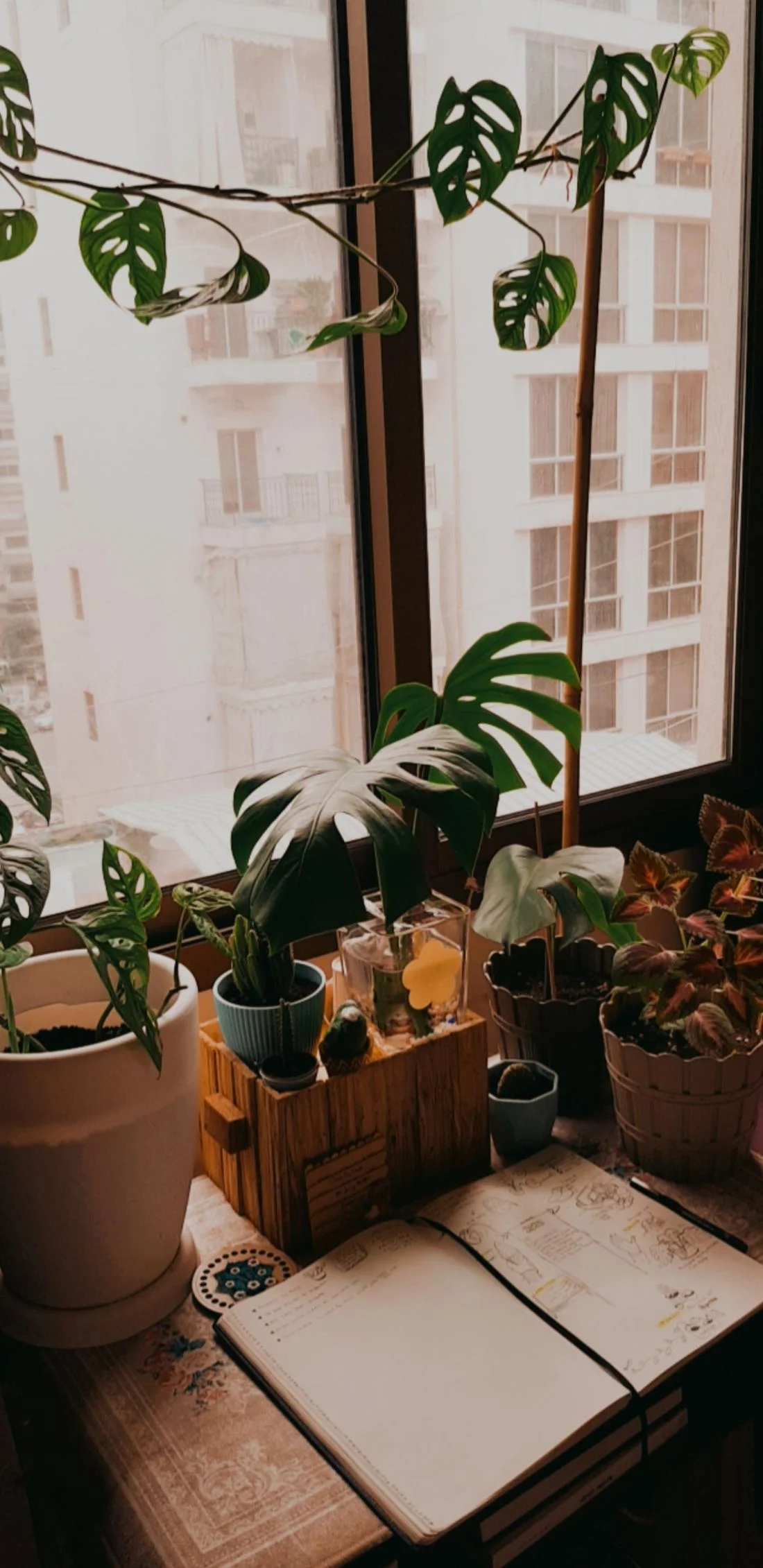
Instead of writing bright living room, note something like east-facing window, morning sun on the sill, sheer curtain usually closed, plant three feet to the side. That description helps a nursery or extension resource guide you toward suitable choices. Window direction alone is not enough when another building or a deep porch blocks much of the light.
Seasonal changes matter as well. A spot that receives generous summer light may be shaded for much of winter. Think about whether you are willing to move the plant or provide suitable supplemental lighting. If not, choose for the conditions it will experience across the year rather than its best month.
Match the plant before matching the pot
University of Minnesota Extension emphasizes selecting plants for the available light. It also notes that plants in lower light generally grow more slowly and use less water. A label that says low light does not mean no light, and it does not mean the plant should be watered as often as a sunlit neighbor.
Ask about the mature size, not just the size on the sales bench. A plant that eventually spreads across a window may obstruct the curtain or make the corner hard to use. Check whether the plant is appropriate for your household, including children or pets, using a reliable plant-specific source before bringing it home.
The decorative pot comes after these decisions. A beautiful vessel cannot compensate for an unsuitable location. If the corner needs visual height but lacks suitable light, consider a lamp or another object there and place the living plant where it can grow.
Test the room's everyday operation
Open and close the curtains, use the nearby chair, and reach for the window handle. Leaves should not be crushed by these ordinary actions. Check heating and cooling outlets too; do not tuck a plant into a spot simply because it conceals a vent.
For a windowsill, confirm that the container sits securely with enough support. For a stand, follow the stand's load and placement guidance, including the filled pot's weight. A narrow decorative pedestal may look good in a photograph but be unsuitable for a broad plant near a busy route.
Observe after the move
Once the plant is in place, give yourself a simple record: location, date, and the care guidance for that species. Notice changes rather than moving it every few days in response to appearance alone. If growth or leaf condition concerns you, use a plant-specific extension resource or qualified nursery for diagnosis instead of assuming every yellow leaf means the same thing.
You can still compose the room around the plant. Repeat its pot color elsewhere, give its outline a quiet background, and leave it enough space to grow. The difference is that the decorative decisions now follow a workable growing position, which makes the arrangement more likely to remain enjoyable.