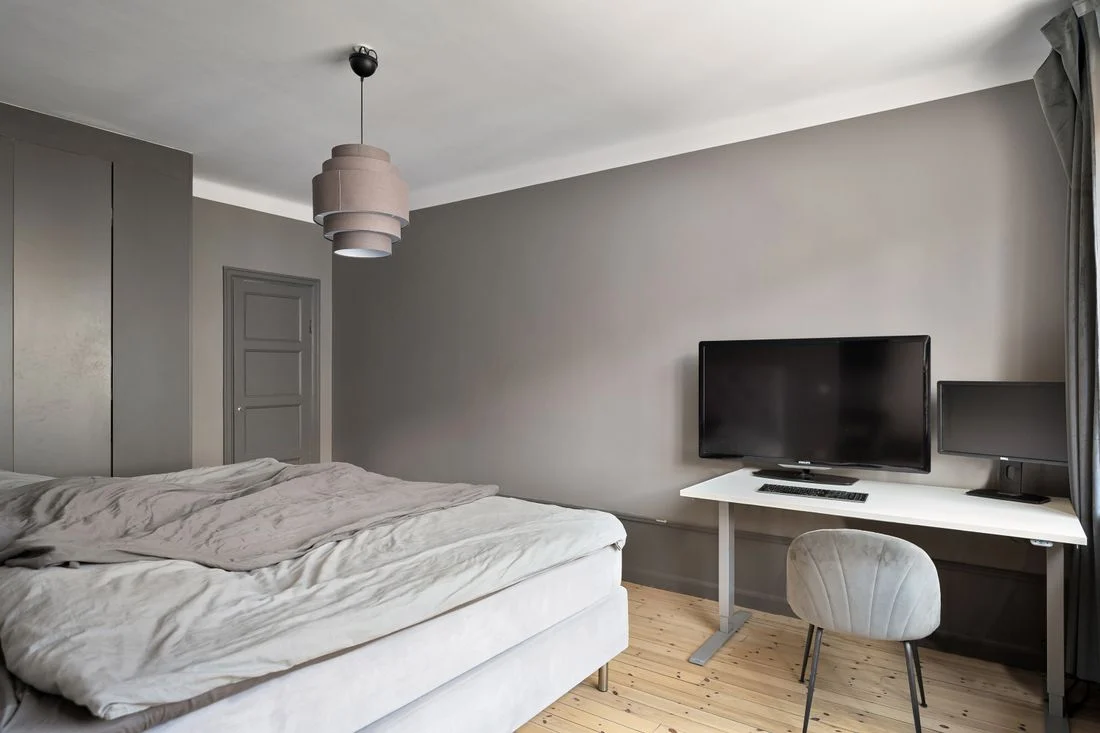
A bedroom desk has two different states: occupied during work and quiet afterward. Designing only for the first state can leave the room dominated by screens, paperwork, and a chair pulled into the path to the bed. Designing only for the photograph can produce a desk that is uncomfortable to use.
Start with the work you actually do there. A laptop used for occasional messages needs a different arrangement from a desktop monitor, keyboard, and several reference books. Measure that working setup before selecting a narrow console and calling it a desk.
Protect the route around the bed
Mark the desk footprint and place a chair in its working position. Open nearby drawers and doors while someone is seated. A desk tucked into a corner can still obstruct the room if the chair occupies its only clear walking route.
Keep the bedside table available for bedtime belongings. Once work papers and charging accessories spread across it, the two activities become harder to separate. Give work items a defined shelf, drawer, or portable box within reach of the desk instead.
Arrange the view, not just the furniture
Look at the screen in daylight and after dark. A window reflected in it can be distracting, while a bright window directly behind it can also make the view uncomfortable. Test a different angle or the existing window treatment before deciding that the desk must face a particular wall.
Set up the chair and equipment for the person using them, following relevant product guidance. If the desk will be used for long periods, its working comfort deserves more consideration than whether it visually disappears. A surface that is too shallow for the necessary equipment is not improved by a more decorative chair.
Make closing down a short sequence
At the end of work, return loose papers to one place and put small accessories into their designated container. Shut down or put away equipment as appropriate. If a monitor stays visible, a tidy surrounding surface can make it less dominant without covering ventilation or introducing a complicated daily rearrangement.
Choose storage you can reach while seated and close without moving the chair across the room. A drawer or cabinet may create a clearer visual boundary than several open organizers. Use what is already available before adding a large unit that reduces the space around the bed.
The room does not have to hide every trace of work. It needs a workable transition between activities. If the desk is ready for the next morning and the bedroom's ordinary surfaces and paths are clear, the arrangement is doing its job.