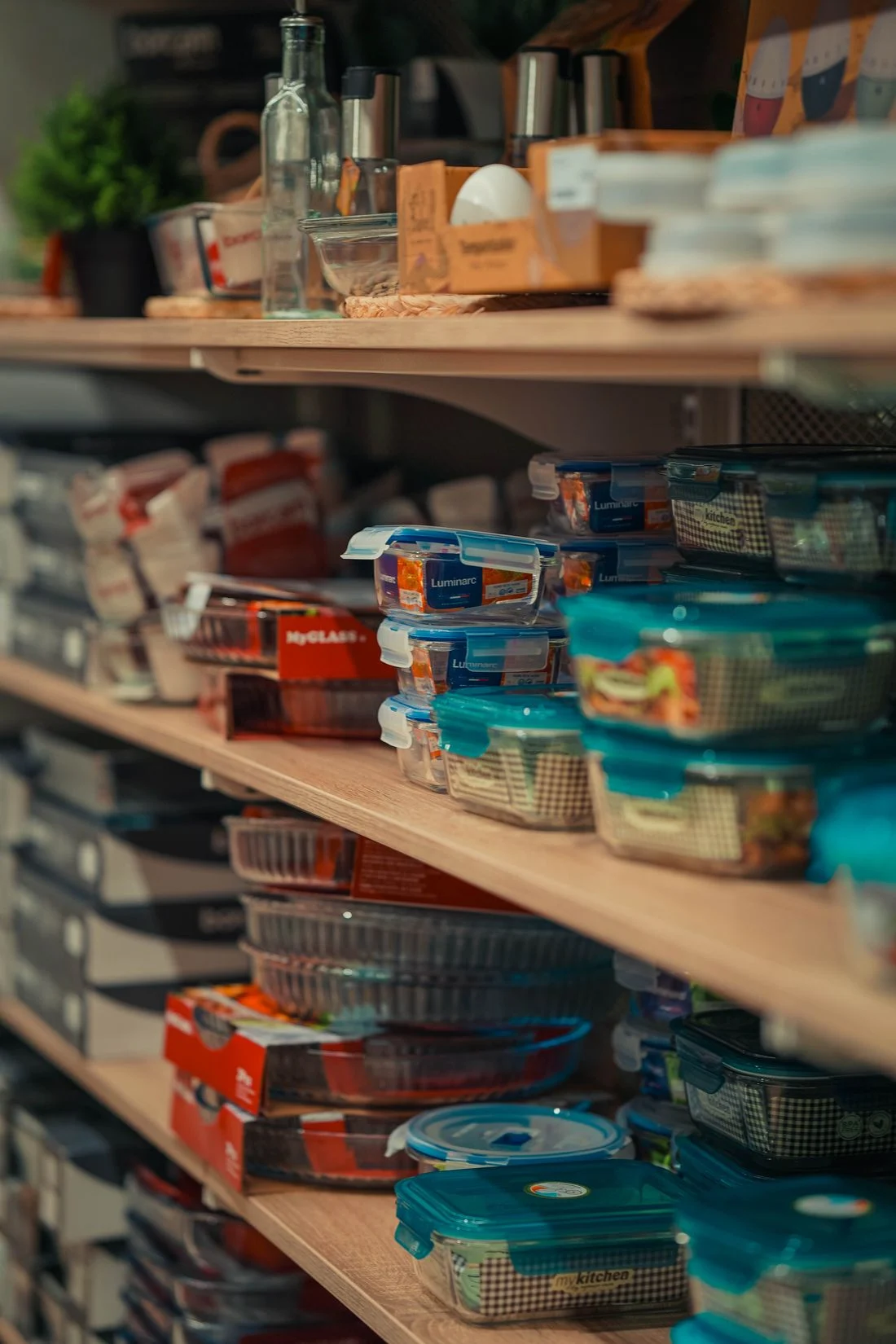
Backstock becomes a problem when it looks exactly like the ingredients available for tonight's meal. Three unopened pasta boxes occupy the front of the shelf while the open one disappears behind them. A separate reserve area can make the pantry easier to use without requiring a second cupboard.
Define active and reserve
The active package is the one currently being used. A reserve package is an unopened replacement. Keep these together in a front-to-back arrangement when the shelf is shallow enough to see both. On deep shelves, use a clearly marked bin or a neighboring shelf section for reserves.
Avoid putting active items in two places. If one person starts a second package because the first was hidden, the system needs a clearer boundary. A small label on the reserve section can be enough; the entire pantry does not need elaborate signage.
Buy for the available space
Measure reserve capacity in the packages you actually purchase. A single shelf section may hold several cans but only one large paper-towel pack; not every bulk purchase belongs in the pantry. Keep household chemicals elsewhere, separate from food, as FDA storage guidance recommends.
Before replenishing, check what remains and whether the product is being used at the expected rate. A discount does not create storage space. If an ingredient regularly sits untouched, reducing its reserve quantity may solve more than another basket would.
Make the refill moment do the checking
When the active package empties, move one replacement forward and add the item to the shopping list only if another reserve is actually needed. Look at date information and package condition while doing this. Do not rely on a memory of what was there several weeks ago.
For decanted ingredients, keep the reserve bag identifiable. Preserve the original label and instructions, and avoid combining an endless succession of refills without knowing which contents are older. A small reserve bin is especially helpful when the last part of a bag will not fit into the main container.
Leave room for irregular meals
A pantry also needs to accommodate ingredients bought for a particular recipe. Give these temporary items a visible spot rather than pushing them behind the reserve stock. After cooking, decide whether the remainder belongs in a normal category or needs a planned use soon.
The backstock area should make the shopping list more accurate and the active shelves easier to navigate. If it becomes a hidden second pantry, shrink the categories and improve visibility before expanding it.