A container garden is easier to care for when its layout includes the watering routine. The route from the faucet, the space to set down a can, and access to each pot all influence whether the work feels simple or becomes something you postpone. Plan those details alongside the attractive view from the patio chair.
Walk the route with the empty can first, then with a manageable amount of water. Notice thresholds, narrow gaps, steps, and furniture that must be moved. A shorter route is useful, but a clear stable route matters more than saving a few feet.
Keep each pot inspectable
You need access to the growing medium, not only the leaves. A tall container behind three smaller ones may be difficult to check without leaning across them. Arrange frequently checked pots near the front of a group and leave enough room to reach the others without lifting heavy containers each time.
Use labels or a short note to distinguish plants with different needs. University of Maryland Extension recommends checking moisture rather than watering containers by a fixed calendar. A hot exposed pot and a sheltered one may behave differently even when they look similar, so a single lap around the patio does not mean every plant receives the same amount.
Give drainage somewhere appropriate to go
Check the container's drainage design and how excess water affects the surface below. Keep runoff away from the main walking route and manage it so it does not inconvenience neighbors or damage building materials. On a balcony, follow the building's requirements rather than letting water escape over the edge.
If you use saucers, inspect and manage collected water according to the plant's needs. A saucer hidden behind foliage can conceal a problem. Choose an arrangement that lets you see what is happening and lift or empty components safely.
Match the equipment to the layout
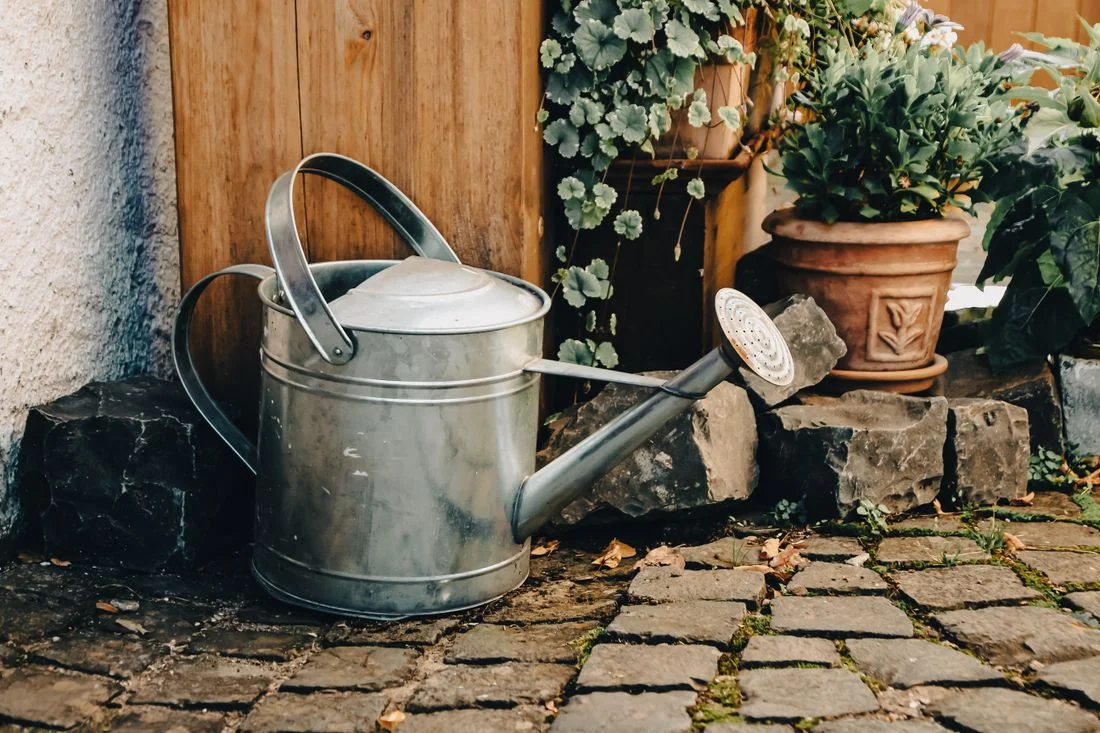
A narrow spout can reach between leaves in a close group. A suitable hose may help with a larger patio, but it needs storage that does not leave a trip hazard across the floor. Select equipment for the available water source and follow its connection and use instructions.
Keep a small clear landing area for the can, gloves, or a removed inner pot. It does not have to be a dedicated potting bench. A stable surface suitable for the load and moisture can make routine jobs easier, while a decorative stool with an uncertain capacity may create more problems than it solves.
Adjust as the plants grow
Leaves can close gaps that were generous at the start of the season. Recheck access after growth spurts and after rearranging furniture for visitors. Move pots before the layout becomes difficult rather than accepting an awkward reach as part of gardening.
A useful garden layout leaves some space unplanted. That space is doing work: allowing you to inspect, water, clean, and enjoy the collection. Protecting it can improve plant care more than adding another container.