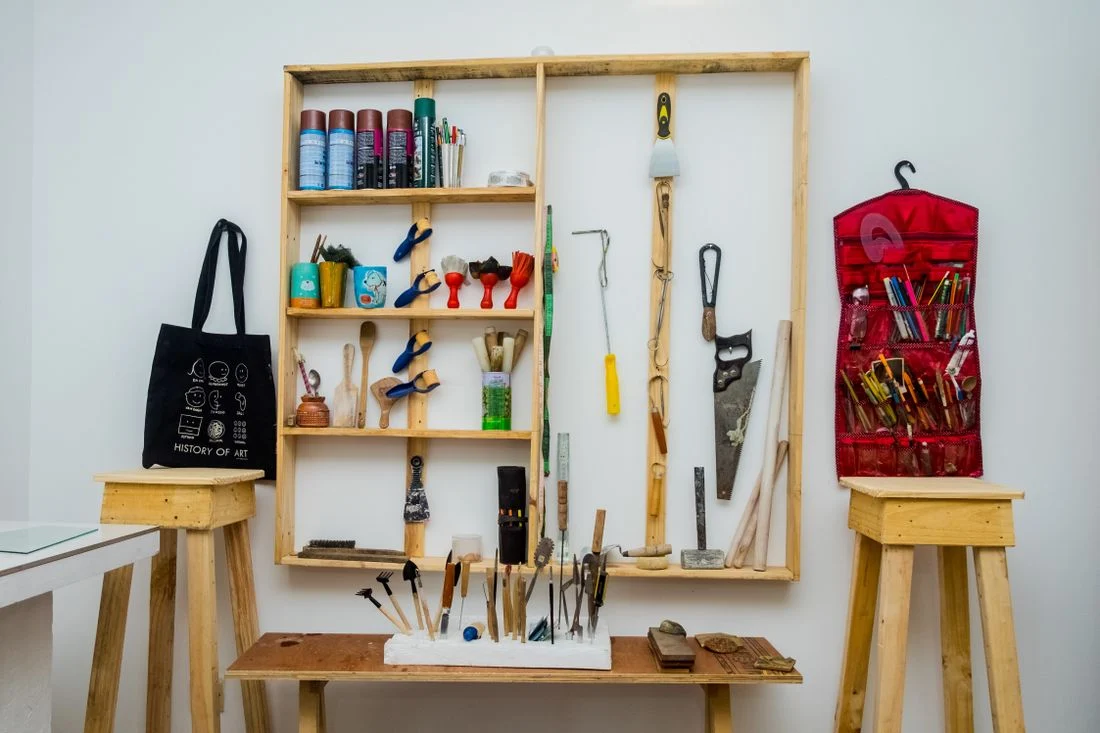
A household tool collection often grows one small purchase at a time. A screwdriver goes into a kitchen drawer, a tape measure lives in a moving box, and spare hardware collects in several unmarked bags. Bringing the basic tools together can reduce repeated searching without turning a spare room into a workshop.
Build around common jobs
Gather the tools you already use for ordinary household tasks and compare duplicates. Keep the versions that are comfortable to handle and appropriate for their purpose. This is an organization exercise, not a reason to attempt electrical, structural, or other work beyond your skills. Store equipment for professional or occasional jobs separately if it is rarely needed.
A small toolbox or a defined shelf can hold the daily collection. Choose an opening that lets you see the tools without emptying everything onto the floor. Long handles and awkward shapes often work better in a divided tray than in a deep, tightly packed box.
Give small hardware specific names
Keep screws, anchors, and fittings in their original labeled packaging when that preserves useful size and application information. A mixed jar may be compact but makes it difficult to identify the right part. For leftover fittings from furniture, label a bag with the furniture name and keep any relevant assembly instructions accessible.
Do not label unknown hardware as universal. If you cannot identify what a fixing is designed to support, appearance alone is not enough to choose it for a new installation. Separate uncertain pieces until they can be identified or appropriately discarded.
Make storage safe to reach
Sharp blades, loose points, and heavy tools need suitable covers or compartments. Keep the collection securely away from children and pets. An open wall display may suit a dedicated adult workspace, but the same arrangement can be inappropriate in a family hallway.
Place heavy tools low enough to lift comfortably and follow the shelf or cabinet's load limits. Cords should be stored without tight damaging bends, and batteries or powered equipment should follow their manufacturer's storage instructions. Paints, solvents, and other chemicals require their own label-directed storage rather than sharing an arbitrary decorative box.
Include the return step
Leave a visible place for the tool currently missing from the set. That might be an empty compartment rather than an elaborate outline on the wall. After a task, return the tool and its accessories together so the next person does not discover that the essential bit is elsewhere.
Review the collection when a new project ends. Keeping leftover materials can be useful, but only when their purpose and storage needs remain clear. The aim is a reliable place for ordinary tools, not a growing archive of unidentified project fragments.