Some people remember an author's name; others remember the subject or the color of a cover. A home bookshelf can accommodate those habits without copying a library classification system. The useful question is whether you can find a particular book when you want it.
Begin with broad groups that reflect the collection: novels, cookbooks, travel, reference, or children's books. Within a large group, alphabetical order by author may help. Within a small group, keeping related books together can be enough. Avoid arranging everything by color if it makes a familiar title harder to locate.
Keep the spines readable
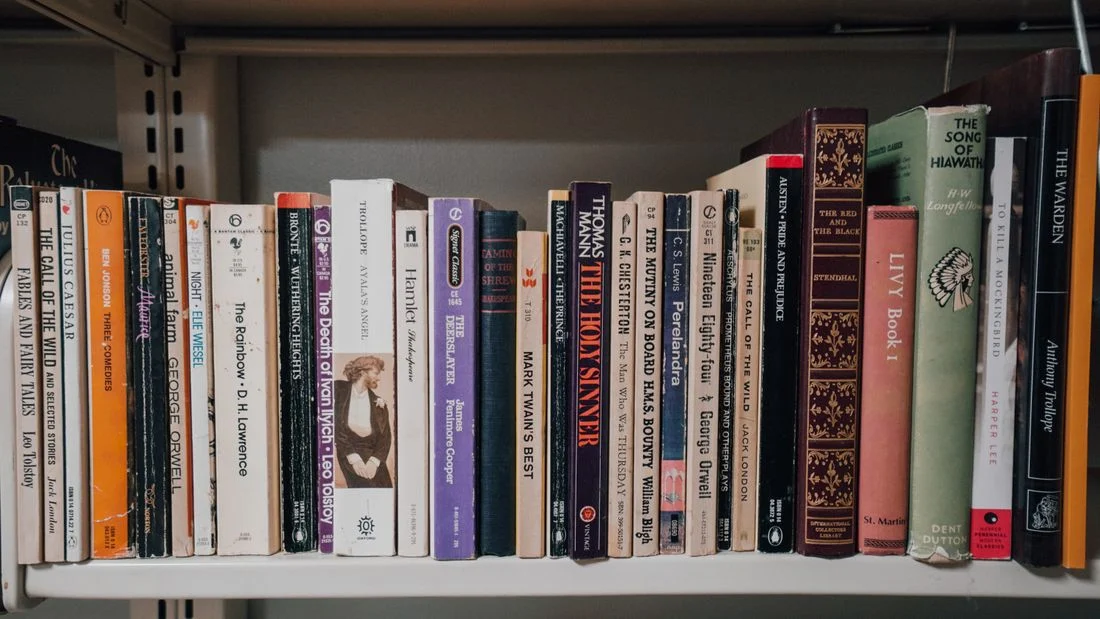
Face books outward so their titles can be scanned. Decorative backward-facing arrangements hide useful information. A small stack can hold a few oversized volumes, but a book you consult frequently should not be trapped beneath several others and a vase.
The Library of Congress recommends supporting shelved books upright rather than letting them lean. Similar-sized neighbors or suitable bookends help provide that support. Avoid packing a shelf so tightly that removing one book requires pulling hard on its spine. There should be room to handle the book without scraping its cover.
Make room for arrivals
Leave a little space in the categories that are growing. If every shelf is full from end to end, each new book forces an unrelated reshuffle. A temporary to-read area can be useful, but keep it bounded so it does not become the default home of the whole collection.
Borrowed books deserve an obvious place. Keeping library books or a friend's books together makes them easier to return and prevents them from disappearing into permanent groups. A small card with the return date may help if that is not already managed elsewhere.
Review the inconvenient shelf
Notice which books remain difficult to reach. Frequently used references belong near the place you use them, while less-used volumes can occupy a higher or lower shelf. Heavy books should be positioned where they can be lifted comfortably, within the furniture's load limits.
Good grouping does not require matching covers or a perfectly even row. It requires a recognizable system, enough support for the books, and enough breathing room for a hand to remove the one you came to find.