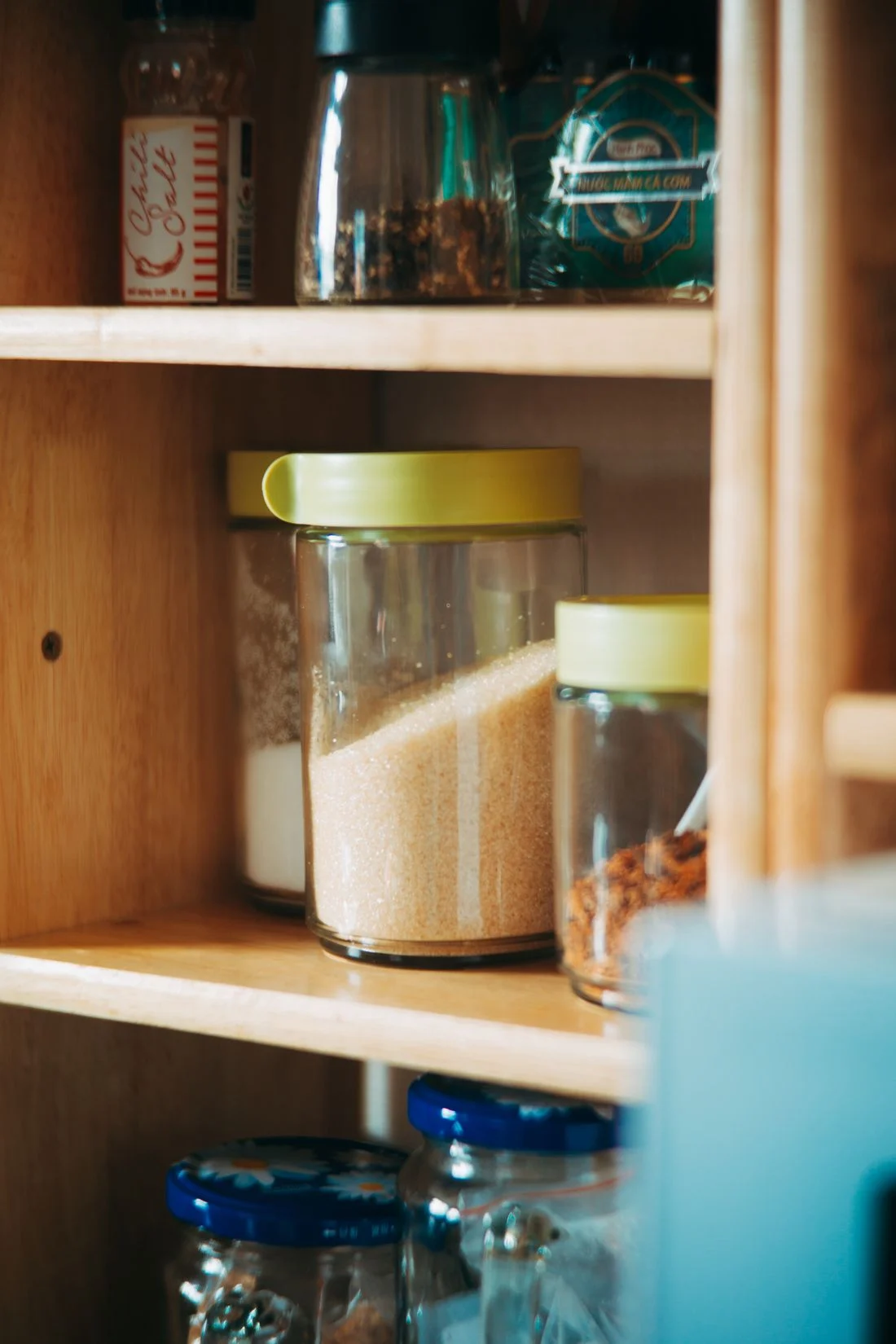
A pantry organized only by package height can be beautiful and surprisingly slow to use. The rice might sit far from the beans, and the breakfast oats may be hidden behind baking supplies. Grouping some ingredients by the meals you make can shorten the search without turning the pantry into a rigid set of tiny categories.
Start with a few repeat routines: breakfast, weeknight grains and pasta, baking, and snacks. These are starting points, not mandatory departments. A household that rarely bakes may need a small baking bin, while one that uses several flours every week may need an entire shelf.
Give everyday ingredients the best view
Place frequently used foods where the package name is visible and the item can be removed without dismantling a row. A low riser can help with short cans or jars if it leaves enough overhead clearance. Deep shelves may work better with a removable bin for small packets. Check the full bin's weight before placing it high up.
Keep original storage instructions accessible, particularly for products that need refrigeration after opening. The FDA advises following food-label storage directions and keeping food away from household chemicals. A pantry should not become shared storage for cleaners simply because both arrive from the same shopping trip.
Avoid duplicating every ingredient
An ingredient used in several meals does not need multiple homes. Keep olive oil in one consistent place, for example, and let the meal-based zones contain the less universal items. Otherwise the system becomes difficult to maintain and creates the impression that something has run out when it has merely moved.
Use flexible boundaries such as one shelf section or a single basket. When a category expands temporarily, it should not force all neighboring foods into smaller, unlabeled piles. A modest amount of free space accommodates the next shopping trip.
Make replacement stock visible
Put unopened replacements behind the active package or in a separate, clearly identified backstock area. Before shopping, check both places. Keep older suitable stock accessible and review dates and package condition as you put groceries away. Decanting is optional; a readable original package can be more informative than a matching jar.
Try the new zones through several meals. If you repeatedly search for the same ingredient in the wrong place, its location may not be intuitive. Move that item rather than assuming you need more discipline. The pantry should reflect the way your household cooks, and it should remain understandable to someone who did not design it.