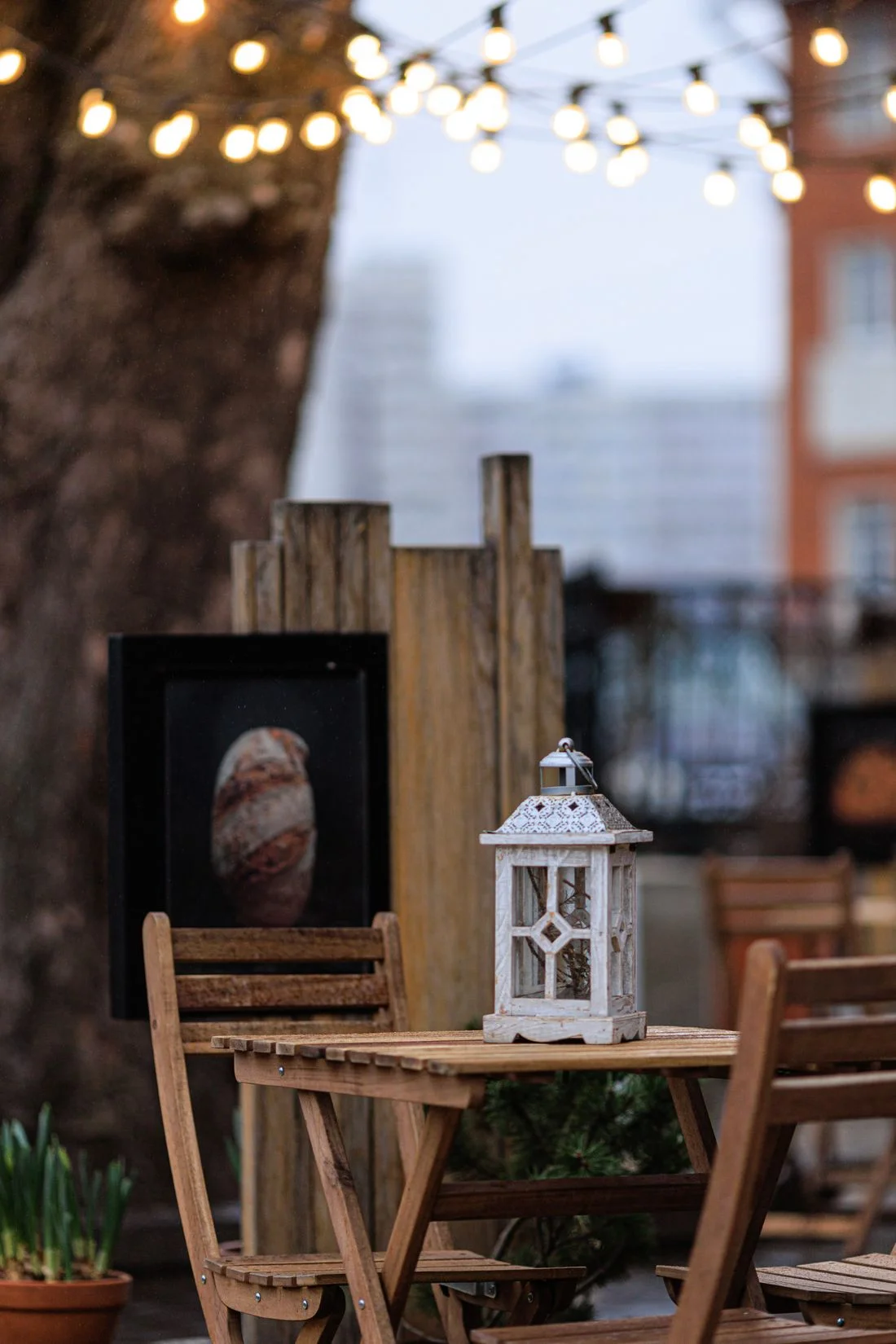
A portable lantern can make an outdoor table feel usable after sunset without changing the whole patio. Its most useful role is often modest: enough light to see a drink, recognize a plate, and make the table feel like a place to stay. A very bright lantern can instead become the object everyone looks away from.
Try a light at the center of the table and then nearer an edge. Check the view from every chair. A low light with a diffused source may be comfortable for conversation, while a tall transparent lantern can put a bright point directly at eye level.
Match the product to the exposure
Choose a lantern explicitly intended for the outdoor conditions it will face. A covered porch and an open table exposed to rain are different locations. Read the maker's weather rating, charging instructions, and storage guidance rather than assuming a handle or rustic finish makes a lamp suitable outdoors.
For rechargeable models, plan where charging will happen and how long the stated runtime lasts at the brightness you intend to use. Maximum runtime may refer to a low setting. Keep chargers and connections within their specified environment, and bring the lantern in when the product guidance or weather calls for it.
Keep the table useful
Measure the base against the space needed for serving dishes and glasses. A lantern that fills the middle of a small bistro table may be better on a nearby suitable surface. Make sure it remains stable and does not force people to reach around it awkwardly.
A handle is useful only if the lamp is comfortable to lift and the maker permits carrying it while operating. Check switch placement too. You should be able to change brightness without turning the whole lantern around or moving dishes.
Consider flame-free light
An electric lantern avoids an open flame near fabric, plants, and passing sleeves. If you choose a candle lantern, follow both the lantern and candle instructions and keep the required clearances; glass sides do not make every surrounding arrangement appropriate.
Use one lantern first before buying a matching row. After dark, a small amount of well-placed light can be enough for the table, with separate lighting provided where walking routes need it. The table light should support the conversation rather than become its brightest participant.