The label miscellaneous is usually an admission that the sorting decision has not happened yet. It tells you that something is inside, but not whether opening the box will help. Good storage labels reduce that uncertainty with ordinary words and a category narrow enough to remember.
Before buying a label maker, identify the question the label needs to answer. A pantry label may distinguish similar-looking ingredients. A closet label may identify a bed size. A box in a high cupboard may need to reveal an entire hidden category. These are different jobs, and they do not require the same format.
Name the contents, not the container
Spare charging cables is clearer than electronics, and queen sheet sets is more useful than linens. Avoid names that depend on one person's memory, such as things from the old apartment. If another household member would not know what the phrase means, add a more concrete description.
Do not make the category so narrow that it becomes false after the next purchase. A box labeled winter accessories can accept gloves and a scarf; one labeled blue gloves cannot. The right level of detail depends on how much is inside and how often the collection changes.
Put the words where the eyes go
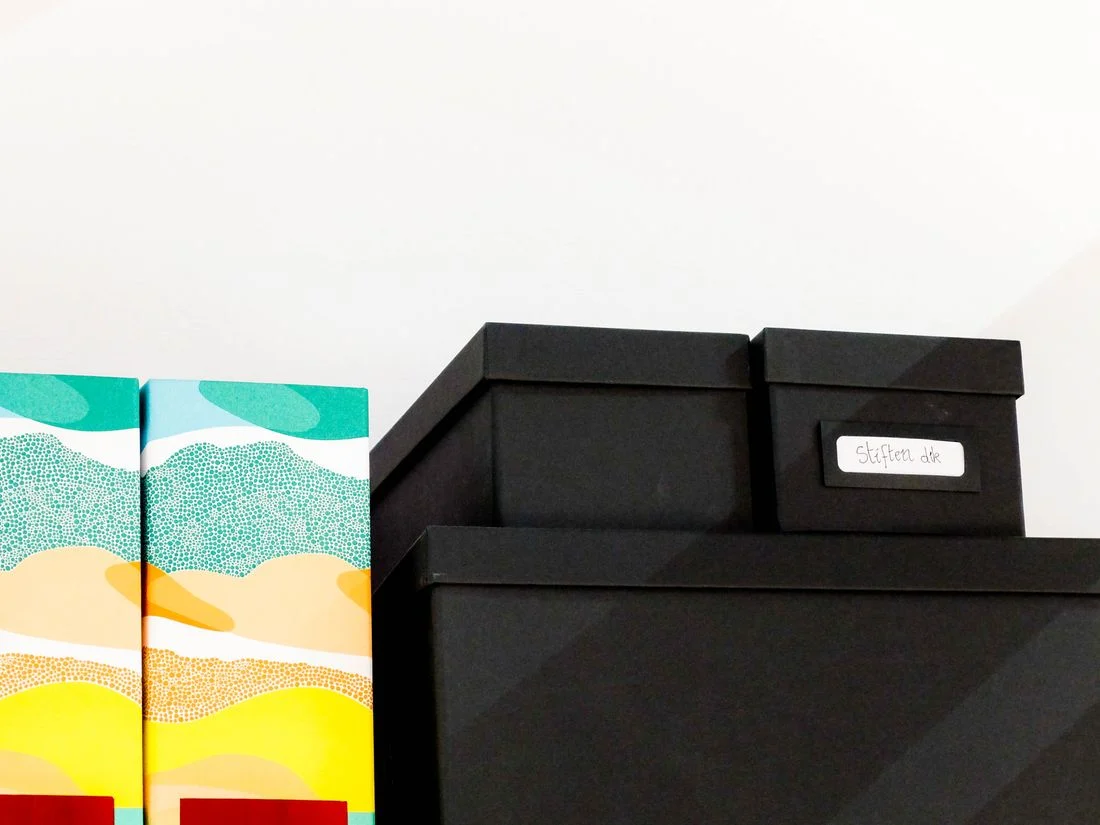
Label the front of a shelf bin, the top of a box stored in a drawer, or both if the container moves between locations. Check the label from a normal standing position. Small decorative lettering may be attractive close up but unreadable on an upper shelf.
Use enough contrast between text and background. A consistent placement can make a row easier to scan even if the containers differ. If a label is temporary, choose a removable method compatible with the surface and test it where any residue will not matter.
Add an inventory only when it helps
A large memory box or a collection of spare parts may benefit from a brief list inside the lid. Daily-use baskets usually do not. An inventory becomes another task if it must be rewritten every time someone removes a pen.
For dated or regulated products, a household label does not replace the original information. Keep product names, instructions, and warnings intact. Never transfer cleaners into unmarked decorative containers to make a shelf look coordinated.
Change the label when the job changes
When a category moves, remove the old wording immediately. Two contradictory labels are worse than one plain handwritten note. Keep a few blank labels with your organizing supplies so a new category does not remain unnamed indefinitely.
The best test is retrieval. Ask someone to find an ordinary item using the labels alone. If they choose the correct container without opening several others, the system is doing useful work.