Oversized books tend to become decorating objects because they do not fit the ordinary shelf. A large art book ends up beneath a lamp, while a wide cookbook hangs over the edge of a narrow unit. These arrangements may look intentional, but they can make the book difficult to use and leave parts of it unsupported.
Before rearranging, measure the closed book's height, width, and thickness. Compare those dimensions with the shelf's clear opening and depth. Include the space needed to lift the book out, not just the minimum gap in which it can be wedged.
Adjust the shelf before the book
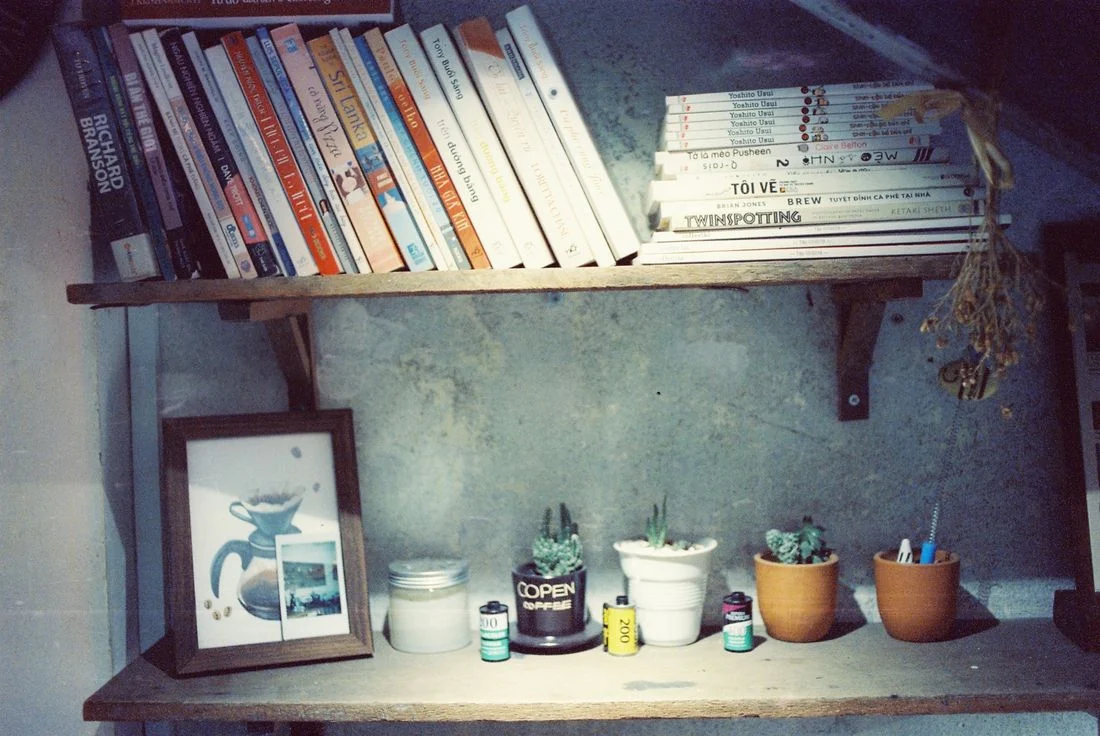
If the furniture has adjustable shelves, dedicate one taller opening to the large volumes. Keep the books upright with suitable support rather than allowing them to lean at an angle. The Library of Congress advises grouping books of similar size so neighboring covers can support one another.
Do not force a book into a position that bends its cover or catches the top edge each time it is removed. A shelf pin adjustment is often a better solution than turning every large volume sideways. Check the furniture's instructions before changing shelf positions, and maintain the required supports and anchoring.
When flat storage is more suitable
The Library of Congress notes that books too large to stand can be stored flat with the full volume supported underneath. Use a shelf deep enough for the book rather than allowing it to project into a walkway or sag over an edge. Keep a stack low enough that lifting the upper books is manageable.
Arrange a flat stack by use as well as size. A book consulted every week should not be at the bottom simply because its cover matches the room. Heavy decorative objects on top add another handling step and can make opening the book feel like dismantling a display.
Consider weight and location
Several large books can create a concentrated load. Follow the shelf manufacturer's capacity limits and watch for any bowing or loose fittings. Place heavier volumes at a comfortable lifting height. A high shelf may display them well but be a poor place to retrieve them safely.
Avoid obvious sources of direct light, moisture, and heat when choosing the location. The Library's preservation guidance emphasizes a stable environment and protection from intense light. A book beside a sunny window may need a different home even if the dimensions fit perfectly.
Make the final check with your hands: remove the largest volume, open it on a suitable surface, and return it. If that sequence is awkward, choose another position. A book earns its place on a shelf by remaining available to read, not only by completing a composition.