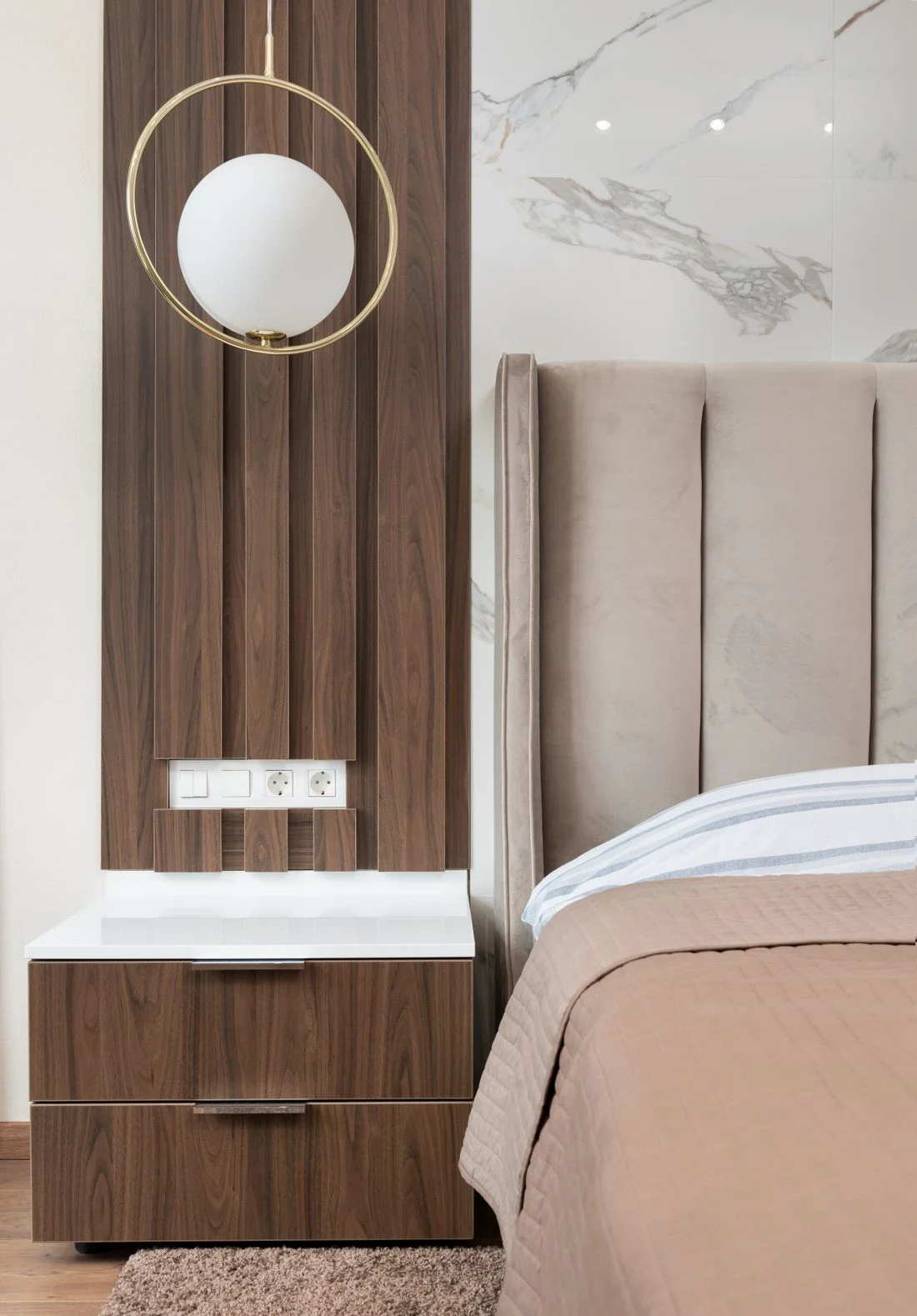
An upholstered bed already introduces a large area of fabric. Repeating the same soft texture in the rug, curtains, bench, and cushions can make the room feel visually blurred. Contrast does not require a dramatic color; a smooth surface beside the upholstery may be enough to make its texture visible.
Begin with the headboard itself. Look at whether the fabric is tightly woven, nubby, plush, or patterned, and whether the shape is flat or deeply tufted. Those qualities tell you what the bed already contributes before you add anything around it.
Choose one clear neighbor
A smooth wooden bedside table can give a textured headboard a distinct edge. Painted furniture can do the same without introducing another wood tone. Select the surface for its usefulness as well as its appearance: drinks, books, and lamps need a place that suits the material's care requirements.
If the headboard has a strong pattern, start with relatively quiet bedding. You can add a patterned cushion later if the room needs it. Buying several competing patterns at once makes it harder to tell which one is doing useful work.
Vary the scale of softness
An upholstered bed and a soft rug can belong together because they occupy different parts of the room. The problem is not softness itself but repetition without distinction. A flatwoven rug, a smooth sheet, and a quilt with visible stitching can create differences while keeping a restrained palette.
Use decorative pillows sparingly enough that the headboard still reads as a shape. If the pillow stack covers every tuft or curve, you are paying attention to a feature the arrangement then hides. Leave somewhere convenient for the pillows you remove at night.
Let care influence the final layer
Check the bed's upholstery instructions before choosing cleaning methods or products. Bedding and cushions that regularly rub against the headboard should also be considered for their care and color-transfer instructions. Avoid assuming that every pale fabric can be cleaned in the same way.
Stand back from the doorway once the essentials are in place. If the bed has a clear outline and the room contains a few different surfaces, another layer may add work rather than interest. Keeping the top of a dresser or part of a wall plain gives the upholstery space to remain the main textile feature.