A bedroom dresser is often the second-largest piece after the bed. Its width, finish, and position can help the room feel settled, or create another crowded zone opposite the mattress. Choose its location around drawer access first, then decide how much display belongs on top.
Leave room to use the drawers
Measure the dresser's full depth, including handles, and the space occupied by an open drawer. You also need room to stand in front while choosing clothing. A unit that fits between the bed and wall may still be too deep for comfortable use.
Follow the manufacturer's anchoring instructions and the CPSC's tip-over guidance. A dresser's visual stability or substantial weight does not remove the need to secure it appropriately. Keep the installation suitable for the wall and furniture rather than improvising with decorative hardware.
Give the top a clear center of interest
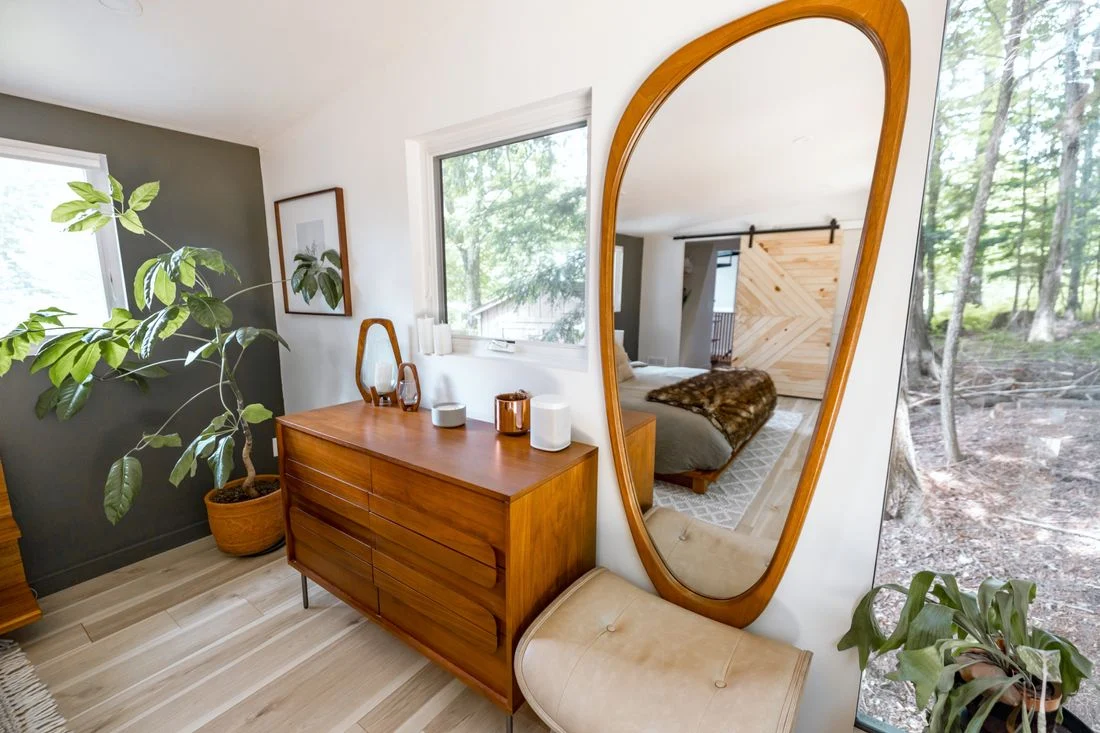
A mirror or artwork can anchor the area above the dresser. Choose its position in relation to the furniture, while keeping any required installation secure. A mirror should reflect something you are happy to see; placing it automatically opposite the bed may repeat clutter or glare.
Keep everyday objects together on a modest tray or in a small container if that helps the routine. Leave enough open surface to set down an item temporarily without rearranging a display. One substantial object often reads more clearly than many small ornaments spread across the full width.
Connect the dresser to the rest of the room
The finish does not have to match the bed frame exactly. A repeated tone in a smaller object can relate different woods, while bedding and curtains can provide a quieter transition. If the dresser has a strong grain or ornate shape, let nearby accessories be simpler.
Avoid treating the space beside it as automatic overflow storage. A basket may be useful for a specific purpose, but a collection of bags and spare furnishings can make the dresser feel crowded even when its top is clear. Give the floor enough room for cleaning and movement.
Review what lands on the surface for a few days. If it repeatedly collects mail or laundry, solve the destination for those items rather than adding more decorative containers. A calm dresser area depends on a useful routine as much as a carefully chosen mirror.