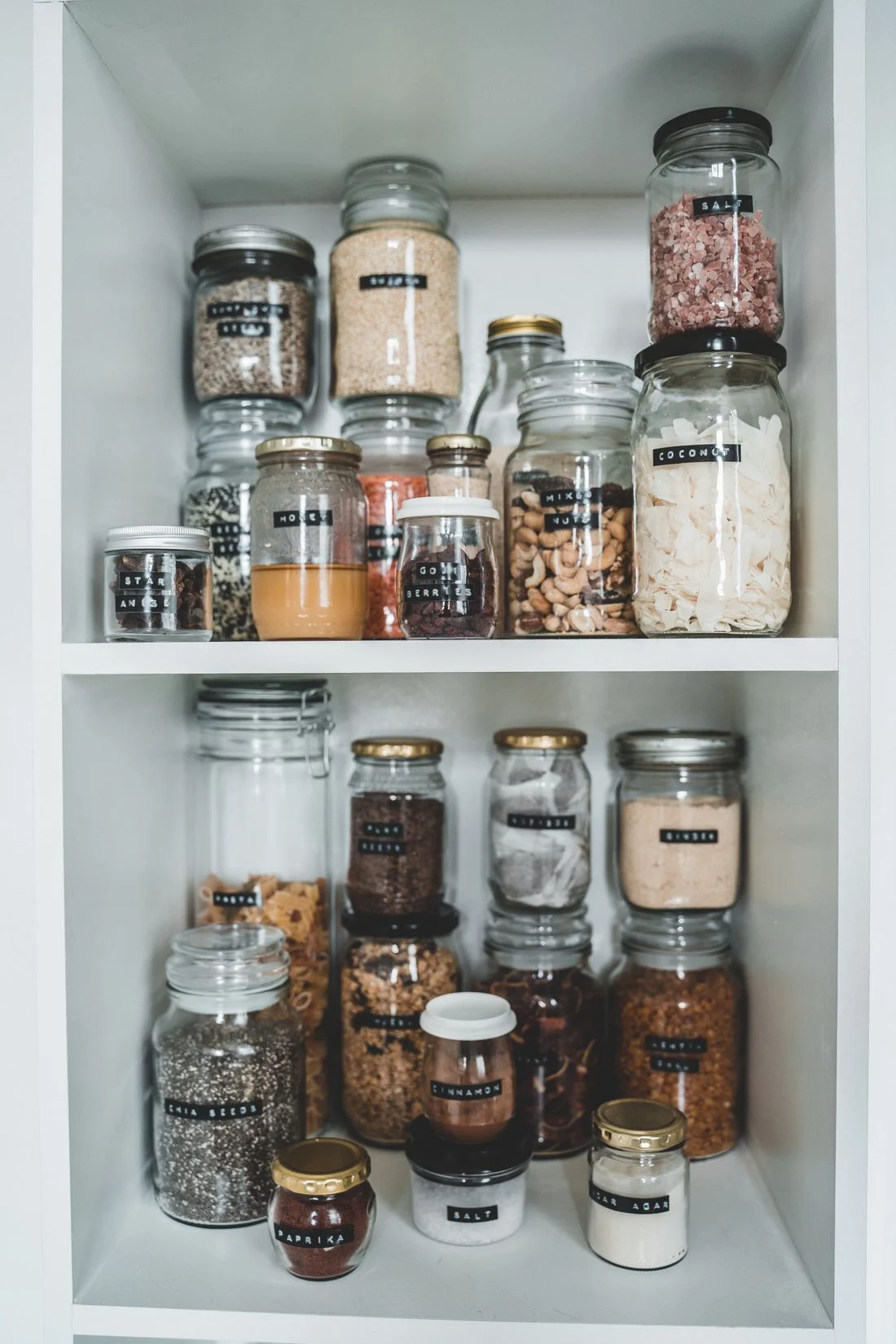
A pantry does not need to be made entirely of matching jars. Transferring food makes sense when the new container improves access, closes reliably, or fits a difficult shelf. It makes less sense when it creates half a package left over, loses preparation instructions, or turns every grocery trip into a lengthy refilling session.
Good candidates have a clear problem
A frequently used dry ingredient in a flimsy bag may benefit from a container with a broad opening. A food you scoop every morning can be easier to handle that way. Small packets used only occasionally may be better kept together in a bin, still in their original packaging.
Before buying a container, measure the shelf and check the amount you normally purchase. Package weight does not translate directly into container volume: flour, rice, and pasta occupy different amounts of space for the same weight. Look for useful capacity examples from the container maker, or test with a container you already own. Leave enough room to open the lid and use the scoop.
Preserve the information
Keep the product name, allergen information, storage instructions, preparation directions, and relevant date details accessible. A clipped label stored safely with the container or a clear photo can help. Include identifying batch information when you need to check a recall. A stylish label reading flour does not tell another person whether the contents are wheat, almond, or a prepared baking mix.
Do not assume a transferred food can remain at room temperature. Follow its original storage directions. FDA guidance also emphasizes keeping foods separate from household chemicals; decorative matching bottles should never blur that distinction.
Make refilling deliberate
Avoid continuously topping up a container with newer food without checking what remains. Empty and clean it according to the container's instructions when appropriate, and let it dry fully before refilling dry goods. Keep the older contents and their identification clear rather than combining batches into an unknowable mixture.
Choose a lid you can operate comfortably with ordinary kitchen hands. A stiff clasp or awkward screw top may discourage everyone from closing the container properly. Transparent walls help you see quantities, but opaque containers can still work if the labeling and shopping routine are reliable.
A mixed pantry is a valid result
Use jars for the few ingredients that benefit, bins for packets, and original packages for products whose packaging already works. There is no need to buy a matching set before you know the required sizes. Start with one troublesome item, use the replacement container for several weeks, and expand only when the change actually helps.
The aim is easier cooking and clearer information. If a jar looks good but adds work without improving either, the original package deserves its shelf space.