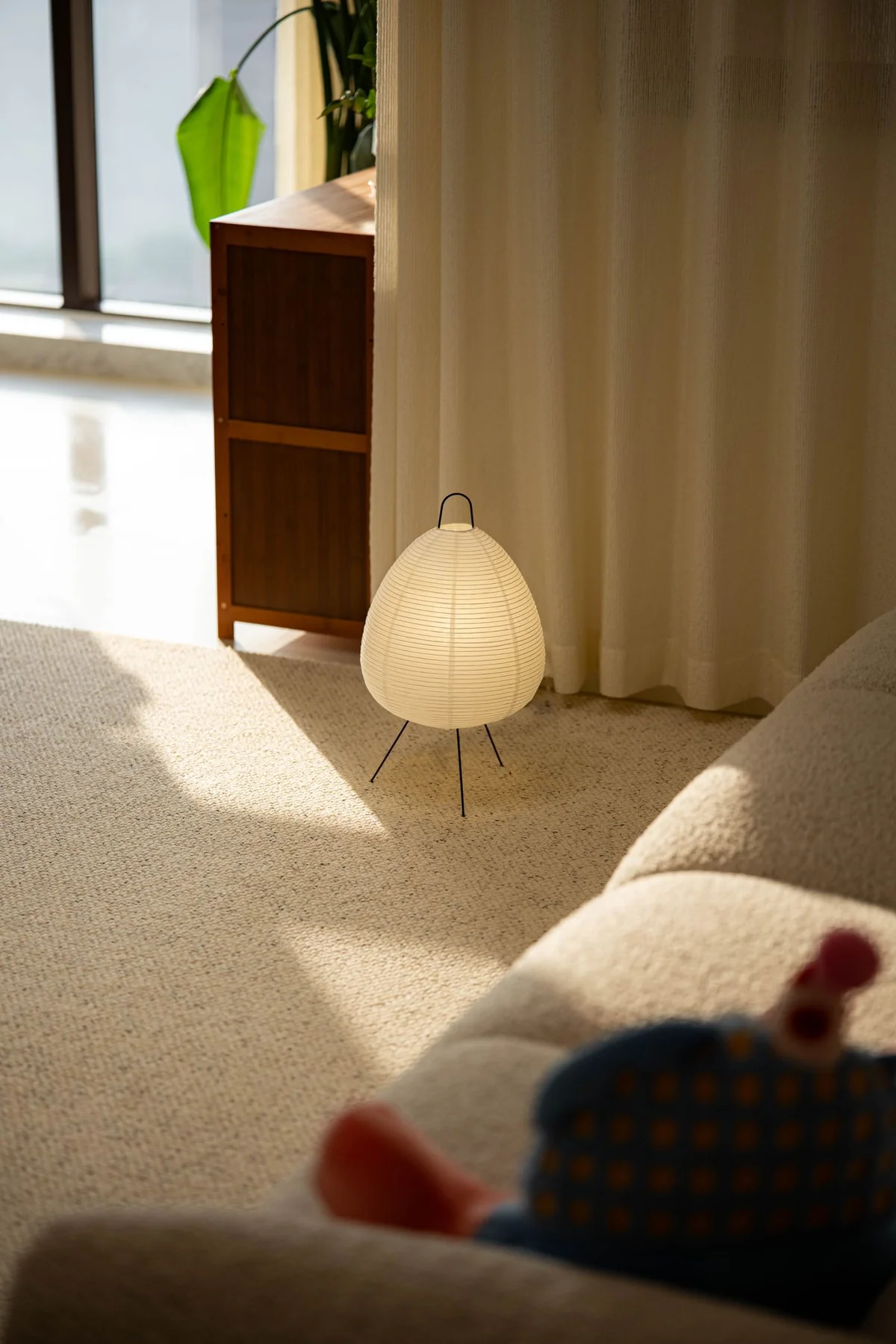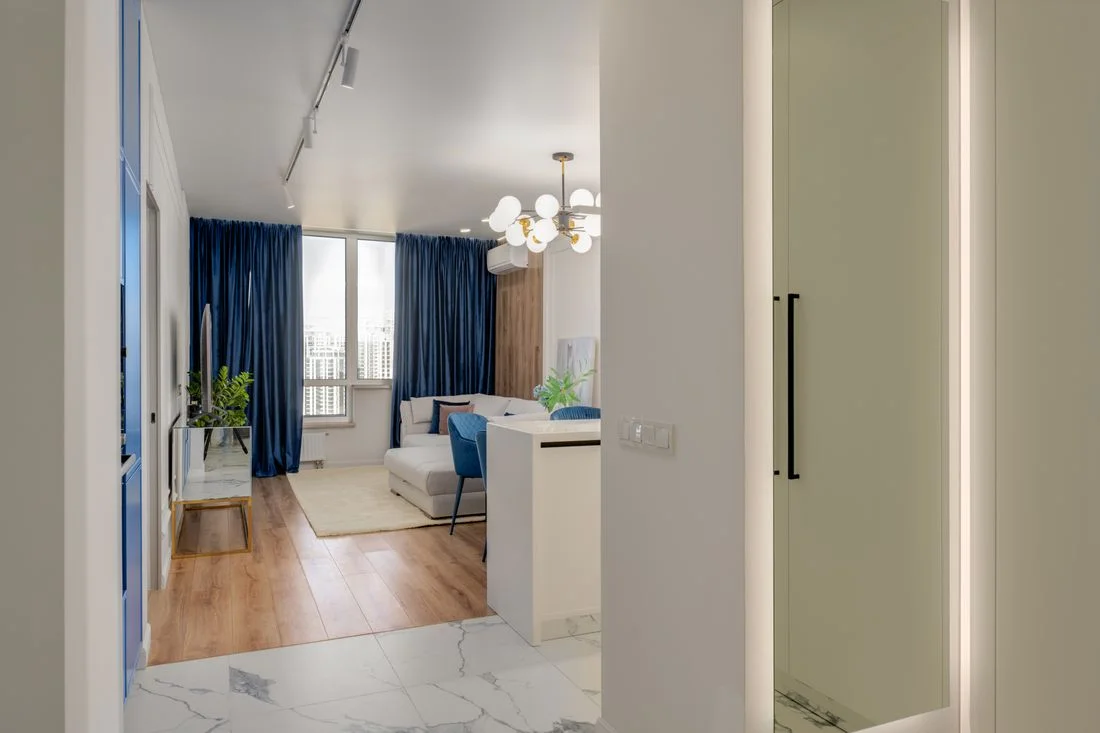
A home desk in the living room is visible long after work ends. Its lamp therefore needs to function as a task light without making the whole corner look like an office supply display. The best starting point is the desk itself: where you write, where the screen sits, and how much surface remains once the work is put away.
Before choosing a style, mark the space available for the lamp base. Include the reach of any adjustable arm. A compact base does not guarantee a compact lamp if the head extends into a passage or over a neighboring chair.
Keep the work light controllable
Try the lamp on the side that avoids casting your writing hand's shadow across the page. With a screen, tilt and move the head until the light is not reflected directly toward you. The position may change depending on whether you are typing, drawing, or reading paper, which makes straightforward adjustment more useful than a complicated set of features.
Avoid selecting a bare decorative bulb for this job merely because it matches the room. A shielded light source gives you more control over where the light goes. Check the lamp from the sofa as well as the desk; other people in the room should not have the bulb in their eyes.
Choose one visual relationship
The lamp can repeat the finish of a coffee-table base, the color of a chair, or the curved shape of a nearby vase. One connection is enough. A vintage-looking task lamp can sit comfortably in a contemporary room if the surrounding surface is restrained, while a simple metal lamp may quietly link several furniture styles.
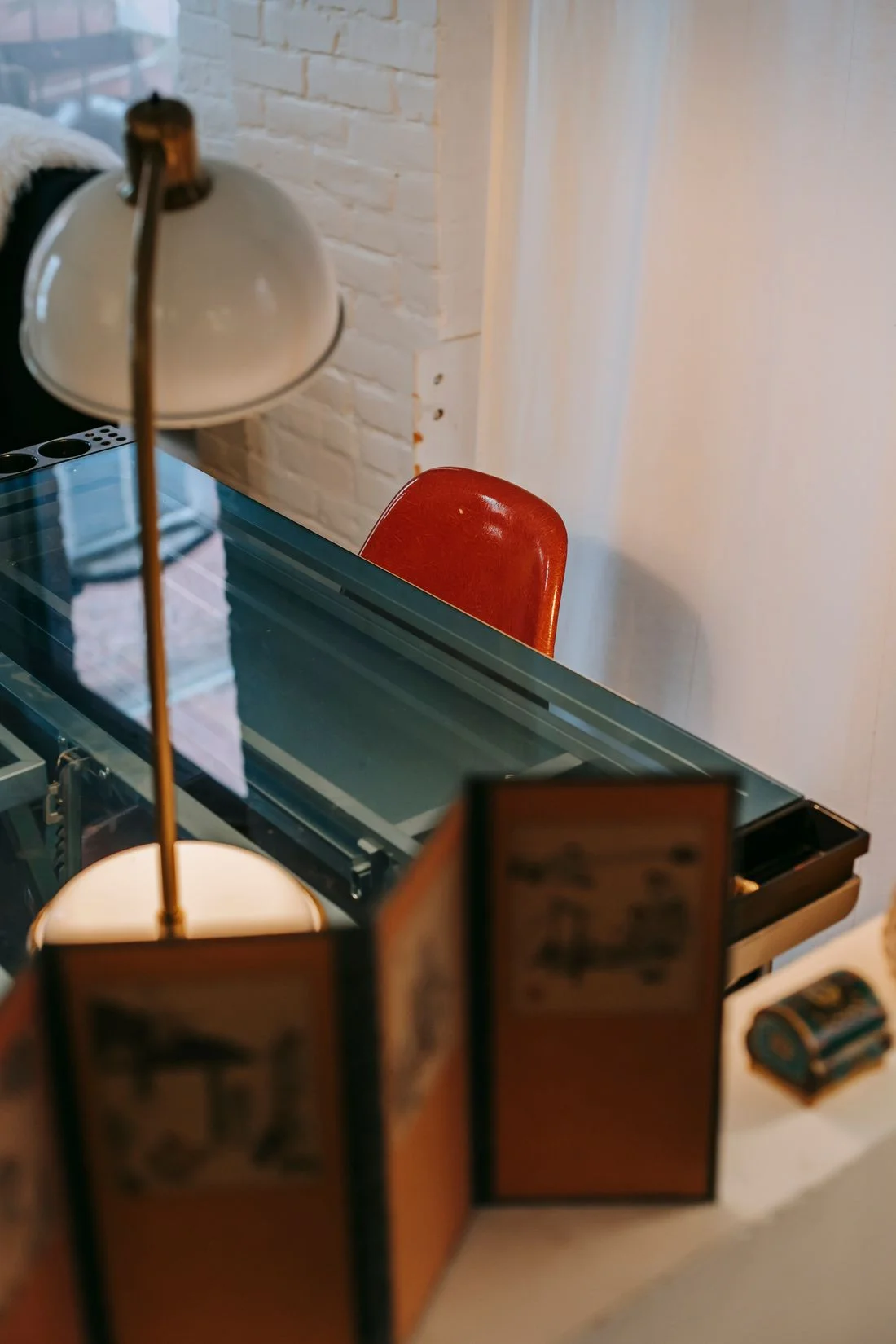
Consider how much visual weight the desk already carries. A thick wooden top and a large monitor might benefit from a slim lamp. A delicate glass desk can handle a more definite silhouette, but its surface may reflect the light; test that combination before committing.
Plan the off-duty arrangement
Give work items a place to go at the end of the day. A lamp cannot make a desk feel integrated if its base is surrounded by chargers and loose paper. Keep a small clear working area, then let a single framed picture or a plant occupy the space outside the task zone.
The switch should be accessible without opening the computer. You may enjoy the lamp as part of the room's evening lighting when the desk is unused. If that softer setting matters, choose a suitable dimmable model and compatible controls rather than expecting one fixed brightness to suit both detailed work and a quiet evening.