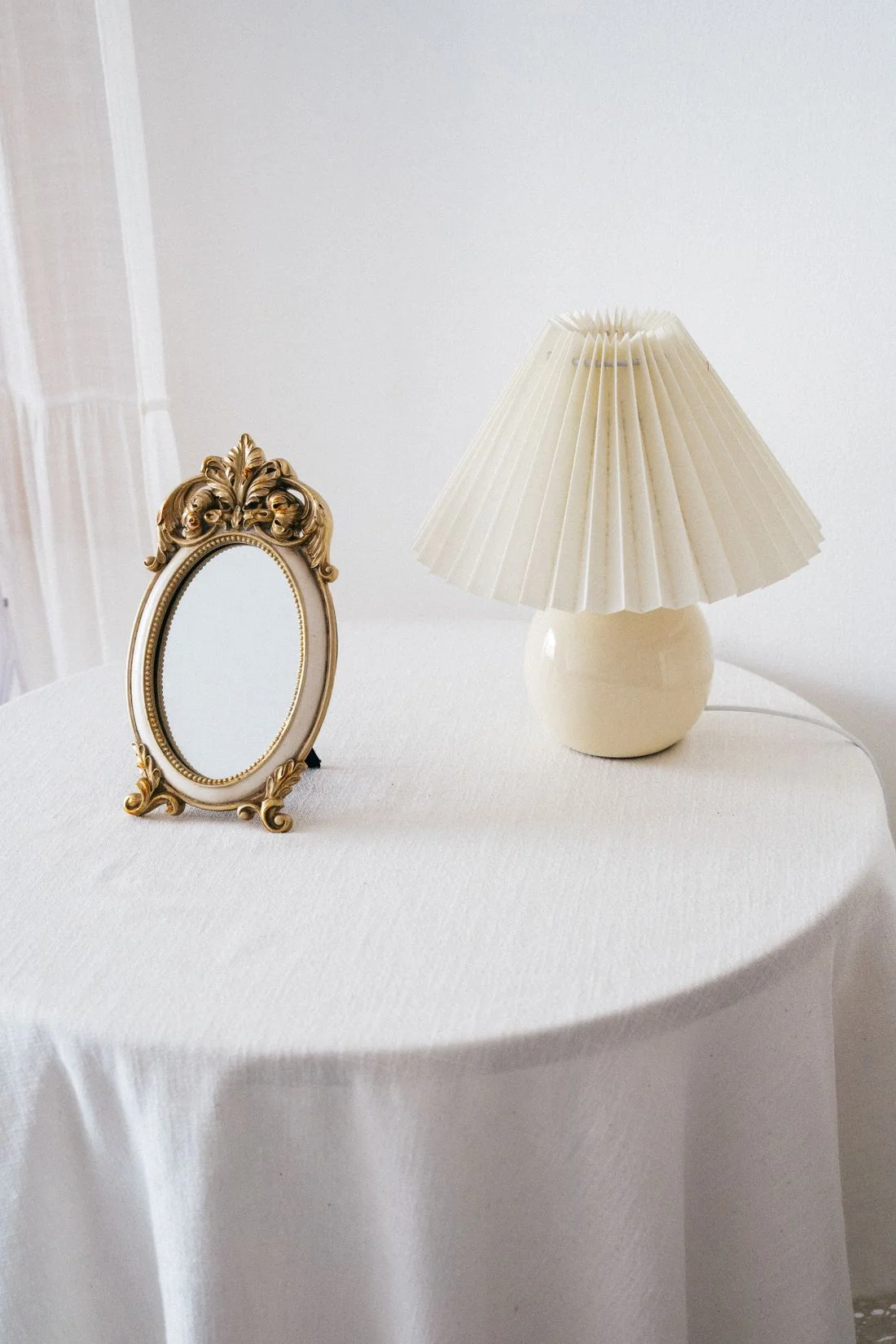
Pleats make a lampshade look different even when the lamp is switched off. Their narrow folds catch daylight, giving a simple table lamp a more detailed outline. In a room of smooth upholstery and plain walls, that small change can be enough decoration for an otherwise quiet corner.
Replacing a shade is also a proportion exercise. A taller shade can make the base appear shorter; a wide one can overwhelm a little side table. Measure the old shade's top, bottom, and sloping side, then compare those measurements with the replacement rather than relying on the word medium.
Fit comes before style
Confirm the fitting type and how the shade attaches. A shade designed for a harp is not automatically compatible with a socket-mounted lamp. Check the lamp maker's requirements for clearance, bulb shape, and maximum wattage. A decorative replacement should never sit against the bulb or require an improvised attachment.
Keep the intended table in the decision. If the shade projects over a narrow walkway, choose a smaller diameter or a different lamp position. Sitting beside it should not mean brushing the edge every time you reach for a drink.
What will the fabric do?
A pale translucent shade usually lets more light through its sides than an opaque lined one. Rather than assuming that pleats guarantee a soft glow, ask to see the shade illuminated with a comparable bulb. Dark trim can create a distinct outline, and a colored fabric may influence the light on the nearby wall.
The Department of Energy distinguishes light output in lumens from the color appearance described in kelvins. Those are separate decisions: a warmer-looking bulb does not have to be the dimmest bulb on the shelf. Compare bulbs within the lamp's approved specifications and test the result in the room.
Keep the surrounding shapes simple
Pleats work well beside a plain vessel, a stack of books, or an unpatterned chair. Pairing them with an equally detailed mirror can also work, provided the two pieces have some space between them. If everything on the table has trim, tassels, carving, or folds, remove one element and look again.
Consider cleaning access before buying a deeply folded shade. Ask how the specific material should be dusted, especially if it is paper or an untreated fabric. A shape that looks lovely from the doorway should still be one you can maintain without distorting its folds.