A few flowers in a room can feel more relaxed than a large formal bouquet. The difference often comes from the vessel and the placement, not the price of the flowers. A small arrangement beside a chair belongs to everyday life when there is still room for the book and the cup that normally sit there.
Start with the spot. If the flowers will be seen mostly from a doorway, use a clear silhouette. On a coffee table viewed from all sides, turn the vase as you arrange it so the display does not have one finished front and an awkward back.
Let the vase do some work
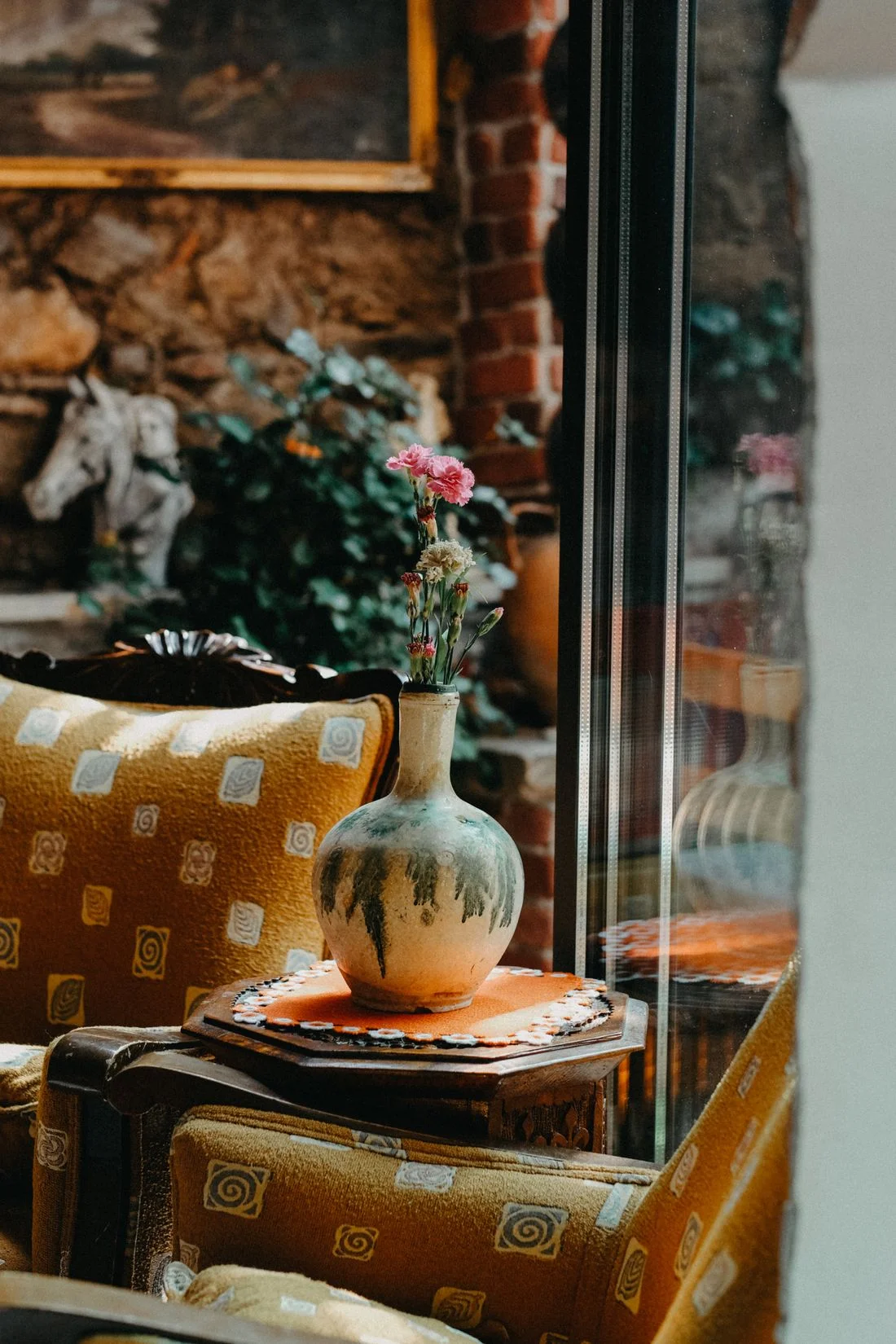
A narrow opening supports a few stems without much spreading. A wide mouth needs a different arrangement or a smaller vessel inside it; otherwise a modest bunch can collapse into the rim. Check that a decorative ceramic vase is intended to hold water before placing it on wood. When in doubt, use a watertight liner that fits without forcing it.
Use the vase's color to decide how much contrast you want. Clear glass shows the stems and feels visually light. An opaque vessel hides them and gives the flowers a more distinct base. A strongly patterned vase often looks better with fewer kinds of flowers.
Build a loose outline
Place the stem that establishes height first, then add a few at lower levels. Leave gaps so individual shapes remain visible. You do not need to use every stem in the bunch; a second tiny arrangement elsewhere can be more pleasing than an overfilled vase.
Check the display while seated. Flowers beside an armchair should not brush your shoulder, and a dining-table arrangement should not block conversation. If the best silhouette becomes too tall for the location, move the vase rather than compressing every stem into a tight dome.
Keep water maintenance easy by leaving room to lift the vessel out. Follow the flowers' care instructions, remove spent stems, and protect the furniture from drips when changing water. The arrangement earns its place by staying manageable between special occasions.