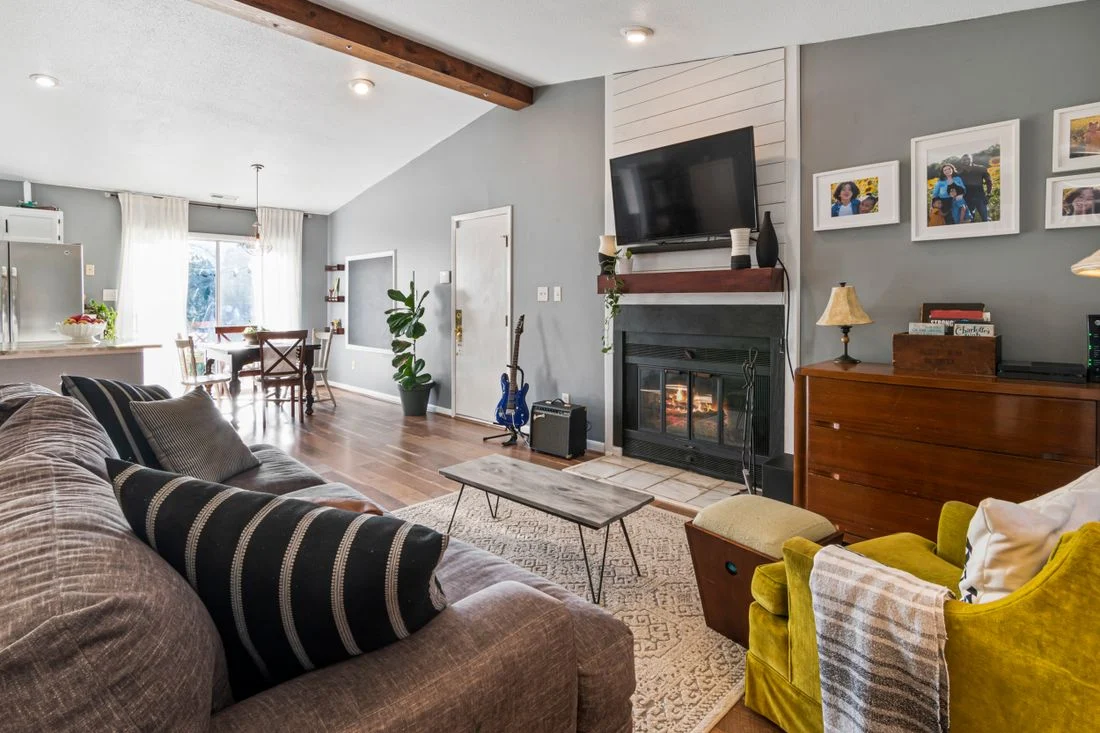
A fireplace located near a corner or beside a doorway rarely cooperates with a perfectly symmetrical furniture plan. Trying to center the sofa on it may block a path or leave the rest of the room stranded. Separate the fireplace's architectural role from the seating group's everyday job.
Protect the working area first
Find the fireplace manufacturer's required clearances and follow the relevant installation and use guidance. Furniture, rugs, curtains, and decorative objects must respect those requirements. This is not a situation where a general styling measurement can replace the instructions for the actual appliance or hearth.
With that area established, mark the doors and the main walking route. The remaining space is the realistic seating footprint. Keep access to the fireplace controls and any service points clear rather than hiding them behind a convenient armchair.
Center the seats on each other
A sofa and chairs can form a coherent group that sits slightly to one side of the fireplace. Angle one chair so a person can enjoy both the hearth and the conversation. The sofa does not need to point directly at the fireplace if doing so makes the rest of the room awkward.
A rug can establish the center of the seating group independently of the wall. Position it around the furniture, with the required fireplace clearance, rather than aligning it automatically with the mantel. This helps the room read as a place to sit rather than an exercise in compensating for asymmetry.
Balance the wall without copying it
If one side of the fireplace contains a doorway, the other side does not need an equally large cabinet to make the wall feel balanced. A lower piece, artwork, or some empty space can be enough. Look at the whole wall from the entrance and from the sofa before adding more furniture.
Keep the mantel arrangement restrained if the fireplace already has a strong surround. A cluster of objects can exaggerate its off-center position by adding another busy shape above it. One well-proportioned piece may be easier to relate to the seating area.
Live with the arrangement during both fireplace use and ordinary evenings. A room should remain comfortable when the fire is off, the television is on, or people are talking. That broader test often leads to a better layout than making every piece face the hearth all year.