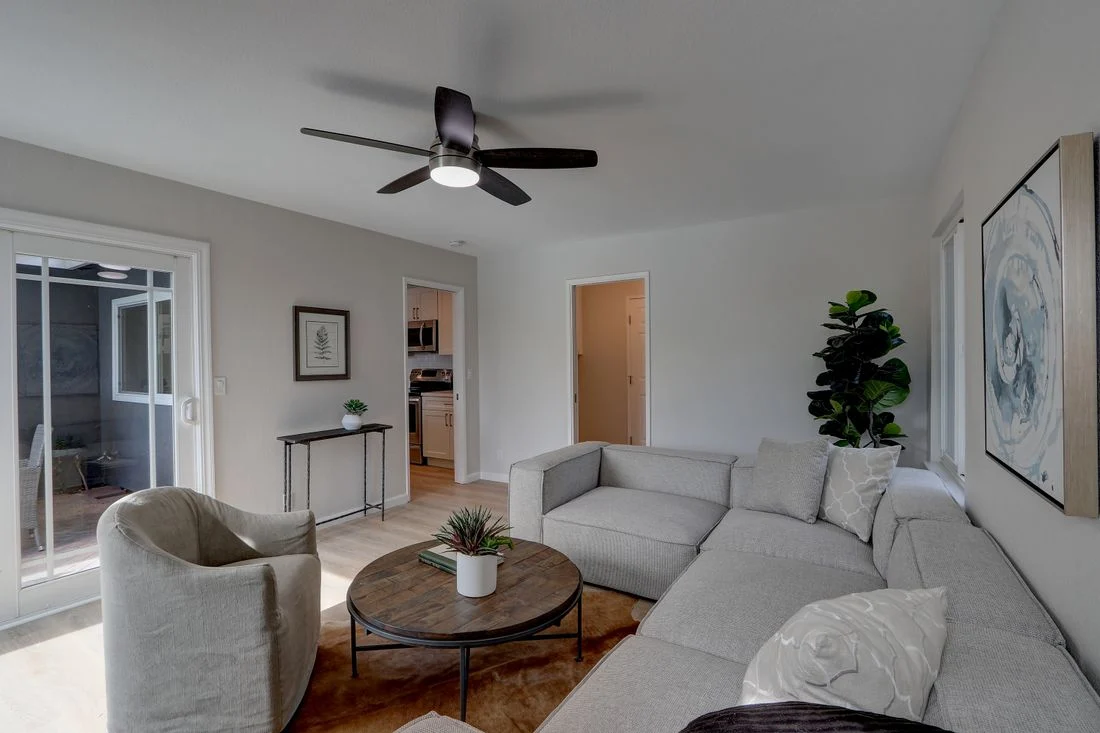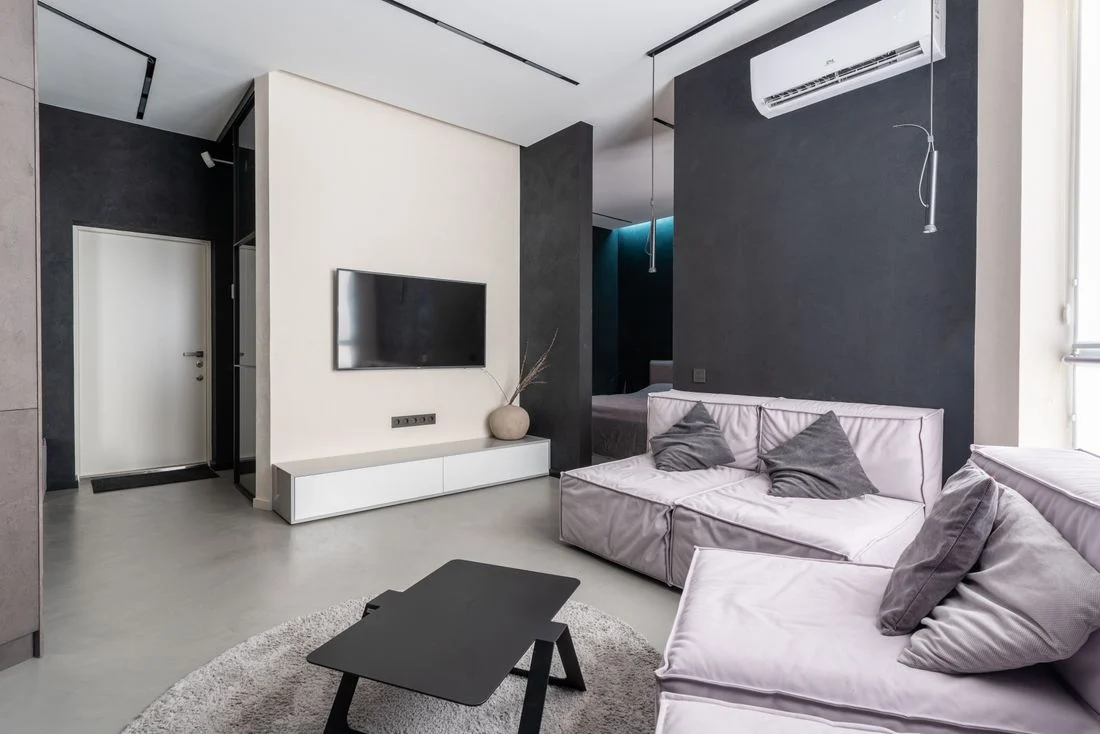
A sectional establishes a strong corner, even when the room has no architectural corner there. Its long arms and chaise determine where people sit, where they can enter the group, and where the central table can go. Treat that shape as the starting point instead of trying to add every piece from a conventional sofa-and-two-chairs arrangement.
Check the open side
Identify the easiest way to enter and leave the seating area. A chaise placed across the main route may make the room feel smaller than its measurements suggest. If a sectional offers reversible components, confirm exactly how they can be rearranged; a product photograph does not guarantee every configuration is possible.
Tape the full footprint before purchase, including projecting arms and the depth of the chaise. Then add the coffee table and walk around the entire group. A sectional that fits by itself may leave no sensible space for the rest of the room.
Balance bulk with a different shape
A single armchair can be enough to complete the arrangement. Consider a chair with a more open frame or a smaller visual mass than the sectional, while still offering the comfort you need. Another heavily upholstered piece may be right for a large room but overwhelming in a modest one.
Round or softly shaped tables can work within an angular seating group, although they still need a footprint check. Nesting tables offer flexibility only when there is somewhere for the smaller table to go. Do not assume several little tables consume less space than one carefully chosen piece.
Give each seat a usable surface
The far end of a long sectional may be well beyond the coffee table. A side table or a stable surface designed for the sofa can help, provided it does not obstruct access or damage the upholstery. Keep drinks away from precarious decorative ledges.
Lighting should follow the seats people actually use. A lamp behind the chaise may serve reading there, while another seat receives enough light from elsewhere. Avoid placing tall lamps at every corner simply to fill the gaps around the sectional.
Resist filling the enclosed area
The empty floor inside the sectional is not wasted space. It allows people to stretch out, cross the room, or play a game. Keep accessories concentrated rather than scattered around each cushion and tabletop. If the group feels too heavy, first remove a redundant stool or side table before replacing the rug or repainting the room. Often the sectional needs less company, not a more elaborate setting.