Putting a desk in the living room is less about hiding work than deciding how much of the room work should occupy. A laptop used for an hour needs a different arrangement from two monitors, paperwork, and daily video calls. Write down the equipment that actually stays out before choosing a desk by appearance.
Plan the working footprint
Measure the chair in its occupied position and with enough space to get up. A shallow desktop does not solve a tight layout if the chair blocks the route to the sofa. Keep the screen at a comfortable position for the way you work, and do not let a decorative shelf dictate an awkward setup.
Look at outlets, daylight, and background noise. A desk directly in front of a bright window can be pleasant, but screen reflections and video-call exposure may be difficult. Try the location with your existing equipment at the relevant time of day before buying a piece that only fits there.
Decide how much work should remain visible
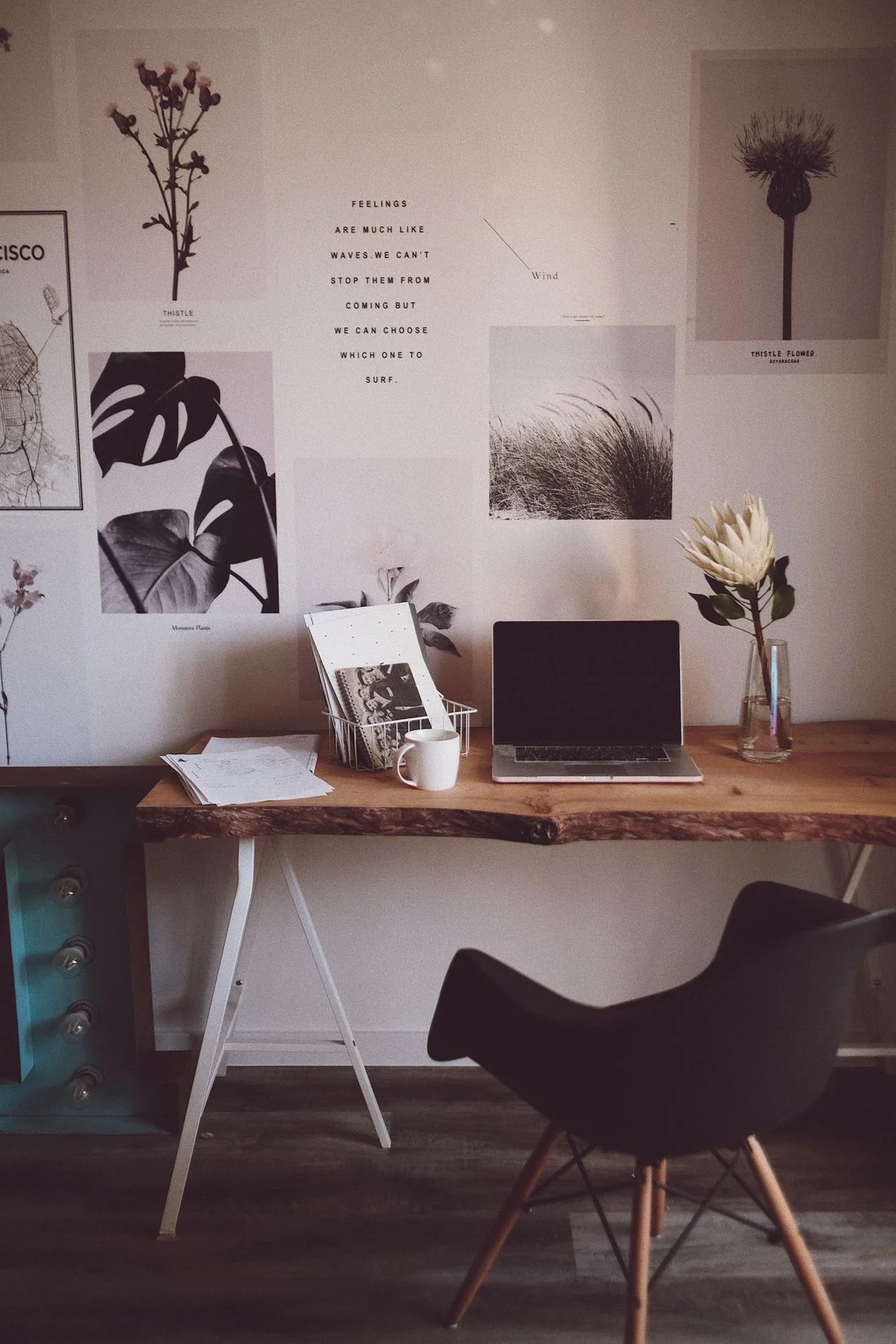
An open desk can belong to the living room if its materials relate to the nearby furniture. A wooden top might echo a coffee table; a simple dark chair might connect with a lamp or picture frames. The desk does not need to masquerade as an antique console if that sacrifices the space required to work comfortably.
Closed storage is useful when papers and chargers make the room feel unfinished. Keep daily items near the desk and reserve the living-room display shelves for things you enjoy seeing. A small drawer unit may be more effective than a series of attractive boxes that must all be opened to find one cable.
Make a real end-of-day routine
Choose a place for the laptop, headphones, and current paperwork before adding accessories. If a desk surface is meant to be cleared, the storage must accommodate everything that comes off it. A drawer already full of unrelated household items cannot perform that job.
A tray can gather loose pieces, but avoid turning it into a permanent heap. Keep charging equipment ventilated and use appropriate cable management rather than concealing power strips beneath fabric. Route cords so they do not cross the room's walking path.
Protect the other purpose of the room
A work chair that projects into the conversation group makes the whole space feel like an office. Shift the desk to a side wall or let a sofa back define a boundary if the room allows it. Keep the main seating arrangement complete in its own right, with comfortable light and useful surfaces.
For occasional work, a modest desk may be enough. For a full working day, choose the setup for that reality rather than purchasing the smallest piece that looks unobtrusive. The room works better when the work area has an honest footprint and a clear place to stop.