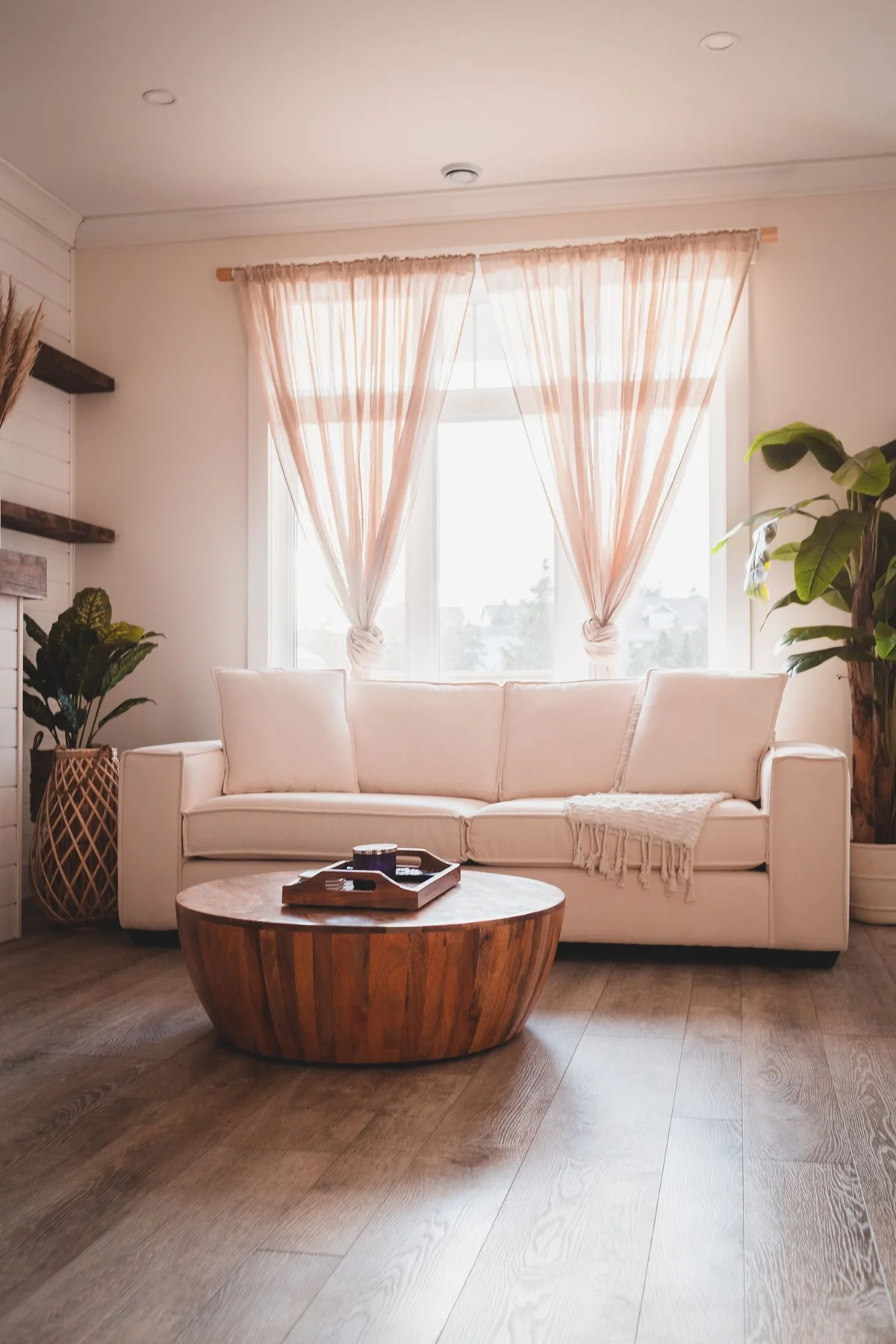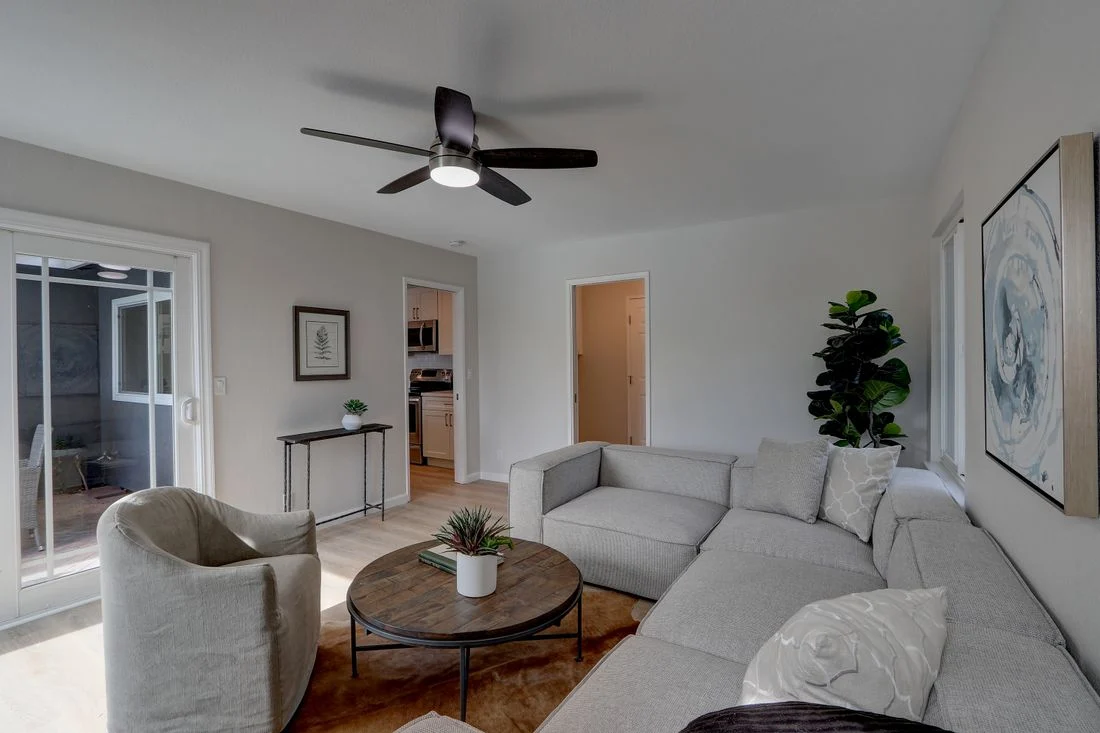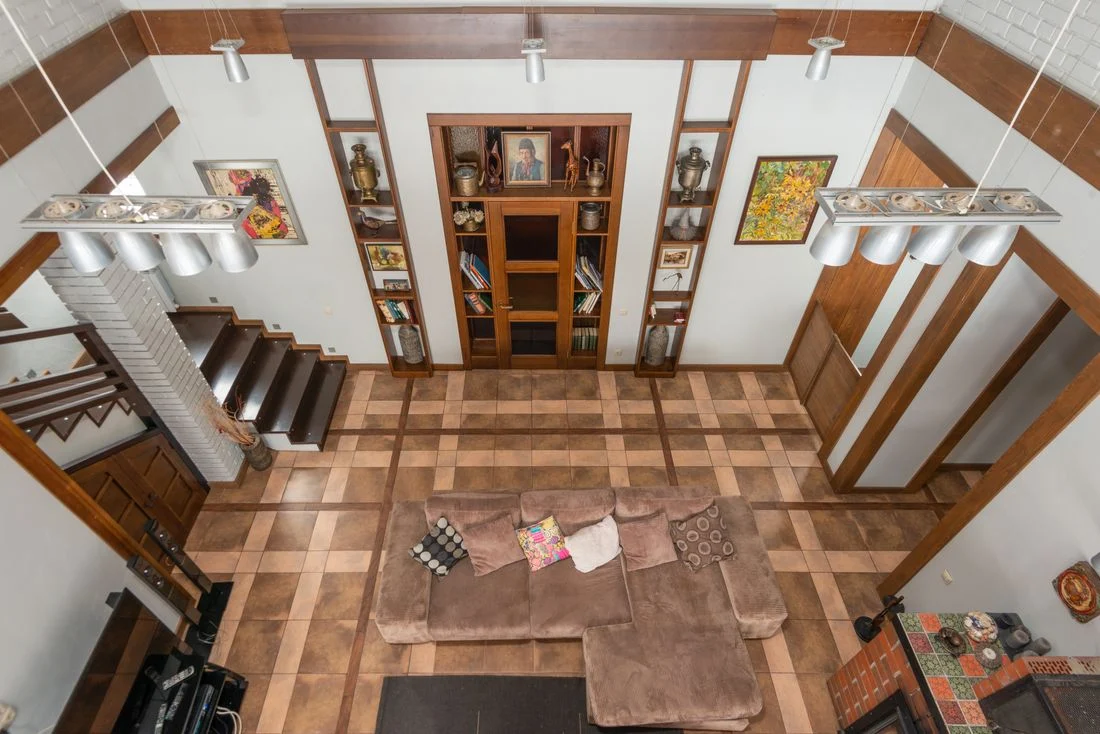
The back of a floating sofa is a visible part of the room. It may be the first thing you see from the dining table or entry, so its height, seams, and fabric matter. Before placing a sofa in the open, check that the rear is upholstered and finished for display. Some pieces are designed with the expectation that their backs will sit against a wall.
A bare sofa back is not automatically a problem. Its long, simple line can give an open room a useful boundary. Add something behind it only when that addition improves the view or provides a function you need.
Start with the walking space
Mark the sofa's actual position, then walk behind it carrying a bag or tray. The path needs to work before a console or bench enters the picture. If a dining table is behind the sofa, include the space occupied by pulled-out chairs. A narrow console can still turn a comfortable passage into a squeeze.
Keep the furniture arrangement aligned with the room rather than with a single wall. A sofa may look more settled when its back relates to the dining table or a nearby architectural line. Small adjustments in position can be more effective than another decorative object.
When a console is useful
A console can hold a reading lamp, a bowl for keys near an entrance, or books within reach of the sofa. Choose its height with the sofa back in mind; a surface rising well above the upholstery will become a separate visual barrier. Consider whether lamp cords can reach an outlet without crossing a walking route. If they cannot, skip the lamp rather than improvising a cord path across the floor.
Limit the display to objects that remain secure when people sit down or move past. A line of fragile tall vases behind an active family sofa is difficult to live with. A few lower objects leave the rear view quieter and the surface easier to clean.
Let the sofa be the boundary
If a console is unnecessary, use the surrounding arrangement to make the placement feel intentional. The rug can extend under the sofa, while side tables define its ends. A nearby chair turned slightly inward reinforces the seating group.
Do not cover the entire back with a throw just to disguise it. A neatly draped textile may soften a small section, but it can also slip every time somebody sits down. The simplest arrangement is often the most convincing: an adequately finished sofa, a clear passage, and enough space around the ends to see why the sofa belongs there.