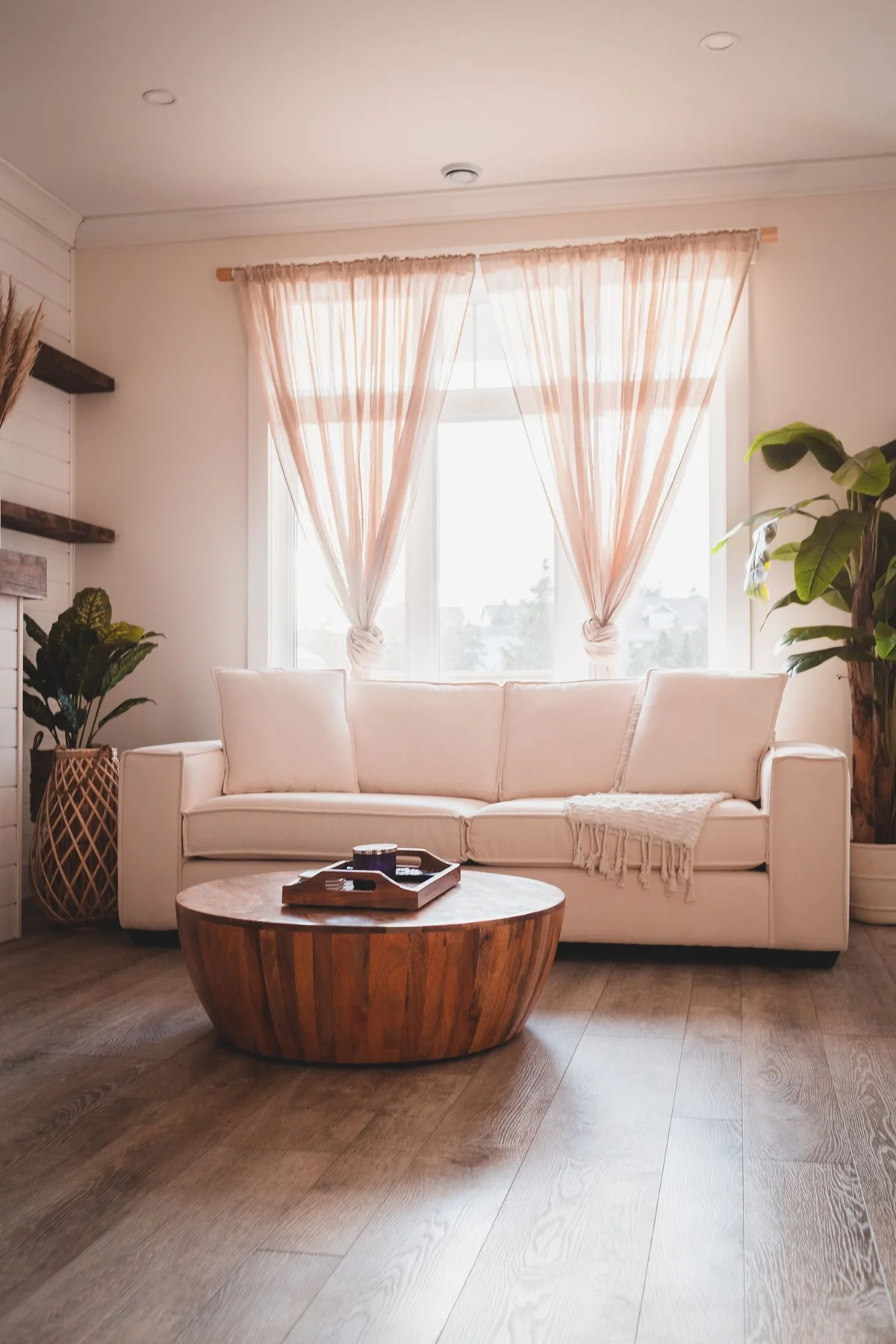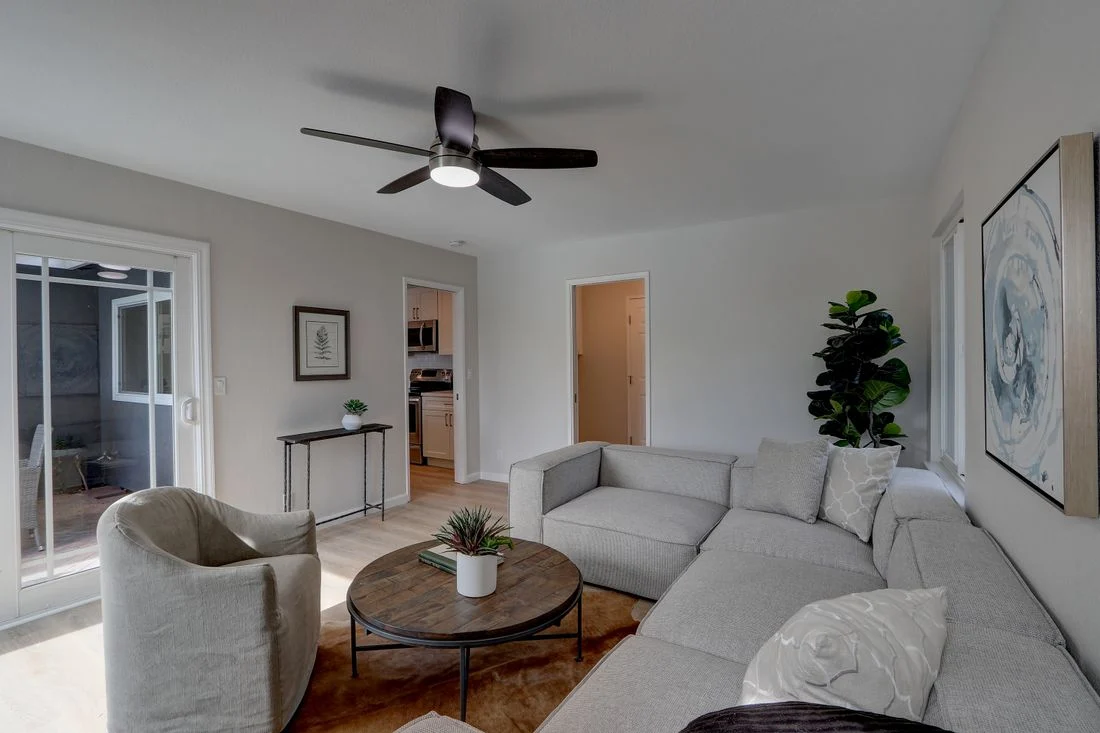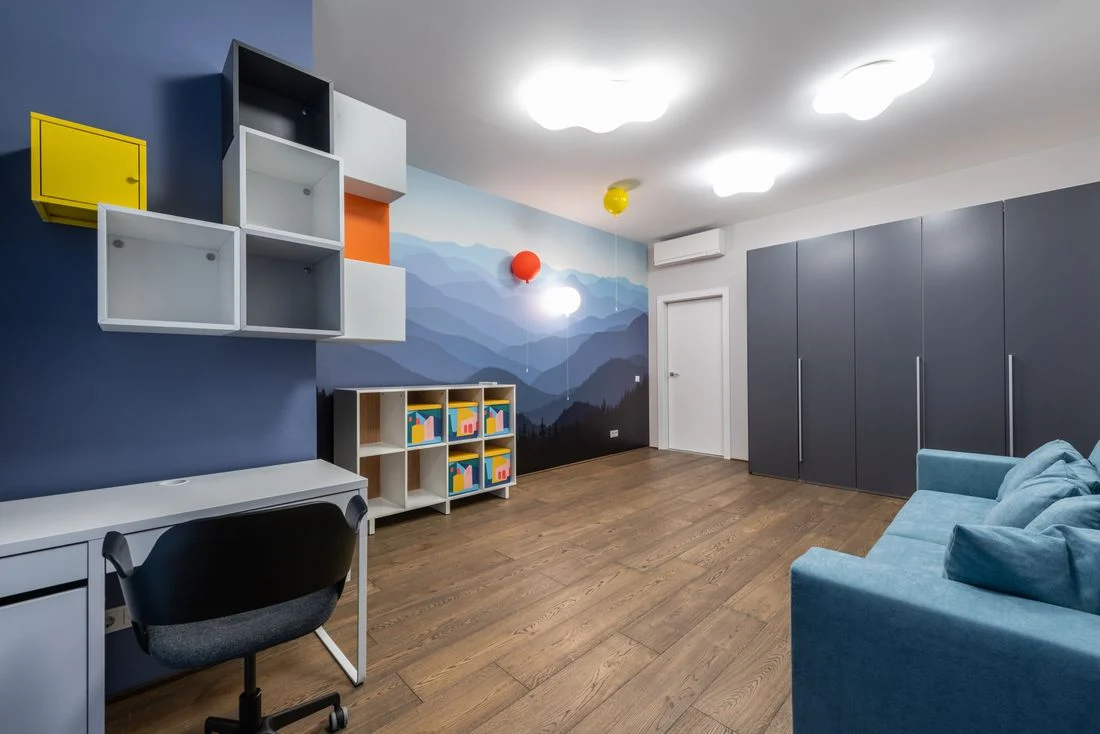
Toys do not need to disappear from a family living room, but they need somewhere to go between activities. Without that destination, every free surface becomes temporary storage and clearing the sofa turns into a small relocation project. Begin with the toys used in this room rather than the household's entire collection.
Give play a defined footprint
Choose a patch of floor that does not block the main route or the movement of a recliner. It might sit beside the seating group rather than in its center. Keep the most frequently used toys close to that area so children do not need to carry several containers across the room before playing.
A low, accessible storage unit can help, provided it is appropriate for the household and secured according to its instructions. Follow CPSC guidance on preventing furniture and television tip-overs. Do not rely on placing heavy objects at the bottom as a replacement for required anchoring.
Sort by how things are used
Building pieces, drawing supplies, and pretend-play objects need different containers. Broad categories that are easy to return are usually more useful than a complicated system that only an adult understands. Check that lids, edges, and storage hardware are suitable for the children's ages and the products being stored.
Avoid buying all the containers first. Place the current collection into temporary groups and see how much volume each one actually occupies. Oversized bins can hide small pieces at the bottom, while tiny boxes may turn every cleanup into a sorting exercise.
Keep the room comfortable for everyone
Leave the sofa seats available and protect the paths between doors. A coffee table may need to shift toward one side or give way to a smaller option if the center floor is used for play every day. Choose that arrangement intentionally instead of moving the same heavy table twice a day.
Limit display objects at the edge of the play area. A tall fragile vase and a favorite building zone are unlikely to remain peaceful neighbors. Keep adult reading, drinks, and remote controls in their own reachable places so the room still works after toys are put away.
At the end of a week, notice which items never return to storage. The container may be too far away, too full, or too difficult to use. Adjust the system to the activity rather than treating a recurring pile as a reason to buy a larger cabinet. A shared room succeeds when its daily reset is manageable.