A television does not have to disappear for a living room to feel calm. Often the louder problem is everything surrounding it: several little shelves, loose cables, a cabinet too small for the screen, and decorations lined up at different heights. Editing that collection can make the wall feel more coherent without buying a disguised television.
Make one clear composition
Consider the screen and cabinet as a group. A low unit with a generous visual footprint can give the television a base, while a very narrow stand may make it look top-heavy. Check the television manufacturer's support and clearance requirements rather than relying on visual proportions alone.
Leave some empty wall around the screen. Small frames fitted tightly around every edge tend to emphasize the black rectangle. If artwork belongs on the same wall, group it deliberately to one side or give it enough separation to read independently.
Reduce cable clutter responsibly
Identify which cables must remain accessible for everyday equipment. Use the furniture's intended cable routes and ventilation openings, and avoid packing power supplies into an unventilated decorative box. If hiding cables would require electrical work inside the wall, get the appropriate qualified help instead of treating it as a styling task.
Furniture and televisions also need to be protected against tip-over. Follow the manufacturer's anchoring instructions and the CPSC's Anchor It guidance. A broad cabinet or a tidy arrangement is not a substitute for securing the equipment correctly.
Work with contrast
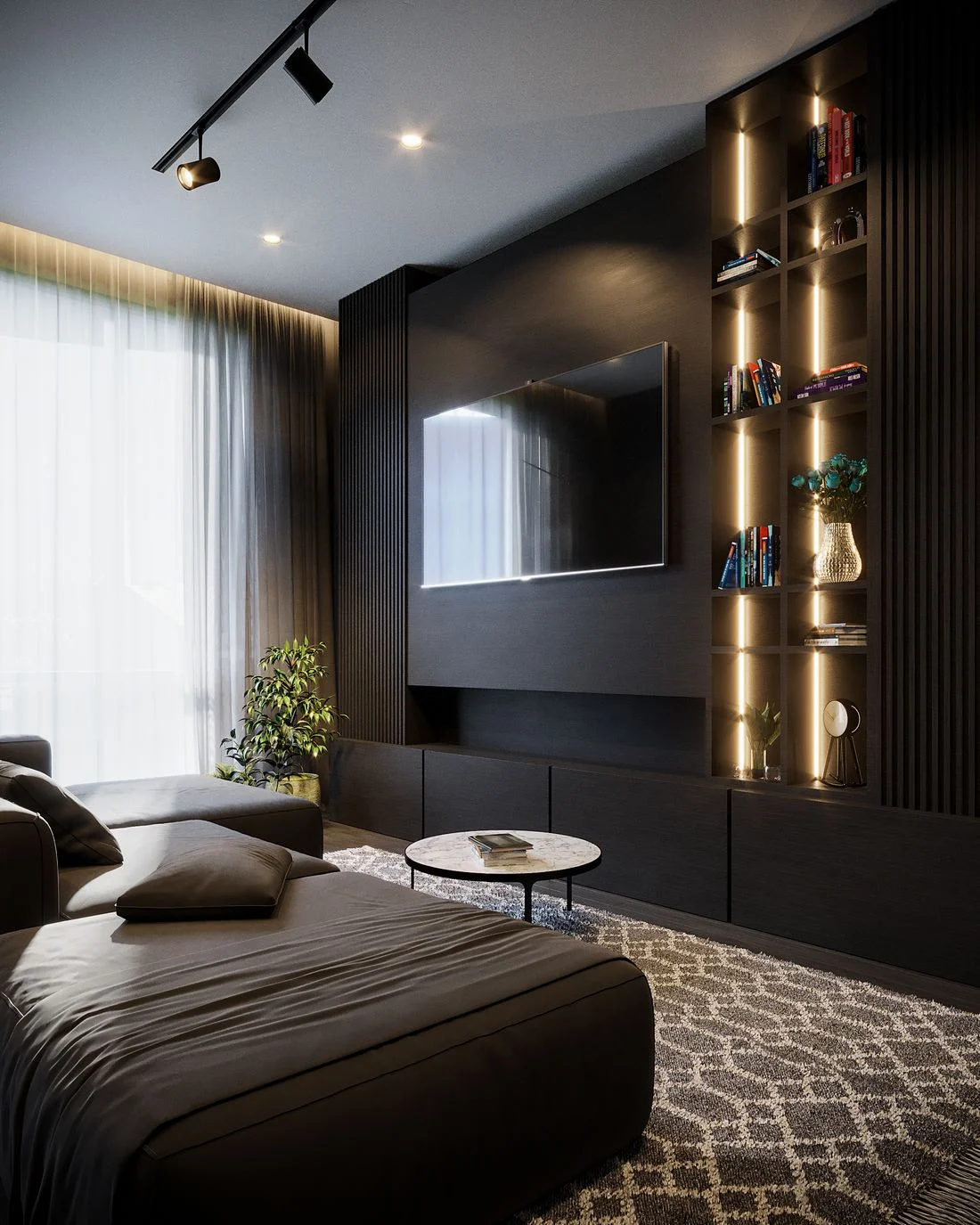
A very bright wall makes a dark screen stand out. A darker background can reduce that contrast, but it will also change the room after the television is off. Try a large paint sample and view it in daylight and evening light before committing to the whole wall.
You can create a calmer arrangement without repainting. Fewer objects, related finishes, and a cabinet that contains the remotes and equipment can do much of the work. Keep reflective ornaments away from positions that catch distracting light beside the screen.
Test from the actual seats
Check reflections, viewing angle, and comfort from every regular seat. Do not center the television on a wall simply to satisfy symmetry if that puts it awkwardly relative to the sofa. A television placed for comfortable viewing will make a more useful room than an impeccably centered screen that requires everyone to twist.
Finish with only the objects you enjoy seeing while the screen is off. The wall can have character without becoming a display shelf for every spare vase in the house.