A coffee table inherited from family, a new oak bookshelf, and darker chair legs can share a room without pretending to be a set. The challenge is not the number of woods by itself. It is whether their differences have a clear rhythm or seem to arrive at random.
Start by laying out the room's existing wood finishes, including the floor and doors. A photograph is useful, but look at the real surfaces in daylight too. Some woods appear warmer, cooler, redder, or grayer depending on the finish and the surrounding color. A product name such as walnut or natural does not promise a match with anything you already own.
Give one tone the largest role
Choose a dominant wood presence. In many rooms the floor has already made that decision. In others, a large shelving unit or dining table may be the main wooden surface. Smaller pieces can contrast with it without competing for equal attention.
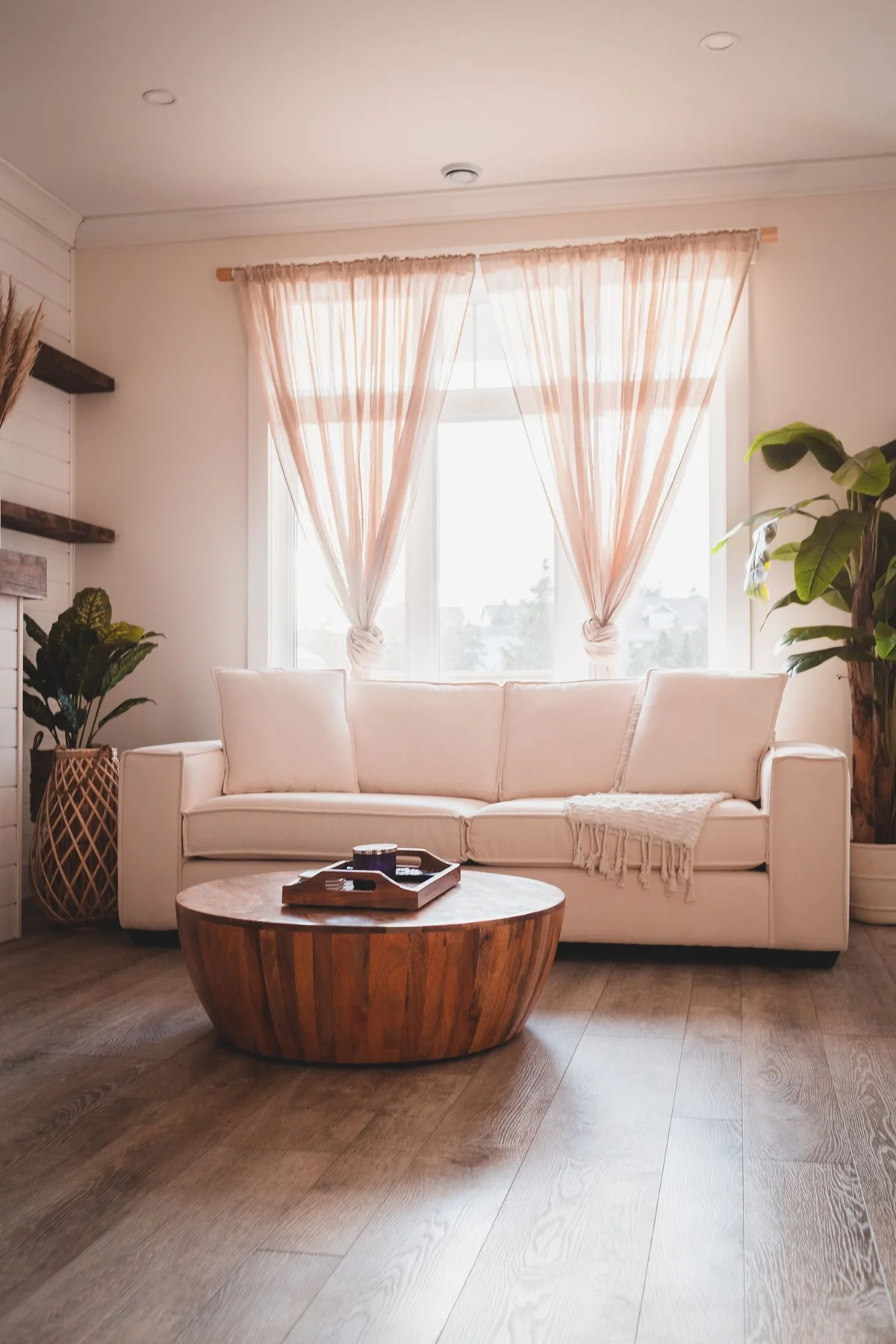
For example, a pale floor and medium-toned coffee table can be joined by darker chair legs. The dark finish works as an accent rather than a second dominant field. If every piece has a different strong grain, color, and sheen, simplify another part of the room so those surfaces have room to coexist.
Repeat selectively
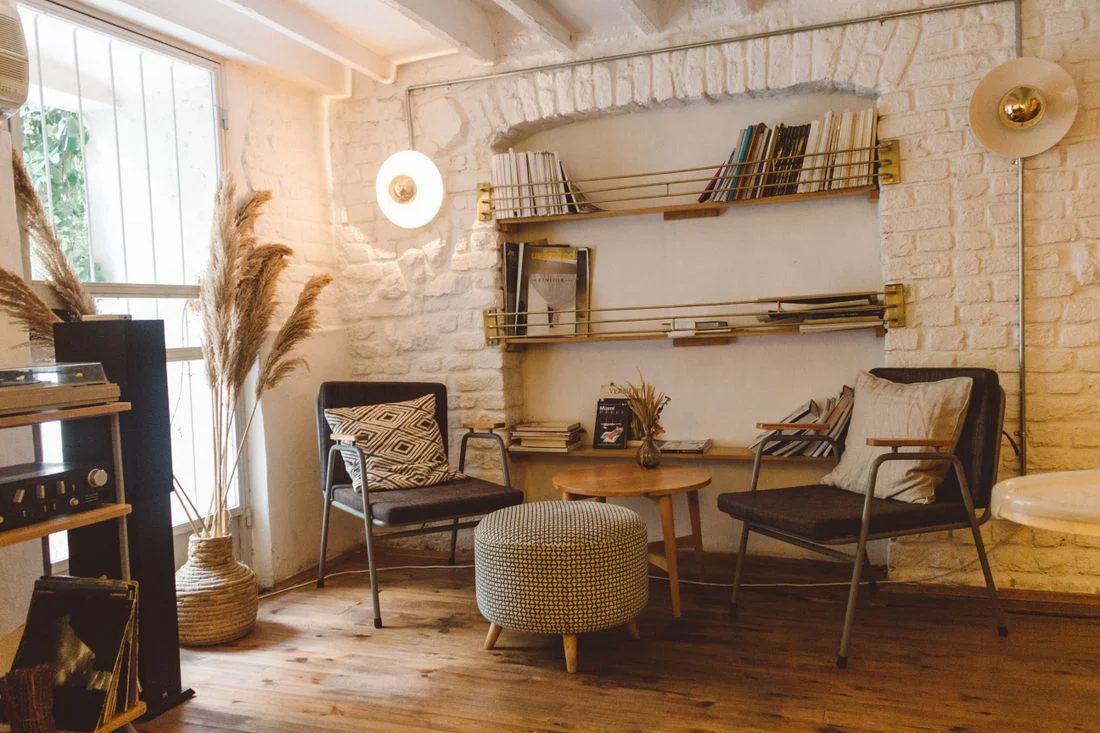
A repeated finish does not have to appear on two large pieces. A picture frame, small table, or lamp base can connect with a darker cabinet. Place the repeat across the room instead of clustering all the dark objects on one side. That distribution helps the contrast look purposeful.
Do not buy a decorative object solely because its wood seems almost identical to a table. Near matches can be more distracting than a clear difference, especially when two surfaces touch. If you are adding a piece immediately beside existing furniture, request a finish sample when available or compare them in person before ordering.
Use fabric between competing surfaces
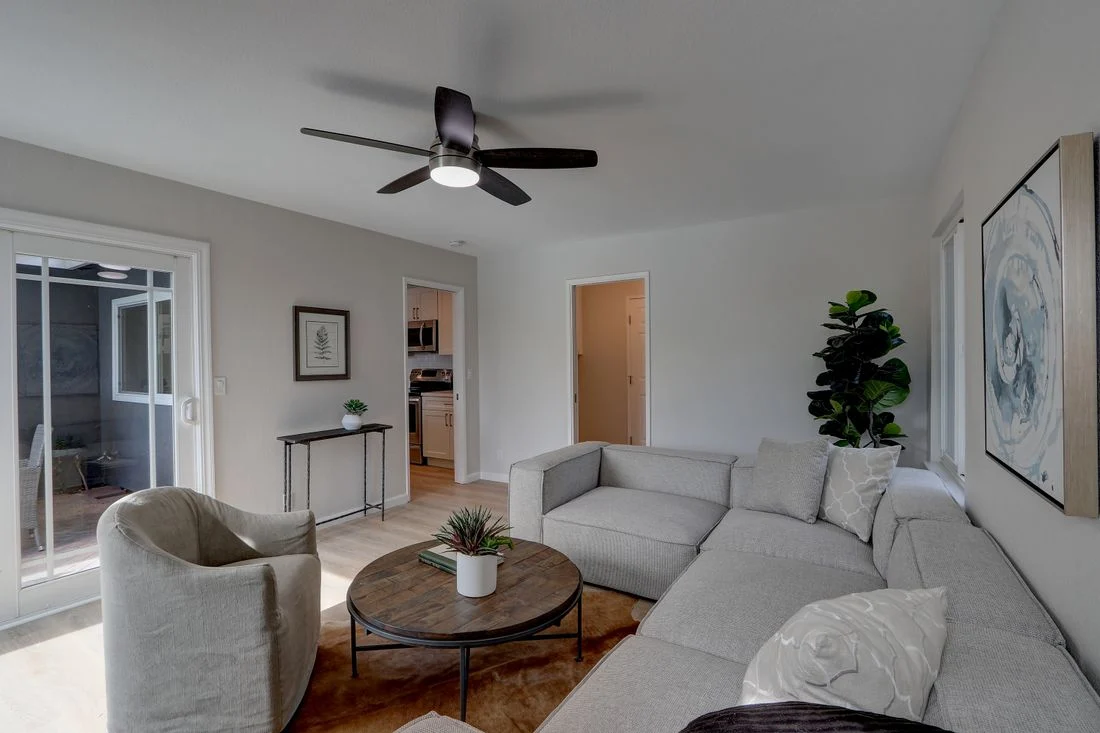
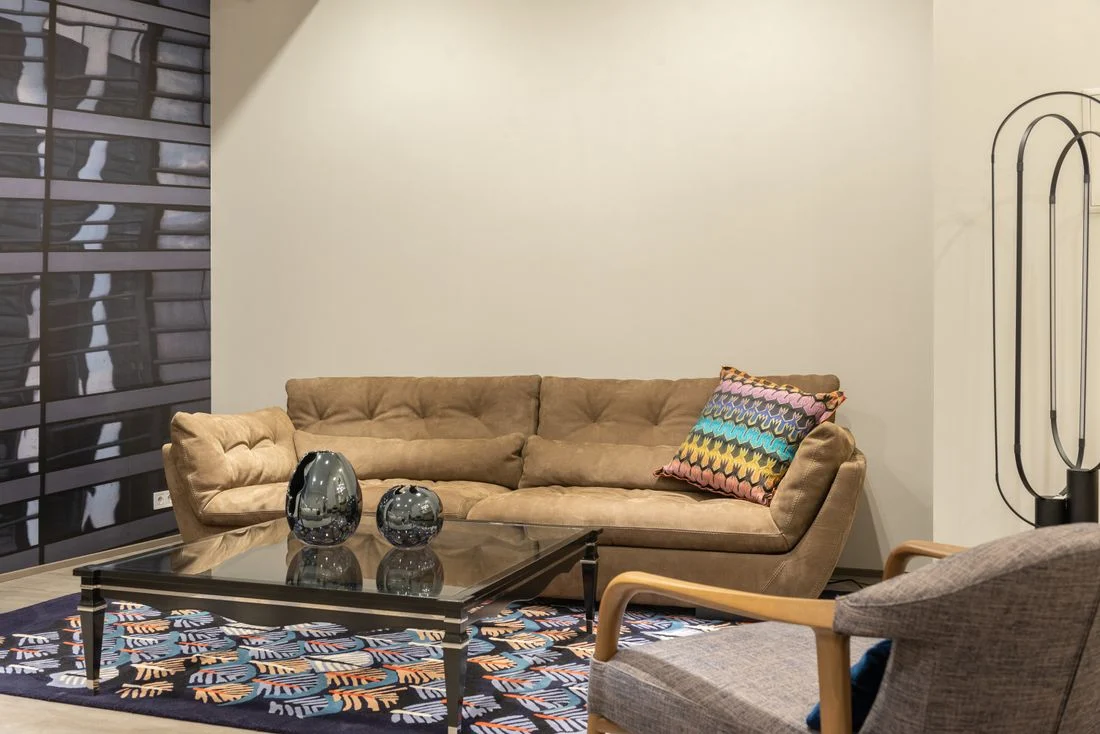
A rug can separate the wood floor from a wood coffee table so their grains are not competing directly. Upholstered seating can interrupt a group of wooden frames. These softer surfaces are particularly useful when the room contains several inherited pieces that cannot easily be replaced.
The rug does not need to match every wood tone. It can provide a calm middle value or introduce a color that suits the whole room. Avoid solving a wood mismatch by introducing three more busy patterns; that usually increases the number of decisions rather than reducing it.
Let age remain visible
An older piece may have wear, a darker patina, or a finish that no new item can reproduce convincingly. Treat that as part of its identity. Pairing it with a simpler modern piece can be more natural than trying to build an imitation antique collection around it.
Before refinishing anything, identify the material and the value of the piece. Veneer, painted surfaces, and solid wood require different approaches, and an old family item may deserve specialist advice. Styling the room around an existing finish is often the lower-commitment first experiment.
When the room still feels unsettled, remove one small wooden accessory and look again. The answer may be less repetition, not another matching purchase. A successful mix gives each major piece enough space to be recognized while keeping the overall room connected.