Patterned curtains are easiest to live with when their job is clear. They can be the main decorative pattern in a quiet room, or a supporting pattern that connects existing upholstery and rugs. Problems begin when every surface competes at the same scale and intensity.
Start by spreading the curtain sample beside the largest patterned object already in the room. Look at them from several feet away. Do both turn into a similar-sized visual texture? If so, a larger check, broader stripe, or much quieter curtain pattern may provide a more useful contrast.
Read the repeat, not just the motif
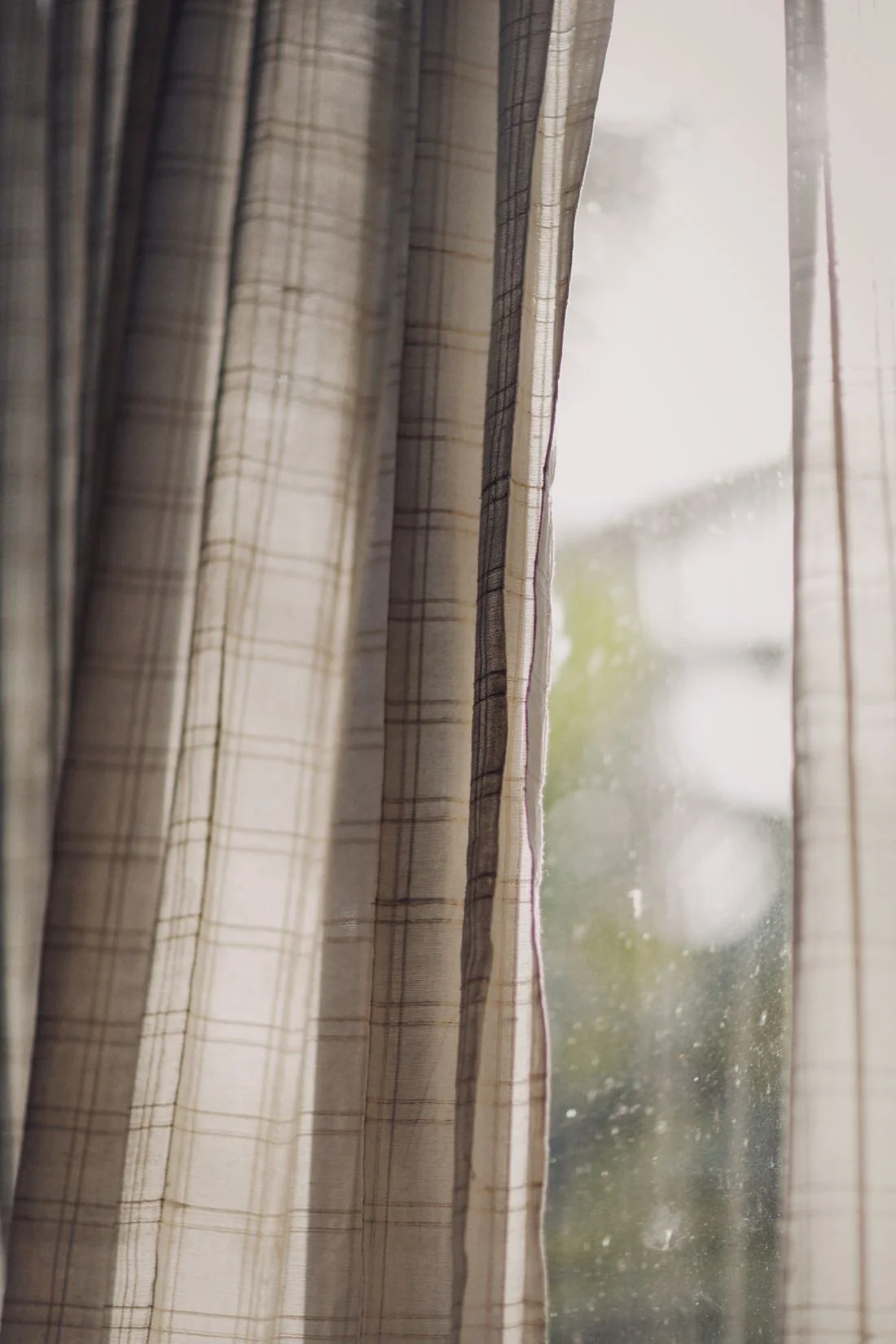
A single flower or geometric shape on a sample tells you little about a full panel. Ask to see the pattern repeat and a photograph of the fabric hanging. A motif that looks charming in isolation may form strong horizontal bands or vertical columns across several yards.
Pleats and folds change that picture again. A stripe can become more pronounced when gathered, while a wide floral design may disappear into folds. If the pattern's exact composition matters to you, check how the finished curtain will be made rather than imagining a flat sheet at the window.
Keep a common thread
One shared color is usually enough to connect curtains with a rug or cushion. The patterns do not need identical backgrounds, and the secondary colors do not all need repeating elsewhere. A small check with warm cream in it can sit beside a floral cushion with the same cream, even if the other colors differ.
Try removing a patterned throw before rejecting the curtain sample. Sometimes the room already has enough small accents, and a larger, more useful textile can take over their role. This is a chance to edit, not automatically an invitation to buy more coordinating pieces.
Consider the room with the curtains closed
During the day, only narrow strips of fabric may be visible. At night, the whole pattern fills the opening. Lay out or temporarily hang enough material to understand that change, especially in a small room where the window dominates one wall.
Choose a simple rod and restrained nearby objects if the fabric is expressive. The curtain heading, tiebacks, hardware, and pattern do not all need to be decorative. Let one part lead, and keep the daily operation easy: panels should open fully, close without tugging, and remain clear of furniture and heating equipment according to the relevant product guidance.