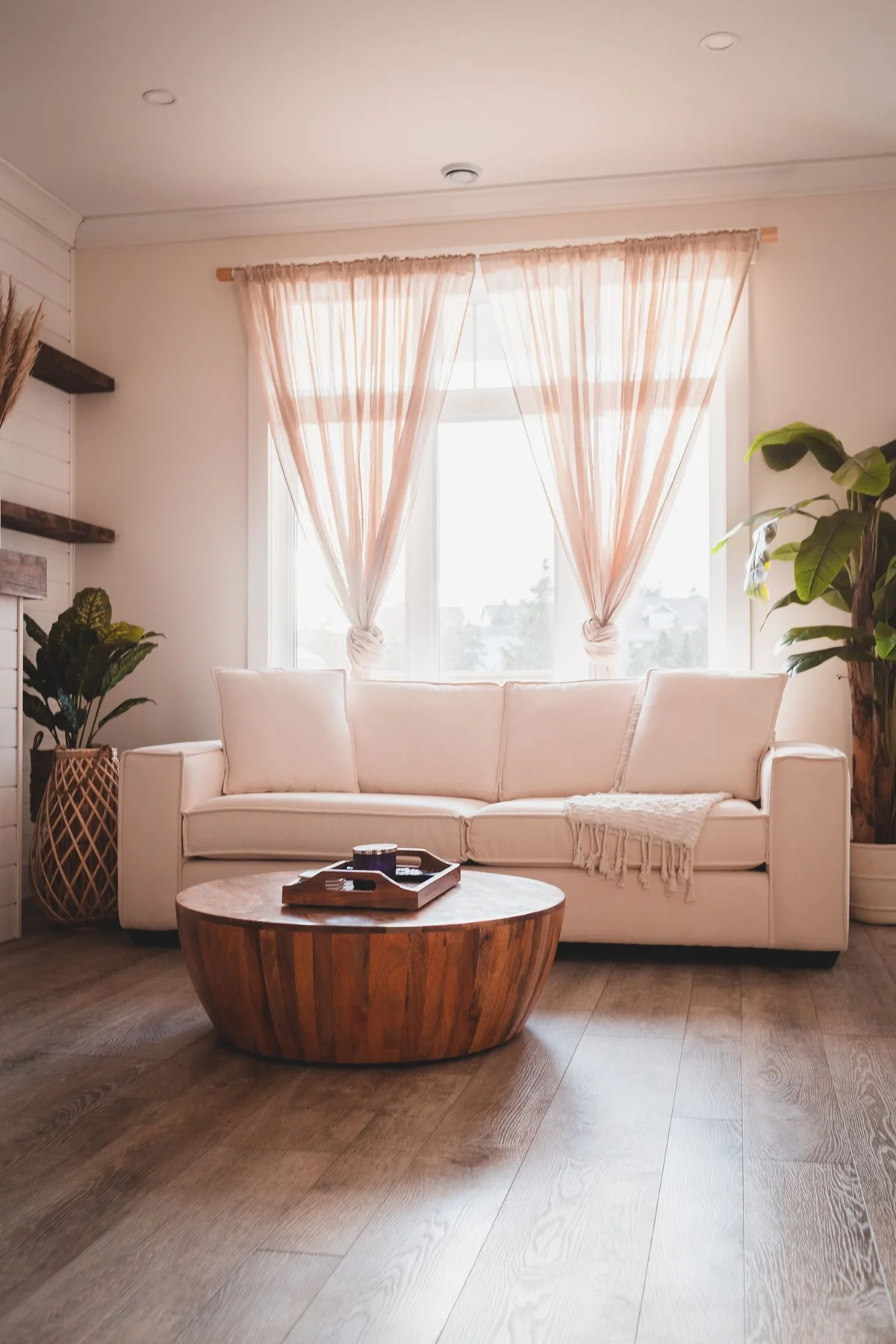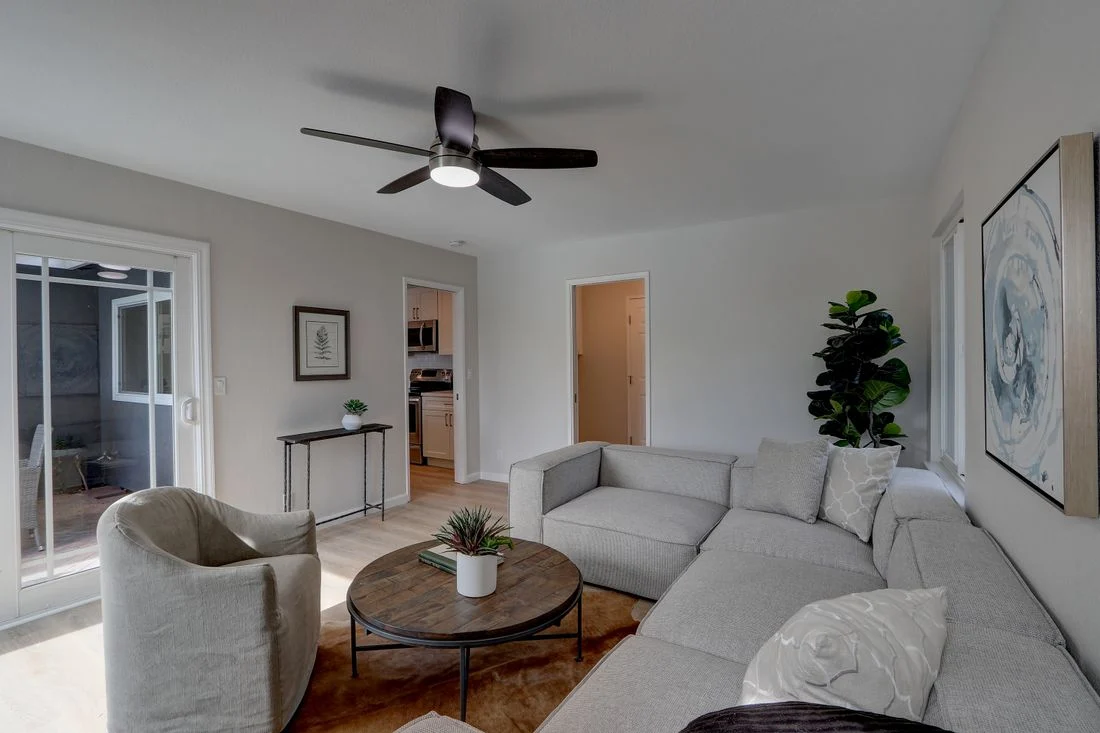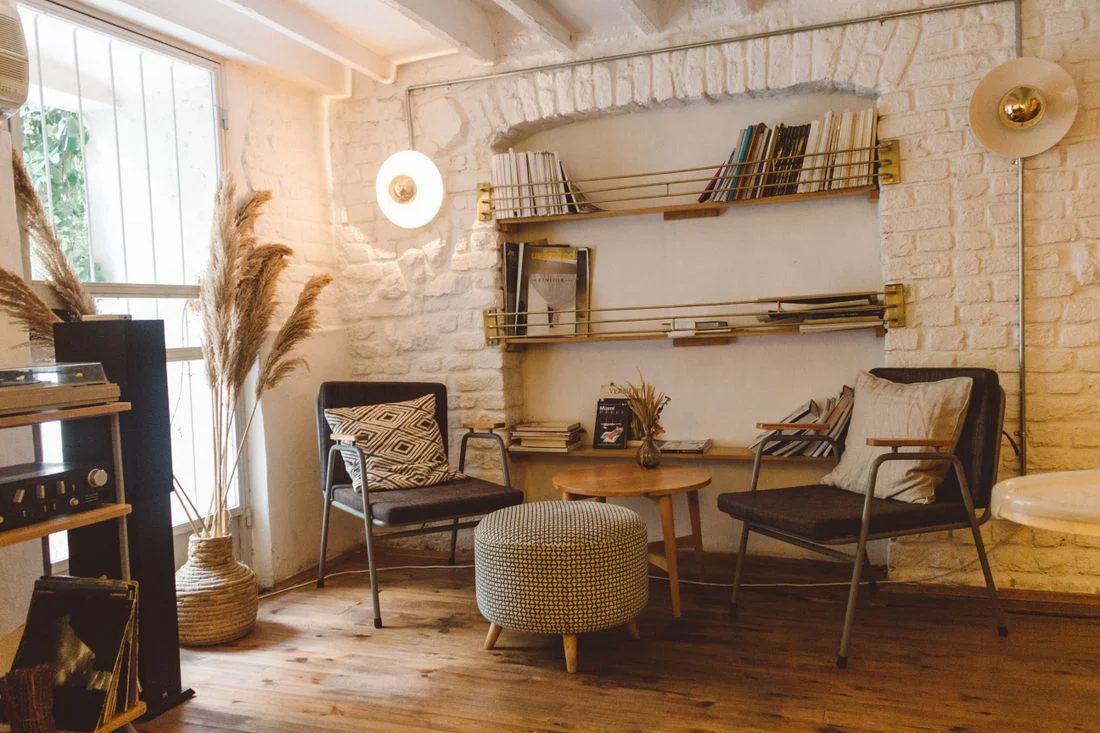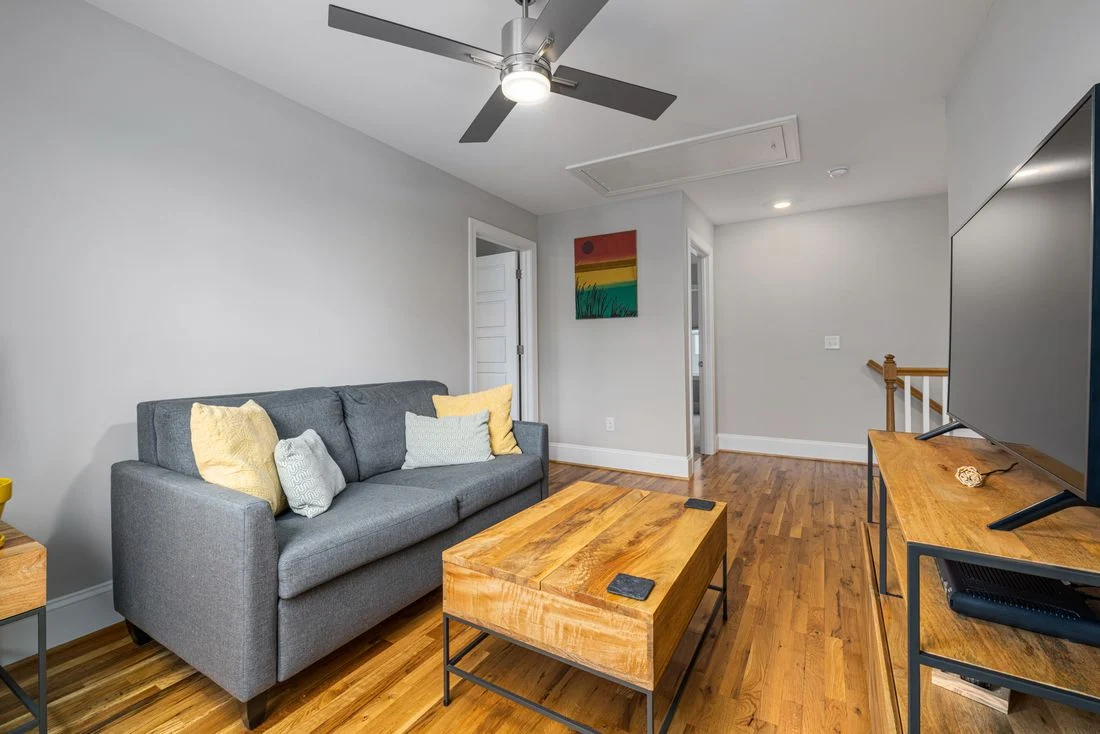
Lining every piece of furniture against the long walls often makes a narrow living room feel even longer. The eye follows a corridor of furniture to the far end, while conversation happens across the gap. Moving everything into the center is not necessarily better. The useful goal is a clear walking route beside a seating group with its own proportions.
Find the route that cannot move
Identify the doors people use most. Trace the journey between them with the furniture in place, including any doors that swing inward. If that route cuts through the middle of the proposed coffee-table area, move the seating group sideways or shorten it. A path that works only when everyone is sitting still is not a finished layout.
Keep bulky storage away from the tightest point. A deep cabinet opposite a deep sofa can make one section of the room feel pinched, even if the remainder is generous. Measure those opposing pieces together before selecting either one.
Shorten the visual room
Group the main seats around a rug rather than spreading them along the entire length. A sofa and one chair may form a more comfortable conversation area than a sofa and two distant chairs. A small table or reading seat at the far end can give the remaining space a separate purpose.
A crosswise element, such as a compact armchair or a low table, can interrupt the long view without blocking it. Keep the scale modest. A tall room divider placed across a narrow space may turn an awkward room into two awkward rooms.
Choose length and depth separately
A short sofa is not always shallow, and a narrow console is not always short. Read both dimensions. Consider tables with the surface you need but less solid visual bulk below it. Furniture on legs can reveal more floor, although it still occupies the same physical footprint.
Avoid filling every gap with another small item. A room containing many miniature tables and stools can be harder to navigate than one with fewer substantial pieces. Leave an empty section of wall or floor where the circulation needs it.
Once the large pieces are placed, check the view from both ends. A large artwork near the seating group can draw attention to where the room is used instead of its length. The layout should make it obvious where to sit and how to pass through, without requiring either activity to interrupt the other.