Finding a patterned rug you like is often easier than deciding what to do around it. A richly detailed design can appear to demand matching pillows, matching art, and a matching paint color. In practice, the room usually needs fewer echoes than that. Let the rug supply the complexity and use the surrounding pieces to make it readable.
First decide whether the rug should be the room's main pattern. If the sofa is already floral or the wallpaper is highly detailed, bring home a sample or use a reliable room mock-up before buying. Two patterns can coexist, but they need to be judged together at the scale of the actual room.
Pull out a background color
Look beyond the brightest motif. A subdued ground color—cream, faded blue, warm brown, or charcoal—often offers the easiest connection to furniture you already own. Use that color in one substantial nearby surface rather than repeating every accent from the rug.
For instance, a rug with a quiet cream background and small rust details can work with a cream sofa and one rust cushion. Adding rust curtains, rust pottery, and a second patterned throw may make the room feel more coordinated than comfortable. Stop while the relationship is still loose.
Notice the border
Many traditional patterns have a strong border. Check where it will sit under the sofa and chairs, not just whether the overall rectangle fits. If most of the central design disappears beneath a large coffee table, the visible border becomes the dominant feature. That might be exactly what you want, but it is different from seeing the full rug in a product photograph.
Lay out the proposed dimensions with tape. Photograph the outline with your furniture in place, then compare it to the rug's pattern proportions. Keep the arrangement centered on the seating group rather than on a doorway or an unrelated wall feature.
Leave a few quiet surfaces
Plain upholstery, simple curtains, and a clear tabletop give the pattern somewhere to settle. Quiet does not have to mean beige: a solid dark green chair can be calmer than a pale cushion covered in tiny motifs. Compare the density of information, not just the intensity of color.
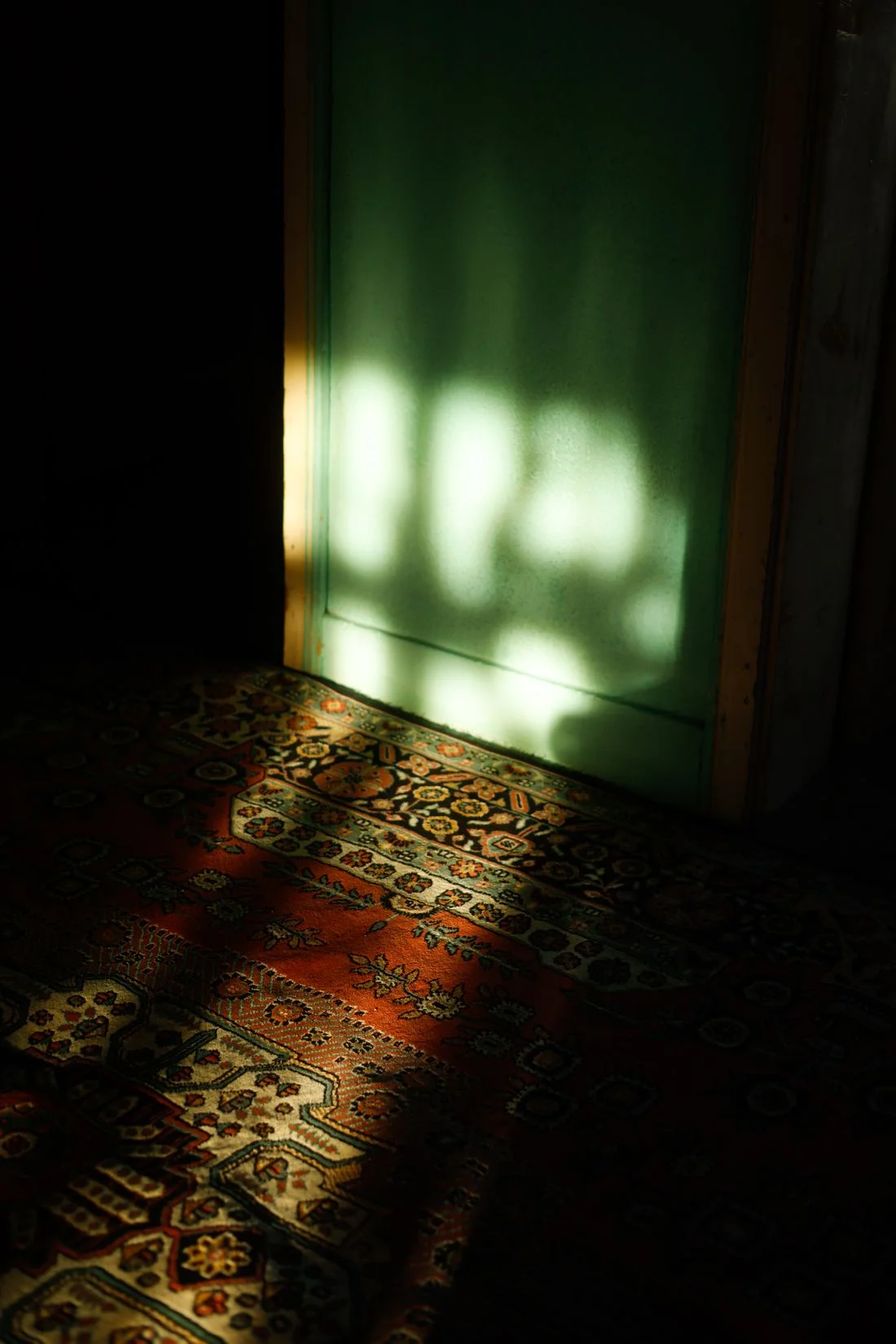
Check the rug in daytime and with evening lighting. A dark ground can lose detail after sunset, while pale motifs may stand out more strongly. If the design still feels like part of the room under both conditions, you can resist the urge to rebuild the room around it. The successful purchase is the one that supports how you already live there.